Category Archives: Apologetics

Is it Rational to be a Christian? (2 of 2)

Anastasis, symbolic representation of the resu...
Anastasis, symbolic representation of the resurrection of Christ. Panel from a Roman lidless sarcophagus of the “Passion type”, ca. 350 CE. From the excavations of the Duchess of Chablais at Tor Marancia, 1817-1821. (Photo credit: Wikipedia)

Below is the second half of a relatively long (but actually concise) treatment of evidences or evidential steps for the view that the Christian faith is rational, and even desirable, to hold (the first half is here).   The introductory paragraph is repeated for clarity.  Thanks for reading, and may the God of all creation bless you.

______________

For the person who wants to know that there is reason to believe a holy book–that there is evidence to back it up–different areas of apologetics have those answers.  In fact, there is more evidence for the truthfulness of the Bible today than ever before, excepting when the events actually occurred.  This essay assumes that the person searching for a legitimate holy book already believes that there is a deity of some sort; it does not cover arguments for the existence of God.  What this essay does cover, in concise form, are the issues of reliability of the Old and New Testaments, fulfilled prophecies, miracles, and Christ’s resurrection.

Miracles

What is a biblical miracle, and what is its purpose and meaning? In the Judeo-Christian context, a miracle is a work of God outside of the patterns of normalcy. Miracles of healing and of being saved from death obviously show the intervention of a God who loves. Biblical miracles consistently show three things. One, they display God’s glory (they also have the effect of showing to God which persons react faithfully to His glory, and which do not). Two, they are proof that the person “performing” the miracle is from God (the source is God, not the person). And Three, they display God’s benevolence. Some examples of such miracles are found in Exodus 14:13-18, Daniel 3:16-30, Mark 2:1-12, and John 11:38-44.

Do miracles happen today? Yes, they do! Most people think they don’t because they aren’t reported in mainstream media. I knew a lady personally, one of the most stable and intelligent ladies I have ever met, who told me the story of her daughter being healed from a terminal illness. The Lord did an emotional healing of myself, and I felt His work in my whole body (I will not explain further here). Open Doors USA reported on its website, in 2002 (April 7), a cancer completely healed in China: “one young woman was healed from cancer. The doctor treating her had fainted from the shock of seeing the cancerous growth gone. We all laughed at that.” Pastor Andrae Crouch was healed of cancer (Nappa  1999). In September 2001, The Voice of the Martyrs wrote of a healing in its magazine/newsletter: a young Pakistani Muslim man was hit by a car while riding his bike, and his leg was broken. A woman came out of the crowd and prayed for him, in Jesus’ name. He felt energy move throughout his body and his leg was healed (later, she gave him a bible and was never seen again, and he became a follower of Christ).  I have read of many other miracles, too, occurring at the time of a person’s salvation and others that happen that save a person from death.  Some medical miracles can be read about at the World Christian Doctors Network.

What about miracles outside of the Judeo-Christian faith? There are some amazing and unexplained things that happen in the world that people might say are miracles, but which do not meet the criteria that show that they are from God. Some of these may not be explained yet, and others may be the activity of fallen angels. The magicians of Pharaoh’s court in Exodus 7 performed seeming miracles. A girl had a spirit that told the future in Acts 16 (16-24), but the spirit in her was not from God. The book of Revelation foretells of someone who will perform ungodly miracles (13:11-14). So, if “miracles” happen that do not seem like they are from God, that may in fact draw people away from God, we should not be surprised.

There are some Buddhist scriptures with interpretations that record possible miracles, but since the miraculous activities are self-aggrandizing and do not point to God (such as the changing of physical things to other physical things, flying, reading minds, passing through solid matter, etc.), they are not Godly miracles.   A modern day Hindu “miracle” happened in 1995, which was apparently reported from all over the world (Hinduism Today, November 1995 [as cited in Powell 2006]). A man in New Dehli dreamt that the Hindu god Lord Ganesha wanted milk. So the man went to the temple and told a priest, who then gave the statue of Ganesha some milk. The statue “consumed” the milk. People heard of it and started offering milk to Ganesha statues all over, and the statues “consumed” the milk. This went on for 24 hours in India, but longer elsewhere. The “miracle” seems useless and it lacks benevolence; indeed, God is not transcendent in Hinduism belief and so any such displays are supernormal, not supernatural. In the Quran, it is written that Muhammad did not perform any miracles.


The Resurrection of Jesus Christ

I wonder if other Christians feel the same as I, that for some odd reason Jesus’ resurrection does not need explaining? The reality of Christ’s resurrection is a very significant topic in apologetics, however, since it is such a hard to believe event for the unbeliever. A subissue is the disharmony of the differing gospel accounts as to what happened at the empty tomb. (This issue had led me to read Mary Magdalene and Many Others: Women Who Followed Jesus [Carla Ricci 1994], and I highly recommend it!) Women were very involved in Jesus’ ministry, he taught them much as disciples, and women were the first witnesses of His resurrection. This happens to play an important role in showing the reality of the resurrection, explained below, along with other rationales for accepting the resurrection as fact.

If the resurrection did not happen, how can anyone explain the beginning of the church? That may seem like an overly simple question–after all, there are many religions today that begin and grow for what seem to be very shallow (and unreasonable) reasons. Well, today, people in the Western World, at least, do not become lion chow in a public arena, are beheaded, or are crucified, for having beliefs counter to those of the government or religious elite. In conditions like that, one would be much more careful about choosing one’s beliefs!

Today, Muslims die (kill themselves) for a belief they think is true. People will die for the truth (and, in fact, Christians do die perhaps every day in countries that are hostile to their faith). But if some critics are correct that the Apostles were promoting false beliefs, why would they die for a lie (almost all were killed for their faith)? Who would do that?  The Apostles and very many early believers died for their faith, knowing it to be true; it would be absurd to die for a cause that you knew to be false. Paul, as an apostle, is very hard to explain indeed, if the resurrection had not happened. Paul was not one of Jesus’ followers, but an ardent persecutor of Christians! He had a great education and was a Roman citizen—in short, he had a privileged life and his future was bright prior to his conversion. Because of his encounter with the living God and after convincing the other apostles that he was sincere, Paul served His Lord (and thus His church), and for this he was eventually beheaded by Nero.

So there was an empty tomb . . . that doesn’t prove Jesus was resurrected, or does it?  A lot of people must think the evidence pointing to Jesus’ resurrection is good, since they try and come up with all kinds of explanations countering the event. Some, like the alien theory, are down-right silly. But what of the evidence? It’s interesting that the Jews tried to cover up the resurrection right from the beginning, knowing that Jesus’ body was gone. This is more significant when one considers that the tomb had been guarded by Roman soldiers who would forfeit their lives for this kind of negligence, and, that the Jews never did find Jesus’ body (you can bet that they tried) (Matthew 27:62-65, 28:11-15).

Another bit of evidence comes to us in a less obvious way. Some critics try to claim that the story of the resurrection was made up and developed through some time by the gospel writers. Even though there is good argument against this in general, we know that in fact Paul wrote of the resurrection early on, within 20 years, at the most, after Jesus died (and prior to the gospels being written). This is in 1 Corinthians 15:3-6, where Paul tells of the many witnesses to the resurrected Jesus, many of whom were still living at that time (readers and hearers of his letter could go and ask these people if what Paul said was true).

One of the evidences is of a type that people of today cannot appreciate unless they know the historical context of New Testament times. At that time, women were held in very low regard amongst the Jews. Sometimes it is hard to see or fathom this from the texts, since women do not seem to have trouble following and supporting Jesus. But women at that time did not testify in court as the men deemed them unworthy witnesses. Yet here, women are indeed the first witnesses to the resurrection. The men at first dismissed what the women had to say about the resurrected Jesus. One can imagine, in this social context, that the men had a very hard time writing the gospels with the women’s stories included. At that time, including their witness would be the opposite of what one would present in order to prove something, and something as important as Christ’s resurrection. The fact that the women’s accounts in each of the gospels varies is also telling—it shows that the writers did not collaborate to try and come up with a totally coherent and slick story that sounded official and convincing (Matthew 28:1-10; Mark 16:1-8 [and perhaps 9-11]; Luke 24:1-12).

Sir Lionel Luckhoo, who during his lifetime won 245 consecutive murder trial acquittals (for this he is in the Guinness Book of World Records), is not alone in his thinking and assessment of Jesus’ resurrection:

“I have spent more than 42 years as a defense trial lawyer appearing in many parts of the world and am still in active practice. I have been fortunate to secure a number of successes in jury trials and I say unequivocally the evidence for the Resurrection of Jesus Christ is so overwhelming that it compels acceptance by proof which leaves absolutely no room for doubt” (Anon 2012).

____

© Vicki Priest 2012 (this is a modified and edited version of a series of articles published by the author at Examiner.com, 2011)

________________

Bibliography and Recommended Reading (for both article parts)

Anonymous. “Why should I believe in Christ’s Resurrection?” GotQuestions.org. http://www.gotquestions.org/why-believe-resurrection.html (accessed March 2012).

Arlandson, James. “Do Miracles Happen Today?” American Thinker. January 13, 2007. http://www.americanthinker.com/2007/01/do_miracles_happen_today.html (accessed March 2012).

Chong, Timothy. “Bible, Canonicity.” In The Popular Encycolopedia of Apologetics, by Ergun Caner Ed Hinson, 101-102. Eugene: Harvest House Publishers, 2008.

Copan, Paul. Is God a Moral Monster? Making Sense of the Old Testament God. Grand Rapids: Baker Books, 2011.

Dowley, Tim, Editor. Eerdman’s Handbook to The History of Christianity. Grand Rapids: Wm. B. Eerdmans Publishing Co., 1977.

Garrett, Duane A, General Editor. NIV Archaeological Study Bible. Grand Rapids: Zondervan, 2005.

Geisler, Norman, and Ed Hindson. “Bible, Alleged Errors.” In The Popular Encyclopedia of Apologetics, by Ergun Caner Ed Hindson, 97-100. Eugene: Harvest House Publishers, 2008.

Gleghorn, Michael. “Ancient Evidence for Jesus from Non-Christian Sources.” bethinking.org. 2001. http://www.bethinking.org/bible-jesus/intermediate/ancient-evidence-for-jesus-from-non-christian.htm (accessed March 2012).

Hart, David Bentley. Atheist Delusions: The Christian Revolution and Its Fashionable Enemies. New Haven & London: Yale University Press, 2009.

Keller, Timothy. The Reason for God: Belief in an Age of Skepticism. New York: Dutton, 2008.

Kennedy, D. James. “Christ: The Fulfillment of Prophecy.” In The Apologetics Study Bible, by Ted, General Editor Cabal, xxviii-xxix. Nashville: Holman, 2007.

MacDonald, William. “Prophecies of the Messiah Fulfilled in Jesus Christ.” In Believer’s Bible Commentary, by William MacDonald, xviii-xxiii. Nashville: Thomas Nelson Publishers, 1995 (1989).

Nappa, Mike. True Stories of Answered Prayer. Carol Stream: Tyndale House, 1999.

Powell, Doug. Holman QuickSource Guide to Christian Apologetics. Nashville: Holman Reference, 2006.

Ricci, Carla. Mary Magdalene and Many Others: Women Who Followed Jesus . Minneapolis: Augsburg Fortress Publishers, 1994.

Sailhamer, John H. Biblical Prophecy. Grand Rapids: ZondervanPublishingHouse, 1998.

Yates, Gary E. “Bible, Transmission of.” In The Popular Encycolopedia of Apologetics, by Ed, and Ergun Caner Hindson, 107-110. Eugene: Harvest House Publishers, 2008.

Lessons in the Psalms: Summaries of C.S. Lewis’s Thought (3 of 3)

Psalm 21, Initial D. In: Albani-Psalter
Psalm 21, Initial D. In: Albani-Psalter (Photo credit: Wikipedia)

This post, which is the third of three, is a summary of sorts of C.S. Lewis’s work, Reflections on the Psalms (1955; the edition of this book used here is found in The Inspirational Writings of C.S. Lewis, published in 1994 by Inspirational Press). Note that word spellings as found in the book are kept in this essay.  I hope you are blessed by Lewis’ insight and these easily accessible summaries (click here for the first in the series and here for the second).

[This is a slightly edited version of the article I originally published at Examiner.com.]

_____________

Psalms and the Christian: The Law and Second Meanings

Sweeter Than Honey (the law)

How can God’s laws, His statutes, be truly thought of as “sweeter than honey,” as stated in Psalm 19:10, or something that “rejoices the heart” (19:8), when a starving person is told not to steal? Lewis could not understand this at first. To say that obeying the law brought about these joyful thoughts and feelings, as some have suggested, is to miss the psalmist’s intentions.

By “the law” is meant all that is in Leviticus, Numbers, and Deuteronomy, not simply the Ten Commandments. Psalm 1:2 says that the law is a delight and to be exercised day and night (in more modern translations, the word used is “meditate”). This is not referring to constant obedience, but continual study and meditation. So what is meant by delight in the law is akin to loving a certain subject, like astronomy, for instance.

Of course, there can be a danger in having your favorite subject be something sacred. It can lead to spiritual conceit. See John 7:49. The pride that grew amongst Israel’s leaders led them to attach more and more conditions to the laws until finally no one could do them all. Or, if some claimed to fulfill all the conditions, then this bred self-righteousness.

Moving on from this note of warning, another aspect of the psalmist’s understanding of Gods laws is that they’re “true.” They aren’t “true” in the same sense that “apples grow on trees” is true, but that they are righteous and rock solid: “Their delight in the Law is a delight in having touched firmness; like the pedestrian’s delight in feeling the hard road beneath his feet after a false short cut has long entangled him in muddy fields” (162-163). This has more meaning when viewed in the light of Israel’s neighbors and enemies. Pagan practices abounded, like ritual sodomy and the burning to death of babies. But when horrific danger pressed in on the Israelites, say from the Assyrians, many were tempted to appeal to the “gods” of these rituals. To the person who saw the harm and horror of these pagan practices, God’s laws indeed would be “sweet.”

Second Meanings: Writings in General, and in Scripture

In the last three chapters of Lewis’ book, he presents ways to view second meanings in (1) pagan writings, (2) how second meanings may be viewed in scripture generally, and lastly, (3) second meanings in the psalms. The purpose of this exercise is to determine if it is legitimate to even consider meanings apart from what the writer apparently intended. And if so, how can we know a second meaning is something we should take seriously?

In relation to pagan writings, Lewis explains how Virgil’s poem Eclogue IV* (written shortly before Christ was born)–which uncannily resembles the birth of Christ and its meaning–can be considered an amazing “coincidence.” Whereas Plato’s description of what the world would do to a man of perfect goodness, where he describes a scene like Christ’s passion before the event came to pass, is akin to a very educated guess. Plato was in tune with the subject because of his teacher Socrates’ execution, and after contemplating it all, perfected his thoughts on the matter. And so it happened that Plato was quite correct in his assessment! (While reading Lewis’ work one can surmise that he did not think, really, that Virgil’s poem was mere coincidence or that Plato’s work lacked divine inspiration, but Lewis is making an argument apart from immeasurable heavenly influence.)

Lewis reasons: “If even pagan utterances can carry a second meaning, not quite accidentally but because, in the sense I have suggested, they have a sort of right to it, we shall expect the Scriptures to do this more momentously and more often. We have two grounds for doing so if we are Christians” (187). The two grounds are:

(1) Aside from direct prophecy, the OT is filled with all kinds of different writings. Ecclesiastes is basically pagan, so why is it scripture? The Song of Songs is basically secular, so why is it scripture? Lewis describes those OT as having been worked upwards, or divinely upgraded. “All [have been] taken into the service of God’s word. . . . On all these I suppose a Divine pressure; of which not by any means [the authors] need have been conscious” (188).

Just as not all see (believe) that the human animal has been up-graded to hold the divine, not all will see the divine in the up-graded words of the Bible. “For what is required, on all these levels alike, is not merely knowledge but a certain insight; getting the focus right” (190). He likens this to the printed page: for those who do not know what it is, apart from ink markings on paper, a person who tells them it is a poem may not get far in convincing them.

(2) The second ground for acknowledging other meanings in scripture is far easier to explain: Jesus Himself said so. He had scolded the disciples going to Emmaus for not realizing, from scripture, that the anointed one would suffer. He told them of the scriptures that referred to Himself in the OT (Luke 24:25-27). From NT verses, we know positively that the following OT passages referred to Jesus: Isaiah 53 (Acts 8:27-38), Psalm 22 (Mark 15:34), Psalm 110 (Mark 12:35-36), Psalm 91:11-12 (Matt 4:6), Psalm 118:22 (Mark 12:10), Psalm 16:[10] (Acts 2:27). As Lewis states: “He [Jesus] accepted—indeed claimed to be—the second meaning of Scripture” (191).

* Lewis had not provided the name of the poem, but I include it for the readers’ information.

Second Meanings: The Psalms

“Here (to speak in ludicrously human terms) we feel that it needed no Divine guidance to give the old texts their second meaning but would rather have needed a special miracle to keep it out” (196).

As Lewis explains it so clearly, and as I think that clarity is necessary here, I will quote him at length concerning the overall view of “second meanings” in scripture:

“In a certain sense Our Lord’s interpretation of the Psalms was common ground between Himself and His opponents. [The example of] how David can call Christ ‘my Lord’ (Mark 12, 35-37), would lose its point unless it were addressed to those who took it for granted that the ‘my Lord’ referred to in Psalm 110 was the Messiah, the regal and anointed deliverer who would subject the world to Israel. This method was accepted by all. The ‘scriptures’ all had a ‘spiritual’ second sense. Even a gentile ‘God-fearer’ like the Ethiopian eunuch (Acts 8, 27-38) knew that the sacred books of Israel could not be understood without a guide, trained in the Judaic tradition, who could open the hidden meanings. Probably all instructed Jews in the first century saw references to the Messiah in most of those passages where our Lord saw them; what was controversial was His identification of the Messianic King with another Old Testament figure and of both with Himself.

Two figures meet us in the Psalms, that of the sufferer and that of the conquering and liberating king. In 13, 28, 55 and 102, we have the Sufferer; in 2 and 72, the King. The Sufferer was, I think, by this time generally identified with (and may sometimes have originally been intended as) the whole nation, Israel itself—they would have said ‘himself’. The King was the successor of David, the coming Messiah. Our Lord identified Himself with both these characters (193).

So, as Lewis remarks, allegorical readings have been viewed as normal and this by the highest authorities–but, not all interpretations are fruitful or even rational. One has to be discerning and open to the possibility that an interpretation can be wrong, based on historical blindness or wishful thinking.

He finishes the chapter, and his book, with examples of second meanings in some psalms based on interpretations in the NT itself (not all are summarized here). The first is Psalm 110, and Lewis explains it in the context of it being used for Christmas day in his church’s prayer book. This psalm is about a coming king who will be victorious over his enemies, and not about a sweet helpless newborn. We already know that David’s “Lord” is Jesus (verse 1), from Mark 12, and this Psalm is wholly messianic. It is about conquering in wrath the kings of the earth, not about individual salvation. Verse 4b says, “You are a priest forever, in the order of Melchizedek,” which is discussed at length in Hebrews 7. For a Jewish convert this is very important, since Jesus could not be a priest in the order Aaron; right there in a psalm of David, a messianic psalm, is the reference to a priestly order prior to Aaron’s. But regarding Jesus as conqueror and king, see also psalms 45, 89, and 132 (for Lewis’ fantastic treatment of Psalm 45, where Christ is also bridegroom, lover, and father, see pages 197 – 198).

Psalm 68 was read on Pentecost. It rejoices at the Lord’s victories over His enemies as well, but also presents how God loves and defends those in need. This is truly an astonishing messianic psalm! In verse 2, there are said to be a great host who spreads the word that the Lord gave; this suits Pentecost and seems to refer to all His followers. In the NT, Paul (Eph 4:7-8) gave a meaning to verse 18 that was no doubt new to many, and that was of the giving of the Holy Spirit (which of course Jesus told them about in John 16:7).

Paul wrote of another Psalm, 8, that had a new revealed meaning (Hebrews 2:6-9, 1 Cor 15:20-28). Instead of the psalmist meaning humanity in verse 5, “You made him a little lower than the heavenly beings and crowned him with glory and honor,” it became known to the early church (maybe through Christ Himself) that that verse referred to the Lord Jesus Christ. Psalm 8 also speaks of the “son of man,” which Christ so-often called Himself. Lewis observes,

“And it is this, I believe, that most modern Christians need to be reminded of. It seems to me that I seldom meet any strong or exultant sense of the continued, never-to-be-abandoned, Humanity of Christ in glory, in eternity. We stress the Humanity too exclusively at Christmas, and the Deity to exclusively after the Resurrection; almost as if Christ once became a man and then presently reverted to being simply God. We think of the Resurrection and Ascension (rightly) as great acts of God; less often as the triumph of Man. The ancient interpretation of Psalm 8, however arrived at, is a cheering corrective. . . . As I have already indicated, there seems to me to be something more than analogy between the taking up of animality into man and taking up of man into God” (199-200).


Sources

Kaiser Jr, Walter, et al. “Does God Seem so Angry in the Old Testament & Loving in the New?” In Hard Sayings of the Bible. Downers Grove: InterVarsity Press, 1996.

Lewis, C. S. “Reflections on the Psalms.” In The Inspirational Writings of C.S. Lewis. Inspirational Press, 1994 (1955).


Lessons in the Psalms: Summaries of C.S. Lewis’s Thought (2 of 3)

KJV of 1611 (Psalms 23:1,2): Occurrence of &qu...
KJV of 1611 (Psalms 23:1,2): Occurrence of “L ORD ” (and “God” in the heading) (Photo credit: Wikipedia)

This post, which is the second of three, is a summary of sorts of C.S. Lewis’s work, Reflections on the Psalms (1955; the edition of this book used here is found in The Inspirational Writings of C.S. Lewis, published in 1994 by Inspirational Press). Note that word spellings as found in the book are kept in this essay.  I hope you are blessed by Lewis’ insight and these easily accessible summaries (click here for the first in the series)!

[This is a slightly edited version of the article I originally published at Examiner.com.]

___________

Psalms and the Christian: Death and Seeing God

Death in the Psalms

Do you know what the Pharisees and Sadducees believed about the afterlife during Jesus’ time? Do you know what the Jews believed about this 1000 years earlier? When it comes to interpreting the Psalms it’s important to know that the Jews, through time, had differing beliefs about life after death. This is because God chose to reveal his plan for our eternal souls slowly.

“. . . in the Old Testament the idea of an afterlife was only partially revealed and even that revelation comes toward the end of the Old Testament period. Most of the time people thought of death as going down to the shadow world of Sheol where there was no praise of God and at best only a semi-life. What they hoped for was to die at a ripe old age with a good name, having seen their children and grandchildren . . .” (Kaiser, et al., p 46).

So this was basically the idea of the afterlife when most of the Psalms were written, which was between about 1400 BC and 430 BC. By the time of Jesus, the Jews were split in their beliefs. The Pharisees believed in an afterlife that included a resurrection, the Sadducees did not. As my old pastor occasionally said, “That’s why they were sad, you see.” At this point I think it well to make a note that while this is the view that Lewis took, and many or most scholars still take (i.e., the quote above), other scholars disagree. They argue that based on (1) the taking of Enoch and of Elijah, (2) the views expressed in some of the psalms, and (3) on the book of Job, that the Jews believed in an afterlife directly with God. While some references to Sheol say that God is present there, others do not, and in any case Sheol did not represent what we understand as heaven.

Here are some examples of the ancient Jews’ views on the afterlife: Psalm 89:47 – “Remember how fleeting is my life. For what futility you have created all men!” Psalm 30:9 – “What gain is there in my destruction, in my going down to the pit? Will the dust praise you? Will it proclaim your faithfulness?” Psalm 6:5 – “No one remembers you when he is dead. Who praises you from the grave?” Psalm 88:5 – “I am set apart with the dead, like the slain who lie in the grave, whom you remember no more, who are cut off from your care.”

Lewis does not deny that there are some verses in the Psalms that speak to us today about God’s plan of redemption, but he is pointing out in this topic that we have to be careful about applying Christian theology to ancient texts. Lewis feels that God kept thoughts of the afterlife to a minimum with His chosen people so that they wouldn’t get too caught up in it. The pagan nations around them, like the Egyptians, were very much concerned with the afterlife, indeed. One can be TOO concerned about it, where it becomes simply a selfish ambition. It was enough during this time that people sought after God to help them simply survive in a difficult world. God also wanted the Jews to learn to love Him for what and who He is, not just for what He could do for them. When they learned to love Him, they then would begin to desire to be with their God forever. It is only when God is at the center that the desire for heaven or the fear of hell really make sense, or any lasting sense, anyway. If we try to imagine what either heaven or hell is like, we don’t get very far; in the end it is a choice of whether one wants to be with God or not.

Worshiping God, Seeing God

Lewis finds that it is useful to think about how Jews worshiped God when the view of heaven was absent, which would be so foreign to us. He says the worshipful aspect of the Psalms is one of mirth, and “If we think ‘mirth’ an unsuitable word for them, that may show how badly we need something which the Psalms can give us perhaps better than any other book in the world” (p.154). What tempers our mirth relative to the Jews’ is that while we believe that the Messiah has already come, he died a gruesome death for us which we are called to remember every time we have communion.

Which brings us to important differences between the Temple and the synagogues, and how they relate to our current church practices. When the Temple existed, it was the place of worship and festivity, slaughter and barbeques. The synagogues were different, being local places for scripture readings and education. In our churches, we combine all: worship, slaughter (the Eucharist), scripture readings and education – we may even have an occasional barbeque.

But there’s a difference between the Temple festivals and our weekly services. Lewis says, “The most valuable thing the Psalms do for me is to express that same delight in God which made David dance” (p. 155). When people came to the temple for a holy time, it was also a fun time. If you didn’t live in Jerusalem, then it was kind-of an adventure (at least for kids). You socialized, had roast meat, listened to music and danced. You might come to think of God in that way, that he equaled those things. This is what Lewis tries to get at. Probably for the “common man” God was all of those pleasant things; the ancient peasant Jew was not an analytical Greek – all was one with him, and that one was God (however, do not think that he was a pagan or pantheist, either).

So when the psalmist talks of seeing the Lord, or longing to see him, he most often meant seeing him through worship in the Temple. Psalm 68 is an example: “Your procession has come into view, O God, the procession of my God and King into the sanctuary. In front are the singers, after them the musicians; with them are the maidens playing tambourines” (vv. 24-25). He wouldn’t say, like we might today, that he “felt” the presence of the Lord, but that what he saw was the Lord’s presence.

Considering the historic contexts shown in the essays so far, Psalm 27 (vv. 4-6) takes on new or added meaning:

One thing I ask of the Lord,
This is what I seek:
That I may dwell in the house of the Lord
all the days of my life,
to gaze upon the beauty of the Lord
and to seek him in his temple.
For in the day of trouble
He will keep me safe in his dwelling;
he will hide me in the shelter of his tabernacle
and set me high upon a rock.
Then my head will be exalted
Above the enemies who surround me;
at his tabernacle will I sacrifice with shouts of joy;
I will sing and make music to the Lord.

And make music they did. The psalms are full of the longing for God and for declaring it through music. Examples can be found in: 9(2); 42; 43(4); 47(1); 50(2); 57(9); 63(2); 65(4); 81 (1-2); 84(3); 97(1); and, 150(5). Since the writers of these psalms did not know the salvation of the Lord like we do, it is all the more amazing that they worshiped with such gusto. Granted, our worship has the somber counterpoint of Jesus’ death, but we should be able to seek the beauty of the Lord and the “pleasures” of his house today. (It seems that the church as a whole actually has moved more in this direction since Lewis wrote his work in 1955.) Lewis concludes: “. . . I find [in the Psalms] an experience fully God-centered, asking of God no gift more urgently than His presence, the gift of Himself, joyous to the highest degree, and unmistakably real” (p.158).


Sources

Kaiser Jr, Walter, et al. “Does God Seem so Angry in the Old Testament & Loving in the New?” In Hard Sayings of the Bible. Downers Grove: InterVarsity Press, 1996.

Lewis, C. S. “Reflections on the Psalms.” In The Inspirational Writings of C.S. Lewis. Inspirational Press, 1994 (1955).

Lessons in the Psalms: Summaries of C.S. Lewis’s Thought (1 of 3)

English: The Psalms scroll, one of the Dead Se...
English: The Psalms scroll, one of the Dead Sea scrolls. Hebrew transcription included. English translation available here. Français : le rouleau des Psaumes, l’un des manuscrits de la mer Morte. Une transcription en hébreu moderne est incluse. Une traduction anglaise est disponible ici. (Photo credit: Wikipedia)

This post, which is the first of three, is a summary of sorts of C.S. Lewis’s work, Reflections on the Psalms (1955; the edition of this book used here is found in The Inspirational Writings of C.S. Lewis, published in 1994 by Inspirational Press). Note that word spellings as found in the book are kept in this essay.  I hope you are blessed by Lewis’ insight and these easily accessible summaries!

[This is a slightly edited version of the article I originally published at Examiner.com.]

___________

Psalms and the Christian: Judgment and Cursing?

Judgement in the Psalms

Judgement itself is not too controversial since there are, in fact, many verses related to it in the New Testament. Jesus is the “judge of the living and the dead” (Acts 10:42), and we expect Him to return and judge the earth: “. . . He has set a day on which He is going to judge the world in righteousness by the Man [Jesus] He has appointed. He has provided proof of this to everyone by raising Him from the dead” (Acts 17:31).

However, the psalmists tend to have a different focus than we do when it comes to judgement. As Christians, we know that we are sinners and that if we had to go before a court to be judged, we would be defendants, not plaintiffs. We look to Jesus to have our “case against us” dismissed, and we speak to others of this salvation. But the Jews rarely used judgement in this context; rather, they were the plaintiffs and they wanted God to bring their enemies into judgement. They wanted justice, if not vengeance, and they didn’t often see themselves as part of the problem.

There is one verse in the New Testament that is more like the Old Testament’s focus on judgement, and that is found in Revelation 6:9-11:

“When he opened the fifth seal, I saw under the altar the souls of those who had been slain because of the word of God and the testimony they had maintained. They called out in a loud voice, ‘How long, Sovereign Lord, holy and true, until you judge the inhabitants of the earth and avenge our blood?’ Then each was given a white robe, and they were told to wait a little longer, until the number of their fellow servants and brothers who were to be killed as they had been was completed.”

At first, this is pretty shocking (well, it was for me), since the New Testament teaches us to forgive and pray for our enemies, and to leave vengeance to God. The martyrs here do leave vengeance to God, but they do not seem forgiving and they are not rebuked by God. I thought I had a clever explanation for this before I studied what others had to say about it. It is reckoned that these are the prophets of the Old Testament and that the others to be killed are the tribulation saints. If this is correct, then they are expressing the exact sentiments we see in the Psalms and there is no need to reconcile them with New Testament teachings.

Most calls for judgement, however, are very morally sound. Some examples are:

“For he who avenges blood remembers; he does not ignore the cry of the afflicted” (9:12); “A father to the fatherless, a defender of widows, is God in his holy dwelling” (68:5); “He will judge your people in righteousness, your afflicted ones with justice” (72:2).

The psalmists cried out in this way because, simply put, peoples in biblical times did not have honest judges! Well, a judge may have given a good ruling, but you had to pay him for it. One of Jesus’ parables, which provides some instructing us regarding prayer, illustrates this norm about judges in Luke 18:1-8. A widow kept pestering a particular judge for justice, and he finally gave her a ruling—not because she was wealthy and could pay him, but because he didn’t want to be bothered by her anymore. Normally, only the wealthiest people were able to obtain a judgement and get justice. Of course there were no international courts either; people needed a hero to act on their cries for justice. So justice is sought from God.

What is more difficult to swallow and understand than calls for judgement in the psalms are the cursings, which we look at next.

The Cursings

If God is in all of the bible, how do we take the cursings? As Christians, we are called to forgive, not curse, so how do we use the verses that contain curses? Examples of “curses” are:

“May the table set before them become a snare; may it become retribution and a trap. May their eyes be darkened so they cannot see, and their backs be bent forever” (69:22-23); “May the iniquity of his fathers be remembered before the Lord; may the sin of his mother never be blotted out” (109:14); “O daughter of Babylon, doomed to destruction, happy is he who repays you for what you have done to us—he who seizes your infants and dashes them against the rocks” (137:8-9).

First, we can look at the culture in which these were written. At that time, it was considered OK to express your anger in this way; it wasn’t considered crazy or rude. Another aspect of their experience is that the times were more violent (at least compared to those of us who live in “the west” today) and definitely more bloody. Remember, blood sacrifice was a common occurrence.

Second, these cursings help us to remember a simple fact: when a person is hurt by someone, the natural reaction is to do a hurt back. A hurt person may never fully recover from the wrong done to them. Even if that person forgives, and forgives again, the hurt is not obliterated and there are consequences or repercussions from the hurt. Though it is a natural feeling to curse or want vengeance, it is wrong for the Christian. It is possible that hurtful actions will cause a lifetime of difficulties for another person, difficulties that can lead them to sin, and this Christians are to avoid.

Another aspect of the cursings shows that the Jews were closer to God than many Pagans, or people today. “What?!,” you’re thinking. Let me explain. Very simply, the Jews expressed indignation: righteous anger. And they expected God to act on it since He is a righteous God. There are many people in the world who, when confronted with evil, shrug their shoulders and say, “Well, that’s just the way things are.” They don’t care about evil much, and they certainly don’t get offended on God’s behalf, as the Jews did. As Lewis stated: “If the Jews cursed more bitterly than the Pagans this was, I think, at least in part because they took right and wrong more seriously” (p. 147).

_________

To continue, please see Lessons in the Psalms: Summaries of C.S. Lewis’s Thought (2 of 3)

Christian Books for Reference and Reading (of course!)

Reading with the kitty scholar

This bibliographic article was first at Squidoo and called My Christian Bookshelf: Apologetics (I).  I removed it to my blog here and I hope you are informed by it!

_____________

Christian Apologetics Covers an Array of Topics

Apologetics is a term many more Christians know today since there’s been a publishing boom on the subject in recent years, and universities have added classes and degrees in it. I have a certificate in Christian Apologetics from Biola University, where, if a student is interested, credits from the low-cost certificate can be applied to a master’s degree. But what is apologetics? It’s not apologizing for one’s faith, as it might sound. Our modern word “apologetics” comes from the Greek “apologia,” which means “defense,” “answer,” or “vindication.” Of course, apologetics covers many topics and responds to whatever new fad of popular criticism crops up. There are a variety of topics that some people specialize in, like apologetics relating to science-based criticisms, or philosophical criticisms, or even textual criticisms.

Regarding textual criticism, there is so much evidence to show that the Old and New Testaments are reliable and unaltered, that it’s a bit odd that this area of criticism continues. Yet, this may be because this subject seems to have the least amount of publications readily available, or perhaps many people just don’t care to understand it as much as other Bible-related issues. It is certainly necessary to understand, since various cults, and even Islam, baldly and falsely claim that the Bible is unreliable. This is to justify their own later writings and to gain followers.

Presented below are some of my general apologetics favorites or those I find very useful. I’ll write about more resources in another post. Be aware that there are many more good apologetics books that I not only don’t have time to read, but don’t have the money to buy them with, or have room in my home to keep them all! If you have any favorites, you’re welcome to talk about them in the comment section near the bottom of this post.

Christian books

The Apologetics Study Bible.  This Holman Christian Standard Bible version is the entire Bible interlaced with 142 short articles (most are 2/3 to 1 1/2 pages long), many “twisted scripture” notes, bullet notes (dictionary/glossary), and more. With its numerous easily read articles that cover a very wide variety of apologetics topics, the Apologetics Study Bible is a great resource for beginners. It’s not a bad way to compare views and nuances on the various topics, either, since some articles overlap, add to a subject, or provide different views by different authors. Unlike some resources, the articles in this Bible come from many different authors, and their bylines are given so that you can look them up further if something intrigues you. In addition, since this translation is a newer one, it wouldn’t hurt to have a copy of it to compare it with other translations.

Holman Quick Source Guide to Apologetics.  This colorful book by Doug Powell is one of my favorites, thus its place at the top here. In fact, I need to get the newer edition since mine is actually falling apart! Powell is a creative, art-oriented person (besides being an apologist, he’s a graphic designer, recording artist, and more, and has appeared on Conan O’Brien’s Late Night show), and this book is overflowing with photos, graphics, charts, and color text. This isn’t to say that the material is overly light. It’s not, but it does provide a great deal of good information in a fairly concise way. The topics run from the various arguments regarding the existence of God, to which God exists, to the reliability of either testament, and so forth, and it includes a valuable discussion on how God could allow evil.

Hard Sayings of the Bible.  This is the most used book in my apologetics library. It is a compilation of four previously published books by different authors. As with just about any large resource with multiple authors, you’ll probably find some things that you disagree with in here. I disagree with some things. For anyone who has read the Bible and talked with a variety of believers, they will know that there are some subjects that are controversial; indeed, there are some things that are simply mysteries–things we can’t comprehend in our present form. And a lot of people like to argue about them, as if they have solved the mystery. In any case, as the title suggests, Hard Sayings of the Bible tries to help readers understand passages or topics that many people find confusing, and it mostly succeeds. Having this book along with a variety of commentaries will really help you understand the context of God’s word.

The Popular Encyclopedia of Apologetics.  Published by Harvest House, this book is pretty much described in its title. It’s an encyclopedia of apologetics that is “popular” due, I think, to the brevity of the entries and, perhaps, as an excuse to leave certain topics out. I’m not trying to criticize the book too much here, as it is included for its usefulness, but it is not all-inclusive as far as topics are concerned. For instance, many religions are covered, yet Scientology is left out (“socinianism” is there, however – any guess as to what that is?). As for the length of the entries, they really aren’t all that short; it’s not a dictionary. In addition to covering many religions and philosophical ideas, there are many entries in this book about apologetics itself, Jesus, and God. Topics are easy to look up quickly in the accessible format.

True Reason: Confronting the Irrationality of the New Atheism.  This book is now available in hard copy form instead of only Kindle, as I have it. This is a good thing for those who find that print documents not only help with retention, but are easier to mark with notes and are definitely easier to cite (since there are page numbers). Multiple contributors wrote about multiple subjects in True Reason, so the topics can be looked up and read about when interested or needed. I love the last chapters the most, 13 – 16, since those chapters interest me personally and they are topics not understood well by many people. One of these topics, from chapter 15, is about slavery in the Bible. There is a very big gap between biblical slavery and the worst examples of slavery found in the historic Southern U.S., or in many parts of the world today. However, from reading high sounding critics, you would completely think that biblical slavery was equivalent to the worst forms of slavery. Perhaps bible translators should sometimes choose different words for “slave” since it seems to have only one meaning anymore.

In any case, some “slaves” among the Jews were persons who today would be those who became too poor to pay their debtors. Someone would agree to pay their debt for six years (or fewer) of labor. After the time was over, the owner-employer sent them on their way, with funds and goods. This is more like indentured servitude and it was unique to Israel. This is due to God’s word; everywhere else, slaves were simply property, no matter the reason they had became slaves. Slaves in Israel were more like servants and were considered to be people, not property, and as such had the same protections against injury and murder as anyone else.

Slavery in the New Testament was not condoned, only made the best of in a time when the new, small Christian church had no power to change the entrenched Roman system. Author Glenn Sunshine gives us some context:

“. . . although a number of Pauline epistles and 1 Peter instruct slaves to be obedient to their masters, they also tell masters to treat their slaves with dignity and respect, in essence recognizing their humanity. This was a radical idea in the Roman world, more than we in the 21st century Western world can easily appreciate. Even more radical was Paul’s insistence on the spiritual and moral equality of all people when he says that in Christ, there is neither Jew nor Greek, slave nor free, male nor female (Gal. 3:28). Paul tells people to remain in whatever condition they were in when they became Christians, with the exception that should an opportunity to become free arise, slaves should take advantage of it (1 Cor. 7:21).”


A Tiny Bit of CS Lewis on Will

“There are two kinds of people: Those who say to God ‘thy will be done,’ and those to whom God says ‘All right then, have it your way.'”


Mere Christianity.  On the back cover of the HarperCollins edition shown of Mere Christianity (which is an edited version of radio talks the author did for the troops during WWII), there’s a simply fantastic evaluation of this book and its context in history. I point you to it. C.S. Lewis, the author of Mere Christianity, is considered to be the greatest apologist of the 20th century. He basically started it all for us who are now in the 21st century. Lewis himself had been an atheist who eventually accepted Christ in his life, through both intellectual reasoning and personal experience. If you’d like to read a thoughtful piece by someone who had been an atheist and then accepted Christ through Lewis’ works, you can check out Philip Vander Elst’s engagingly informative article at bethinking.org: “From Atheism to Christianity: a Personal Journey.”

Zak, pretending to read.The Reason for God: Belief in the Age of Skepticism.  Written by Timothy Keller of the well-liked Redeemer Presbyterian Church in New York City, this book continues much of Lewis’ earlier work. It is a very readable and friendly look at the Christian understanding of such topics as suffering, forgiveness, sin, science, and God’s interaction with us.

The Rage Against God: How Atheism Led Me to Faith.  This book is of more interest than it perhaps generally would be because it is by the journalist brother of the late and popular anti-theist Christopher Hitchens. Peter Hitchens provides personal experiences and much history in explaining not only how he became a believer, but also how the new atheists ignore and/or twist history in their attempts to discredit belief in God and Christ. Besides being informative, it’s an interesting read, particularly if you want to know more about the relatively recent history of the United Kingdom.

Did Jesus Christ and his followers drink wine or grape juice?

Ripening grapes on old, beautifully set grape vines (danjaeger at Freeimages.com).

If bible translations are to be believed, then yes, Christ and his followers drank wine and not grape juice. Yet some Christians want to believe otherwise and insist that all Christians should never drink any amount of alcohol. Is there any merit to their reasoning?

Not according to Walter C. Kaiser Jr.: “All who have read the Bible carefully are quite aware that it makes the case for [drinking in] moderation, not total abstinence. . . . for those who are able to be moderate in their alcoholic intake: wine can make the heart happy (Psalm 104:15) . . .” (p 291). Indeed, biblically speaking, wine is not only often associated with joy, but also with salvation.

Practically speaking, ancient Israel did not have refrigeration and thus could not store grape juice unfermented. And in context, there are numerous passages that speak of wine and/or drunkenness that cannot be rationally thought of as referring to a nonalcoholic juice. Let’s look at some.

Passages that Advocate Wine or relate it to Israel

Deuteronomy 14:22-26 – In instructing the Israelites about tithing, God told them that when they needed to travel far with a tithe and it was overly large or heavy, they could sell it. Then, “use the silver to buy whatever you like: cattle, sheep, wine or other fermented drink, or . . . . Then you . . . shall eat there in the presence of the Lord your God and rejoice.”

Isaiah 5:1-7 – “The vineyard of the Lord Almighty is the nation of Israel, and the people of Judah are the vines he delighted in. And he looked for justice, but saw bloodshed; for righteousness, but heard cries of distress” (verse 7). In Mark 12:1-11, Jesus speaks of the history and the future of God’s vineyard.

Isaiah 55:1 – “Come, all you who are thirsty, come to the waters; and you who have no money, come, buy and eat! Come, buy wine and milk without money and without cost.”

Luke 5:39 – “And no one after drinking old wine wants the new, for they say, ‘The old is better’.”

Timothy 5:23 – “Stop drinking only water, and use a little wine because of your stomach and your frequent illnesses.”

Passages referring to drunkenness

Genesis 9:20-21 – “Noah, a man of the soil, proceeded to plant a vineyard.  When he drank some of its wine, he became drunk and lay uncovered inside his tent.” Unfortunately, this is the first recorded incident after the ark landed and God gave humanity a new covenant, and it led to the cursing of Canaan. See also the sad and distressing incidents between Lot and his daughters in Genesis 19:30-38. Grape juice was not the cause of Noah’s and Lot’s troubles.

Proverbs 20:1 – “Wine is a mocker and beer a brawler; whoever is led astray by them is not wise.”

Isaiah 5:22 – “Woe to those who are heroes at drinking wine and champions at mixing drinks . . .”

Passages relating wine with Melchizedek, Jesus

In Abraham’s time, he–then called Abram–met a High Priest of God called Melchizedek; he was also King of Salem (meaning “Peace”). Melchizedek in fact wasn’t human, having no mother, father, or beginning or ending of days (Hebrews 7:1-3), and this Melchizedek gave Abram bread, wine, and a blessing. Abram, significantly, then gave Melchizedek a tenth of all he had just gained in a large-scale rescue mission (Genesis 14:18-20).

John 2:9-10 – ” . . . the master of the banquet tasted the water that had been turned into wine. He did not realize where it had come from, though the servants who had drawn the water knew. Then he called the bridegroom aside and said, ‘Everyone brings out the choice wine first and then the cheaper wine after the guests have had too much to drink; but you have saved the best till now’.” Here, Jesus turned water into wine, and He made it the best wine at the wedding. Knowing that Jesus is the church’s bridegroom, we look forward to the best that is still to come.

The wedding passage in John also refers to people getting tipsy or even drunk (“too much to drink”), indicating that grape juice was not what people were drinking. It might be worth considering that, despite the guests’ state, Jesus still made more wine for them.

Lastly, Jesus and his disciples drank wine at the Last Supper, which was a Passover meal (Mark 14:23-25 and others). Wine, and quite a bit of it, was an important part of the Passover meal. In Palestine grapes were harvested in late summer to early fall. At this springtime meal, then, Jesus and his disciples would have been drinking fermented grape juice–wine–from a previous year’s harvest. At this Passover, just before His crucifixion, Jesus prophesied: “Truly I tell you, I will not drink again from the fruit of the vine until that day when I drink it new in the kingdom of God.” Since Jesus had been drinking wine, he was referring to the same in that unique biblical passage.  Author Michael Card (pp 103-104) happily surmises:

Parties are almost as important as prayer for a Christian because, if you think about it, the climax of the history of this world takes place at a party. It’s called the “Marriage Supper of the Lamb” and . . . it will quite literally be the party of all time. As far back as Isaiah (25:6) the prophets were catching glimpses of it.”

Isaiah (25:6) tells us:

On this mountain the Lord Almighty will prepare a feast of rich food for all peoples, a banquet of aged wine–the best of meats and the finest of wines.

___

Sources:

Did Jesus Drink Wine?

Hard Sayings of the Bible – Walter C. Kaiser Jr., et al. (1996)

Holy Bible, New International Version (2011)

Immanuel: Reflections on the Life of Christ – Michael Card (1990)

What Does the Bible Say About Drinking Wine/Alcohol?

Recommended:

What Does the Bible Really Say about Alcohol?

“God’s Battalions”: A Corrective to Revisionist Crusades History

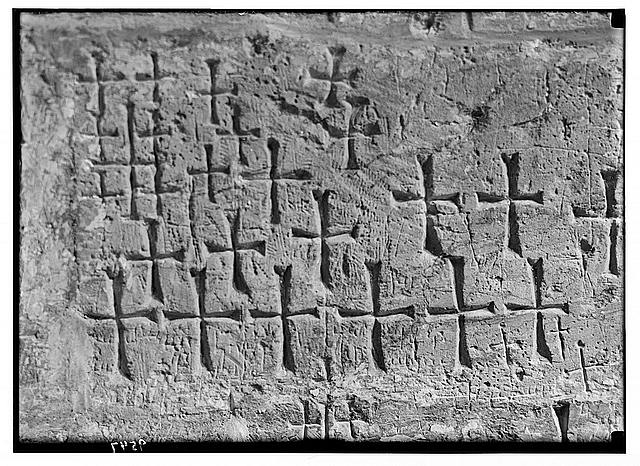
Crosses carved by pilgrims into a wall of the Holy Sepulchre, Jerusalem.  (Yair Talmor, Wikimedia Commons).
Crosses carved by pilgrims into a wall of the Holy Sepulchre, Jerusalem. (Yair Talmor, Wikimedia Commons).

“God’s Battalions: The Case for the Crusades” by Rodney Stark

“Muslims were [not] more brutal or less tolerant than were Christians or Jews, for it was a brutal and intolerant age. It is to say that efforts to portray Muslims as enlightened supporters of multiculturalism are at best ignorant.” (p 29)

In this reader-accessible but academic book, Professor Stark provides a very much needed corrective to the still accepted myths about the crusades into the Holy Land. Besides addressing the fallacies repeated as fact today (a few are given below), Stark presents a centuries-long history leading up to the crusades. Despite the reputation the Catholic Church earned over its handling of its Inquisition, at this earlier time violence was considered sinful. Even the killing of a criminal by a knight was deemed a bad thing. This may explain why Catholics didn’t respond sooner to centuries of mass murders and church destruction by Muslims in Palestine (see Moshe Gil, History of Palestine, 634-1099).

Fallacy 1: Crusaders were motivated by greed.

Fidelity 1: Piety and freeing the Holy Land, Jerusalem, were the crusaders’ motives. It must be understood that for some time Catholics believed that atonement for sins was gained through a pilgrimage to Jerusalem, for this is what their confessors told them. Obviously, this was spiritually very important to them and had nothing to do with wealth (in fact, pilgrimage was incredibly time-consuming, expensive, and dangerous). So when Pope Urban II announced that regaining Jerusalem would cleanse the liberators, it wasn’t an entirely new concept (becoming sin-free through violence was, however).

Fallacy 2: Muslims were tolerant and allowed conquered people to maintain their faith.

Fidelity 2: Depending on the time and area, conquered peoples were either (1) given the choice to convert to Islam or face death or enslavement, or (2) forced to pay heavy taxes, cease church or synagogue building, and never read scripture or pray aloud (even in their own homes).

More specifically relevant to the impetus for the crusades, and a definite show of Muslim intolerance, are the actions of the Turkish commander Atsiz. Sieging Jerusalem in 1071 or 1073, he promised the inhabitants safety if they relented. But when the city gates opened, “the Turkish troops were released to slaughter and pillage, and thousands died. Next, Atsiz’s troops murdered the populations of Ramla and Gaza, then Tyre and Jaffa” (p 97).

Fallacy 3: The crude European crusaders ruined the higher level culture of the Arab Muslims.

Fidelity 3: There are two related components of this fallacy that have been disproven but still remain in our culture. The first is that the Europeans were brutish children of the “Dark Ages.” As early as 1981 Encyclopedia Britannica refuted the long-held academic view that Europe even experienced a “Dark Ages.” On the contrary, this time period saw both the rise of agricultural

innovations that led to the biggest and strongest population ever, and many technological innovations that made the crusades possible.

Secondly, if you consider legitimate the claiming of conquered peoples’ knowledge as one’s own, then Islam “attained” high levels of it. Consider these very few examples: (1) “Arabic numerals” are Hindu; (2) Avicenna, considered the greatest of the Muslim philosopher-scientists, was Persian (this is true of many others, too); (3) Medical knowledge was from the Nestorian Christians. As conquerors, the Arabs made Arab names necessary and the Arab language mandatory for the intelligentsia.

John Lennox on the Resurrection: why Hume, Dawkins, and others got it wrong

John Lennox, Oxford professor and Fellow in Mathematics and the Philosophy of Science, concisely gives us compelling reasons why two widely used anti-resurrection arguments don’t make much sense:   Hume’s and Dawkins’ on “no possibility of miracles,” and the more widely scoffed-at “empty tomb” claims by the first Christians.

What amazes me, as it astonishes Lennox, is that anyone can rationally affirm and adhere to the 18th century philosopher Hume’s argument against miracles, which says that:  miracles go against the laws of nature, therefore they don’t exist.  We study nature and have found  laws of nature by observation, but we can’t rightly claim that something doesn’t exist or won’t happen just because we know of such laws.  What is even more odd is that Hume didn’t actually believe the Laws of Nature were necessarily always uniform:  “He famously argues that, just because the sun has been observed to rise in the morning for thousands of years, it does not mean that we can be sure that it will rise tomorrow.  This is an example of the Problem of Induction: on the basis of past experience you cannot predict the future, says Hume.”  If this is so, then “if nature is not uniform, then using the uniformity of nature as an argument against miracles is simply absurd.”

In his usual clear style, CS Lewis points out how easily Hume’s argument can be refuted (as quoted by Lennox):

If this week I put a thousand pounds in the drawer of my desk, add two thousand next week and another thousand the week thereafter, the laws of arithmetic allow me to predict that the next time I come to my drawer, I shall find four thousand pounds. But suppose when I next open the drawer, I find only one thousand pounds, what shall I conclude? That the laws of arithmetic have been broken? Certainly not! I might more reasonably conclude that some thief has broken the laws of the State and stolen three thousand pounds out of my drawer. One thing it would be ludicrous to claim is that the laws of arithmetic make it impossible to believe in the existence of such a thief or the possibility of his intervention. On the contrary, it is the normal workings of those laws that have exposed the existence and activity of the thief.

After making some thoughtful points, Lennox concludes:  “When a miracle takes place, it is the laws of nature that alert us to the fact that it is a miracle. It is important to grasp that Christians do not deny the laws of nature, as Hume implies they do. It is an essential part of the Christian position to believe in the laws of nature as descriptions of those regularities and cause-effect relationships built into the universe by its Creator and according to which it normally operates. If we did not know them, we should never recognise a miracle if we saw one.”

Lennox goes on to use biblical passages to flush out the truth that people at the time of Christ, and earlier, didn’t easily believe miracle stories either.  They knew how nature worked and what was unusual or seemingly impossible.  Therefore, their ancient witness is just as valid as if you or I saw Jesus resurrected.  Lennox also discusses the real importance of female witnesses to the resurrection.  Please see his article for the full discussion of certain anti-resurrection arguments used by skeptics, and the thoughtful responses he provides.  And, have a joyful Easter!

Enhanced by Zemanta

Prophecies fulfilled, others set in motion, at Jesus’ birth

Christmas gift box icon on old paper background and pattern
A slightly altered version of a saying floating around the internet.

Christmas is such a secular holiday anymore that a person is made to feel like they’re offending someone if they unselfishly wish someone a “merry Christmas.”  Instead, it’s all about having “happy holidays” or enjoying “the season” (my Christmas cards for this year say that . . . but what “season”?  Winter?  The season of blessing retailers with books in the black?).  It’s gotten so strange that some claim that you don’t need Christ in Christmas.  That makes sense . . . nowhere.  I’m surprised that calling it simply “the giving season” hasn’t caught on, akin to the calling of Thanksgiving “turkey day.”

I’m not complaining so much as noting the secular trend, in full swing now, to eliminate Christianity from public life.  Christmas, however, gives us the opportunity to enlighten people about God’s word, possibly more than any other holiday.  When it comes to Easter, people need to accept the New Testament witness regarding Christ’s resurrection.  With Christ’s birth, however, there are prophecies from the Old Testament (or Tanakh) that are pretty clear, and, there is no good reason to think the prophecies weren’t written centuries before Jesus was born.  These prophecies are from the books of Isaiah and Micah.

First, and no doubt very familiar, is Isaiah 7:14.  With verse 13 for context:  “Then Isaiah said, ‘Hear now, you house of David! Is it not enough to try the patience of humans? Will you try the patience of my God also?  Therefore the Lord himself will give you a sign: The virgin will conceive and give birth to a son, and will call him Immanuel.'”  This prophecy is announced as fulfilled in Matthew 1:22-23.  Here it is in context (Matthew 1:20b-23):

“an angel of the Lord appeared to him in a dream and said, ‘Joseph son of David, do not be afraid to take Mary home as your wife, because what is conceived in her is from the Holy Spirit.  She will give birth to a son, and you are to give him the name Jesus, because he will save his people from their sins.’ All this took place to fulfill what the Lord had said through the prophet: The virgin will conceive and give birth to a son, and they will call him Immanuel’ (which means ‘God with us’).”

Some critics like to point out that the word “virgin” is not specifically used in Isaiah, but, in the historical and cultural context, a young unmarried woman (a translation of the word used) meant the same thing as “virgin.”  It’s an odd criticism in any case, since, what else would God have meant?  Would an unchaste girl getting pregnant be any kind of sign from God?

Another criticism, and one without merit, is that the book of Isaiah may have been altered later.  There is no end to such criticisms of the Bible generally.  However, Isaiah is consistently viewed as ancient by scholars, even if some moderns like to imagine that it was written by two or three authors during three periods (the youngest being from about 400 BC).  More importantly, the birth prophecy is in the early part of the book, universally believed to be written in the 700s by Isaiah.  Regarding complete authenticity of the writings, a confirmation came via a Dead Sea Scroll of the entire book of Isaiah.  This scroll is from about 150-125 BC.  Having confidence in the authenticity and the ancientness of Isaiah, we can enjoy the related prophecies in Isaiah 9 (1b-2, 6-7):

“. . . in the future he will honor Galilee of the nations, by the Way of the Sea, beyond the Jordan—

The people walking in darkness
    have seen a great light;
on those living in the land of deep darkness
    a light has dawned.

For to us a child is born,
    to us a son is given,
    and the government will be on his shoulders.
And he will be called
    Wonderful[,] Counselor, Mighty God,
    Everlasting Father, Prince of Peace.
Of the greatness of his government and peace
    there will be no end.
He will reign on David’s throne
    and over his kingdom,
establishing and upholding it
    with justice and righteousness
    from that time on and forever.
The zeal of the Lord Almighty
    will accomplish this.”

There is another prophecy, from Micah 5 (2 & 4), that is quoted in Matthew and is therefore considered fulfilled.  As written in Matthew 2:6:

“‘But you, Bethlehem, in the land of Judah,
    are by no means least among the rulers of Judah;
for out of you will come a ruler
    who will shepherd my people Israel.”

The book of Micah was written about the same time as Isaiah was.  There are more prophecies regarding Jesus Christ, of course, some fulfilled and some yet to be.  You can view some of them in a linked list at Prophecies Jesus Fulfilled.

Wishing you a warm and love-filled Christmas, I also leave you with a couple of songs for you to enjoy:

It Came Upon a Midnight Clear  (simple and traditional; Bruce Crockburn)

Oh Holy Night (Josh Groban)

Sources:  (1)  NIV Archaeological Study Bible (Zondervan 2005), pp 1055, 1115, 1477.   (2) Rational Steps to Belief in Christ

Thoughts and Counter Thoughts on “30-Second Philosophies”

30-Second Philosophies

For a well-organized and concise presentation of 50 philosophical ideas, 30-Second Philosophies: The 50 most Though-provoking philosophies, each explained in half a minute is worth reading and having around for a quick review and a handy reference (for Christians too).  The title is more of a catchy, rather than an accurate, description of the book.  The “30-second explanations” can take more than that time to read, of course–if you’re thinking about what you read–and there are side notes to expand on the explanations.  In addition, for each section in the book there is both a glossary and a profile of the chosen exemplary philosopher.   There is some introductory material and a resources section in the back as well.

It is very nice indeed that the book is divided into subject sections, instead of the philosophies being presented in either a chronological or alphabetical list.  The sections are:  “Language & Logic,” “Science & Epistemology,” “Mind & Metaphysics,” “Ethics & Political Philosophy,” “Religion,” “Grand Moments,” and “Continental philosophy.”

Seeing as this blog is to view things from a Christian perspective, I will opine on the “Religion” section.  “30-Second Philosophies” may be a good book for a Christian to have as a basic learning tool and reference, but it is not friendly to Christian beliefs.  This is no surprise, since most philosophers today are materialistic* in their beliefs and thinking (Hasker 2006).  In this section Thomas Aquinas is profiled and the following philosophies are presented:  “Aquinas’ five ways,” “Anselm’s ontological argument,” “Epicurus’ riddle,” “Paley’s watchmaker,” “Pascal’s wager,” and “Hume against miracles.”

As might be assumed, ending the religion section with an (old) argument against a major theology isn’t a good sign toward a positive view of Christian philosophy and thought.  Each of the sections negatively criticizes Christian philosophers and theological ideas; for example, the author(s) makes a flat-out claim that the ontological argument is false, and elsewhere implies that God is false or silly since He didn’t make us all simply virtuous.  The “obvious solution” of making us only virtuous would have meant no problem of evil would have sprung up.  Here the author ignores the concept of actual free-willed beings, since in materialism there can be no true free will.

Regarding the Ontological Argument, please see the Sennett/Plantinga source below, which contains a chapter on the argument.  In that chapter (which is basically reproduced here), Plantinga goes through the history of the argument and provides a final and valid restatement of it (Plantinga is a professor of philosophy emeritus at The University of Notre Dame).  Secondly, regarding the problem of evil, the reader might like to view the William Lane Craig article provided in the Sources and Recommendations section.  There is no shortage of Christian writings on this subject, since, as Craig wrote,

“The problem of evil is certainly the greatest obstacle to belief in the existence of God. When I ponder both the extent and depth of suffering in the world, whether due to man’s inhumanity to man or to natural disasters, then I must confess that I find it hard to believe that God exists. No doubt many of you have felt the same way.”

I did not write of all the criticisms the authors had for Christian philosophy in “30-Second Philosophies,” but you are encouraged to check them out and seek the answers.  If you can imagine someone picking up this book and only reading the summary explanations and criticisms, then you will get an idea of what the average person or student thinks.  You can find this level of knowledge and thinking all over the internet (and no doubt in our more physical interactions), and it would behoove us to know more and have legitimate and current counter arguments and answers.

* This link will lead you to a subscriber view only article.  To see the whole article without being a subscriber, do a browser search and click on the link for “What is Materialism?” by Michael Philips.

Sources and Recommendations

Beilby, James K., editor, For Faith and Clarity: Philosophical Contributions to Christian Theology  (BakerAcademic 2006).

Craig, William Lane.  “The Problem of Evil,” at Reasonable Faith.

Evangelical Philosophical Society (and Philosophia Christi).

Evolution News & Views

Hasker, William.  “Philosophical Contributions to Theological Anthropology,” in For Faith and Clarity (Beilby 243-260).

Kreeft, Peter J.  “C.S. Lewis’s Argument from Desire,” in G.K. Chesterton and C.S. Lewis: The Riddle of Joy (William B. Eerdmans Pub. Co. 1989, 249-272).

Sennett, James F., editor, The Analytic Theist: an Alvin Plantinga reader (William B. Eerdmans Pub. Co. 1998).