Category Archives: Faith

Michal the Maligned; King David’s First Wife

English: Michal lets David escape from the win...
English: Michal lets David escape from the window. A painting by Gustave Doré, 1865. (Photo credit: Wikipedia)

I’m not a feminist, but it doesn’t take a feminist to see the mysogeny in some Judeo-Christian circles when King David is so glorified while persons like Michal, David’s first wife, are vilified.  If Michal can be so maligned, then any woman can.  David treated Michal (and his other wives) like his property in more ways than one, and many “believing” men still see David’s actions in a righteous light.

King David, Israel’s most revered king [1], who was chosen by God for that role and for his part in God’s redeeming plan, was a poet and a bit of a prophet, but he did things that God did not approve of and which are utterly un-Christlike/un-Christianlike [2] (read about Judah and others that God used and you’ll see that He didn’t forcefully make them “saints”).  As always, we should recognize and praise the good, but we need to also recognize the bad and not repeat it.  We are also called to recognize and help the oppressed.

Background

What got “me going” on this subject at this time was a biography of David.   In the introduction the author claimed that the only thing David did wrong was have Uriah the Hittite murdered because he wanted the man’s wife (Bathsheba).  Though the author didn’t provide the reference for his claim, it comes from 1 Kings 15:5:  For David had done what was right in the eyes of the Lord and had not failed to keep any of the Lord’s commands all the days of his life—except in the case of Uriah the Hittite.  Since there are other things written in the Old Testament that David did that displeased God, this statement can be taken as a generalized commendation, just as other kings received generalized condemnations; and “in the case of Uriah the Hittite” David committed many deep sins, not just one.  (Note, however, that this particular verse seems to have been added to scripture later since it is not in the oldest versions of the Greek Old Testament).

Continue reading Michal the Maligned; King David’s First Wife

Who Will Enter God’s Kingdom?

bad trees don't produce good fruit
Bad fruit — it can look good on the outside while it’s rotting on the inside. With God’s help in discernment, we should be able to recognize bad fruit. “A good tree cannot bear bad fruit, and a bad tree cannot bear good fruit” (Jesus, in Matthew 7:18).

I was reading Matthew today and came across the below group of verses.  It made me think about my own salvation and if I’m on the right track.  I have these times where I wonder if God expects more of me, if I’m letting Him down, and if He’s really paying attention to me anymore.  I think all believers go through times with thoughts like that.  I do believe I’m saved, as Paul wrote: “The Spirit himself testifies with our spirit that we are God’s children” (Romans 8:16).   But I also think Paul wrote his passages about persevering  for a reason, that people can indeed fall away from the faith (become apostate).  One example from Hebrews (12:1-3):

Therefore, since we are surrounded by such a great cloud of witnesses, let us throw off everything that hinders and the sin that so easily entangles. And let us run with perseverance the race marked out for us, fixing our eyes on Jesus, the pioneer and perfecter of faith. For the joy set before him he endured the cross, scorning its shame, and sat down at the right hand of the throne of God.  Consider him who endured such opposition from sinners, so that you will not grow weary and lose heart.

The following passages from the end of Jesus’ Sermon on the Mount, consisting of three paragraphs and concepts, is a good reminder to consider:  where we’re at in our faith; if our faith is matched by our actions; and, if our righteous-looking actions are hiding unrighteous motives.  It is that last bit that is the scariest.  Those persons who do NOT enter God’s Kingdom, even though they seemed like they were powerfully working for God, seem to be surprised.  Perhaps it is yet just another deception they are trying to pull off, or, they are so deluded they can’t even tell the difference.

Continue reading Who Will Enter God’s Kingdom?

Site Update: “About Me” Page and Others edited, moved

An earlier me during an archaeological survey.

I’ve changed pages and updated With Christian Eyes in the past, but there’ve been more changes lately and I also wish to better connect with my followers.  I edited and updated my biographical information in  the About the Author page (formerly “About Me”), and moved a bit of what was in the “Let Me Write for You” page to there and deleted the rest.   I added two table of contents pages for ease of finding articles; there are two instead of one in order to keep the number of links on each page down.

In case you didn’t know, there is a second blog run by my husband here,  Lingering Trees, although I’m going to see about how to transfer it to him to make it separate (for his ease and distinct online presence).  He is trying to promote his and my son’s YouTube account so as to eventually make some money off of it.  This is not to get rich, by any means, but only to make extra money since he is ill so much.  Eventually, unless God chooses to heal him, he’s not going to be able to work a regular job.  It’s too bad Christians don’t support other Christians in this way as much as the worldly folk do–if you don’t know about people making a living off of YouTube, just know that some do extremely well.  We’re not expecting to live off of YouTube income (!), but are working at it with the hope of earning money to go toward living expenses and gifts.

I’ve appreciated the likes and follows so much!  Thanks for the time you’ve spent here.  As we prepare to end homeschooling and move across the country, we’ll still be here!  After that’s all done, we’ll see how God guides us, but I may be able to write more.  I should have more time and ability to focus–maybe I’ll even work on a book or two.  The Lord hold you and smile at you.

Contemplating.  Author photo.
Contemplating. Author photo.


Thanks, WordPress, for reminding me of the Noahic Covenant

Imposed and inappropriate symbol at WordPress


So I’m working at my WordPress site today (June 26), and when I view the stats page this colorful banner confronts me.  Huh.  Looks kind of tacky.  I don’t go around imposing my Christian symbolism on sites that are public and have users from all different backgrounds, beliefs, creeds, and whatnot, but hey, I guess WordPress can do what it wants.

Anyway, thanks for putting up a reminder of God’s covenant with humankind, given through Noah, after God destroyed the Earth and most that was in it by water.  God had judged the Earth’s inhabitants to be too far along in their selfish and evil desires.  But instead of destroying humankind altogether, He chose Noah and his family to start the human race all over again.  It’s a good thing they could all have kids.  While we’re all descendants of Adam and Eve, we’re also all descendants of Noah and his wife, too.

Continue reading Thanks, WordPress, for reminding me of the Noahic Covenant

The Disadvantaged and the Pharisees of Our Day

This piece was an experiment.  I wrote it for a Christian periodical that normally prints articles that are non-fiction, for individual and group contemplation.  The subject is pharisees of our day (a sub-subject related to humility), and I thought a more creative piece like this could cover more, or lead to more understanding, anyway, with the limited amount of words allowed; however, it was not accepted and so I decided to post it here.  Perhaps I’ll add references/recommended reading later, but suffice it to say now that everything in the piece is based on personal experience, information from nonprofits, published articles, and governmental reports.  (The low amount provided for Disability is based on the deduction they normally make for support from other household members or other sources; the starting base amount is around $700.)  ______________________________________

Angel contemplatingBecca fed dollar bills into the laundry’s money changer. While expertly flattening out creases and bent corners, she noticed the “In God We Trust” slogan. “Who is it referring to?” she mumbled. She believed in God—in Jesus—but the savior she knew . . . well, it didn’t seem like her country knew Him. “Clank, clank, clank!” She scooped up the quarters and headed to the washers.

“Trusting God. That means seeking to know Him and please Him, right?” she asked herself. As she loaded the clothes, she searched her mind for examples of the U.S. demonstrating that kind of faith and commitment. Nothing came to mind. “Well, helping the poor and elderly through Medicaid and Medicare was something,” Becca thought.

Continue reading The Disadvantaged and the Pharisees of Our Day

The Christmas Spirit: “What Men Live By” by Leo Tolstoy

The 1885 short story, What Men Live By by Leo Tolstoy (Russian, 1828-1910), in times past was much more well-known and even acted out as Christmas-time plays.  I have a wonderfully illustrated little hard cover copy from 1954, published by the Peter Pauper Press (PPP), but the entire text can be read online at The Literature Network (What Men Live By).  Below, I provide a synopsis of the story with some Christian and biblical commentary, although Tolstoy himself prefaced it himself with passages from 1 John (here are two of the six):

“We know that we have passed out of death into life, because we love
the brethren. He that loveth not abideth in death.” 3:14

“Whoso hath the world’s goods, and beholdeth his brother in need,
and shutteth up his compassion from him, how doth the love of God
abide in him? My little children, let us not love in word, neither
with the tongue; but in deed and truth.” 3:17-18

Continue reading The Christmas Spirit: “What Men Live By” by Leo Tolstoy

“Gay Love” by K. Smart: Excerpts and Pulled Verses

There is no shortage of information available on the internet regarding what the Bible says about sin and salvation in general, and homosexual acts as sin in particular.  I came across an article by Kevin Smart (I think it’s actually by his wife, however!) at Light & Life Communications and thought it was good, so I want to share it.  Also, the article contains references to biblical verses regarding homosexuality, so I’ve written them out here for your reference.

For anyone who comes to this article and wants to rave about how I’m picking on a certain sin and somehow that negates the points made–please, don’t be absurd.  Sin is sin, no matter WHICH sin it is (if one can in all seriousness claim that the Bible doesn’t condemn homosexual practices, then in all seriousness, it doesn’t condemn anything).  The reason why Smart’s article exists, and others like it, is because so many people are trying to make homosexual acts NOT a sin when they clearly are in God’s view.  The worldly embrace of homosexuality has entered the church and thus it’s a big issue indeed.  Who would accept a church that embraces adultery the same way?  That would be funny, wouldn’t it, to see a bunch of leaders in churches who are proud practitioners of adultery?  Adulterous acts and homosexual acts are both sexual sin–they are outside of God’s provision of marriage between one man and one woman.

Continue reading “Gay Love” by K. Smart: Excerpts and Pulled Verses

New Testament Views of Women: Overview

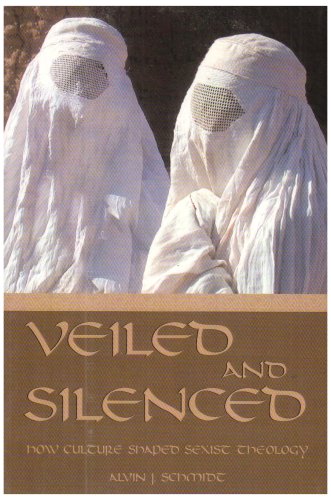
Veiled and Silenced, amazonChrist is primarily known as the savior of the world – his sacrifice being for all who want to dwell with God (Jesus’ blood removes our sin so that we are able to be in the presence of the sinless God). But Jesus did something quite significant and often overlooked (as evidenced throughout the writings of the New Testament): He raised the status of women to the same level as men. Many would argue that men and women have a few different responsibilities in regard to the family and church, but in God’s sight the sexes have equal standing: “There is neither Jew nor Greek, slave nor free, male nor female, for you are all one in Christ Jesus” (Galatians 3:28).

There is a great deal that can be written on this topic–including the contradictory teachings of, and actions by, some church leaders and Christian men. But first, let’s look at some social mores that exhibit the status of women in Israel and the surrounding cultures at the time Jesus walked the earth, and some that are still with us today in various parts of the world.

Female babies are of low worth: In past and present non-Christian cultures, female worthlessness is widespread. Female babies were commonly the victims of infanticide. While that continues today, in places where ultrasound is available many more female fetuses are aborted than male fetuses (especially in China and India). Christians do not value females less than males and do not abort or kill female babies.

  • Polygyny and divorce: Polygyny was permitted though not very common in ancient Israel; it was relatively common elsewhere. In Greece, a man had one wife but he also had a legal mistress (so, essentially, a 2nd wife). Polygyny was not approved by God, though there are a number of instances of it recorded in the Bible. The NT clearly reiterates God’s will that one man be married to one woman; polygyny is not allowed in Christianity. A man could divorce his wife easily in ancient Israel, but the NT does not allow for this.
  • Complete control of wife and children by father or husband: In Rome, fathers had total control over family members, and a husband had absolute power over his wife; he could sell a daughter to her future husband. All these powers became illegal some years after Christianity became legal in Rome (374/313). Women also were granted the right to own property and have guardianship of their own children. In Greece, wives had segregated quarters and could not visit male guests of her husband’s in her own home. As in ancient Israel, women in Greece were not to speak in public. Women simply had a very low status in Greece and ancient Israel, and in Israel at the time of Christ, women’s legal witness was virtually non-existent. This obviously changed with Christ’s work.
  • Clitoridectomy: The removal of the female clitoris, and often other genital parts, is a common practice in many African countries (and is found in countries where Africans have immigrated to). This is condemned and outlawed in Christian-based countries.
  • Binding feet, China: In order to be more attractive to men, girls used to have their feet bound so that they remained “small.” The fact is, the foot only became very disfigured and it often became severely infected. Because of Christian missionary pressure in the 19th century, the Chinese government outlawed the practice of female foot binding in 1912.

There are other practices around the world (past and present), like burning or burying widows alive (in India), arranging marriages of female children (this still occurs in China, India, and parts of Africa), maintaining double standards for adultery, and the forced wearing of veils, that make obvious the widespread low status of women but which are condemned by Christianity. As Alvin Schmidt, author of How Christianity Changed the World, said in an interview, “Geroge Sarton, a historian of science, once said, ‘The birth of Christianity changed forever the face of the Western world.’ As far as I know, Sarton had no love for Christianity. He merely said what history revealed to him. Another historian, for instance, has said, ‘The birth of Jesus Christ was the turning point in the history of women.’”

Now let’s look more specifically at how women were viewed and treated by Israel when Christ lived, and what Christ did to elevate women. Today when we read the New Testament (NT) text alone, we simply cannot understand how radical so much of what Jesus did was; our culture reflects in so many ways the changes that Jesus began. The radical things Jesus did seem normal to us now, so we must look into the context of the times to fathom the changes that he wrought.

At the time of Christ¹ women existed for the pleasure of men. If a woman did not bear a male child or didn’t please her husband in some way, he could divorce her with ease. A woman could not divorce her husband. Women were not to speak in public with men (men should not even give a greeting to a woman in public), they were not to testify in court, they were not supposed to read the Torah (Law), nor were they to be taught. As a rabbinic teaching advised (Sotah 3.4), “Let the words of the Law be burned rather than committed to a woman . . . . If a man teaches his daughter the Law, it is as though he taught her lechery.” Also, women were set apart from men in synagogue worship, either by a partition or by being in separate rooms.

Each one of the above negative aspects of womanhood in ancient Israel was reformed by Jesus, as it was never God’s will that such treatment of women exist. First, regarding a man’s ease in divorcing his wife, Jesus told his disciples that it was not to be—that instead a man could divorce his wife for unfaithfulness only (Matthew 19:4-9). Second, what about women speaking to men in public? To the great shock of his disciples, Jesus not only spoke to women in public, but also to a Samaritan woman publicly (she was very shocked as well) (John 4:5-29)–both no-nos in ancient Israel. In speaking with the Samaritan woman at Jacob’s well, Jesus also taught her. Jesus both spoke and taught to Martha in public (John 11:25-26). Jesus taught Mary, Martha’s sister, and commended Mary for wanting to learn from him (Luke 10:38-42). Another woman followed Jesus in order to be healed. She was not only healed by him, but he talked with her and blessed her publicly (Mark 5:25-34).

These are not the only interactions that Jesus had with women. There are very many recorded in the NT. Of very real significance, however, is Jesus’ appearing to women first after his resurrection (Matthew 28:1-10; Luke 24:1-12; John 20:1-18). This put women in a whole new realm of being chief witnesses. Remember, women could not testify or be a witness in court. The fact that Jesus appeared to women first, and told them to go and tell the male disciples of his resurrection, had to have really driven home the message of women’s spiritual equality to the disciples—once they accepted the truth of Jesus’ resurrection that the women were telling them. After Jesus’ ascension into heaven, the believers, both male and female, met and prayed together (Acts 1:14). As the fellowship of believers grew they met in houses for “church,” and many of these houses were owned by women. The possibility of the women as leaders in these early churches will be included in another of this series.

_________

Note 1. How Israelite men viewed and treated women changed and varied through time, and was no doubt influenced by the cultures that surrounded them. This essay is interested only with the status of women at the time of Christ.

The second and third articles in this series can be found here:

New Testament Views of Women: 1 Corinthians 14:34-36

New Testament Views of Women: Paul’s Co-workers

_________

Works Cited and Recommended Reading

Anonymous. “Women in Ancient Israel.” Bible History Online. n.d. http://www.bible-history.com/court-of-women/women.html (accessed June 2011).

Cabal, Ted, General Editor.  The Apologetics Study Bible.  Nashville: Holman Bible Publishers, 2007.

Cowles, C.S. A Woman’s Place? Leadership in the Church. Kansas City : Beacon Hill Press, 1993.

Dunn, James, General Editor. Eerdmans Commentary on the Bible. Grand Rapids: William B. Eerdmans Publishing Company, 2003.

Faulkes, Irene Bonney. “Question of Veils in India.” Dr. Irene Faulkes Articles. 2011. http://revirene.org/Question%20Of%20Veils.htm (accessed June 2011).

Garrett, Duane A, General Editor. NIV Archaeological Study Bible. Grand Rapids: Zondervan, 2005.

Schmidt, Alvin John. How Christianity Changed the World. Grand Rapids: Zondervan, 2001.

—. Veiled and Silenced: How Culture Shaped Sexist Theology. Macon: Mercer University Press, 1989.

Zondervan. “Interview with Alvin J. Schmidt.” Zondervan. n.d. http://www.zondervan.com/media/interviews/product/pdf/0310264499_authintrvw.pdf (accessed June 2011).

_________
© Vicki Priest 2014, 2012  (This is an edited version of a series of articles first posted at Examiner.com, 2011, and transferred from withchristianeyes.com)

The passionate genius, Simone Weil

Français : Bourges - 7 place Gordaine - Plaque...
Français : Bourges – 7 place Gordaine – Plaque commémorative Simone Weil (1909-1943) professeur à Bourges en 1935-1936 (Photo credit: Wikipedia)

Who is, or was, Simone Weil? If increasing attention in the way of books and a newer documentary mean anything, particularly considering her death was some 70+ years ago, then she’s obviously “somebody.” At least two meanings of the word “prodigy” apply to Simone: (1) she was known to be a genius from a very young age and is a recognized philosopher, and (2) by her short, painful, yet beautiful and selfless life. Being a Christian mystic and having been “adopted” by Catholics (Simone never became a member of any church), had perhaps contributed to a certain level of obscurity until more recent years.

All books that bear Simone’s name were published after her death (1943), with one of the most well-know being Waiting for God (WfG; 1951), a collection of spiritual letters and essays. Much has been made of her spiritual life – and rightly so – but for a biography that focuses on her philosophy, see Palle Yourgrau’s Simone Weil (Reaktion Books 2011). A 2010 documentary made the film festival rounds and is now on DVD: An Encounter with Simone Weil. The odd film focuses on life, death, suffering generally, and on these words of Simone’s specifically: “Attention is the rarest form of generosity.” (I wrote a fairly in-depth review of the documentary here: Secular Girl Activist meets Christian Girl Activist . . .)

Simone was born in France in 1909 to agnostic Jewish parents. At the age of six she could quote classic poetry, and despite interruptions in her education (and the onset of migraines), she received her baccalaureate at the age of 15. Simone had a deep desire to know “truth,” so she attended graduate school and became a teacher of philosophy.

Do not think that she lived comfortably from the “ivory tower.” As early as age five she refused to eat sugar because the French soldiers could not have it, and she maintained this practice of food-denial all of her life. She chose not to turn the heat on in her rented rooms since the unemployed could not afford it themselves, and gave much of her salary to the poor and to workers’ causes. She was very politically active, striving to secure better conditions for factory workers, and was involved with the defense of her country during World War II.

Simone seemed to apply her whole self towards realizing her convictions. Even though frail, she was always working, thinking, writing—incessantly doing. She even went so far as to travel to war-torn Spain, in 1936, to fight against the Fascists. She was a pacifist but felt so strongly about the cause that she volunteered for the most dangerous assignments. Because of a severe cooking-related accident, however, Simone did not stay there for very long. And her witness of an execution of a 15-year-old boy by the people she supported, among other things, caused her to not return.

Perhaps the personal experience of war caused a crack in Simone’s idealism that became an entryway for God. In 1937, Simone wrote of an encounter while at Assisi: “something stronger than I was compelled me for the first time in my life to go down on my knees” (WfG pp 67-68). Then in 1938, while having severe migraines during Holy Week services, Simone had the experience of separating herself from the pain to enjoy the beauty of the service and to receive understanding of the passion of Christ. That same year, while reciting a Christian poem about accepting Christ—which she claims she hadn’t understood as such—Christ indeed “came down and took possession of me” (WfG p 69).

Though she accepted Christ, Simone’s writings are controversial. Some do not believe Simone was really a Christian; she had consideration and respect for other religions, and some fairly unorthodox theological views. In her “religious” writings, she often wrote of wrestling with God over truth. Though she wrote about spiritual truths found in other religions, or even myths (CS Lewis and JRR Tolkien held similar views), in the final analysis only Christ is truth: “Christ likes us to prefer truth to him because, before being Christ, he is truth. If one turns aside from him to go toward the truth, one will not go far before falling into his arms” (WfG p 69).  A useful work in this regard is Simone Weil’s Apologetic Use of Literature (Marie Cabaud Meaney 2008).

Her friends in faith were Catholic, but she refused to enter the church because of its history and its exclusionary practices. Despite being an “outside Christian,” she wrote conventional ideas like: “It is not my business to think about myself. My business is to think about God. It is for God to think about me” (WfG pp 50-51), and “. . . I think that God himself has taken it [her soul] in hand from the start and still looks after it” (WfG p 73). Going deeper into her thought we find: “Only obedience is invulnerable for all time” (WfG p 63), and “. . . I always believed that the instant of death is the center and object of life” (WfG p 63). Significantly, and counter to some who attempt to claim that Simone was not a Christian, she told a friend a few months before she died: “I believe in God, in the Trinity, in the Incarnation, in the Redemption, in the teachings of the Gospel” (from Simone Weil, by Stephen Plant, p 33).

[If you’re interested in more of Simone’s words, I wrote a “found” poem with her words–it is the 2nd poem on that linked page.]

____________

© Vicki Priest 2014, 2012 (this was published at Examiner.com 2011, then at withchristianeyes.com)

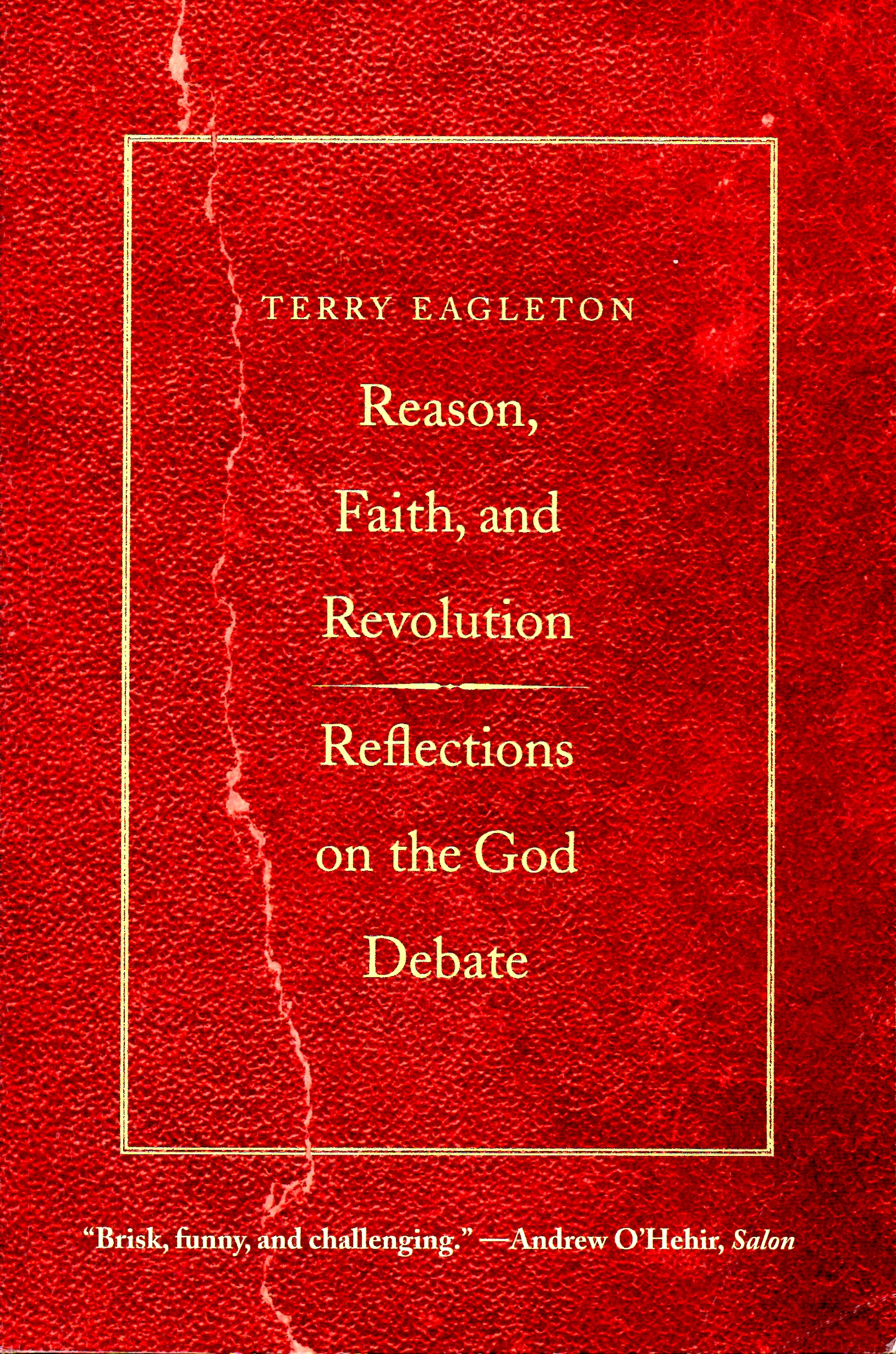
Review: “Reason, Faith, and Revolution: Reflections on the God Debate”

Reason, Faith, and Revolution by Eagleton, cover

by Terry Eagleton (Yale University Press 2009)


“This straw-targeting of Christianity is now drearily commonplace among academics and intellectuals—that is to say, among those who would not allow a first-year student to get away with the vulgar caricatures in which they themselves indulge with such insouciance”
(p 52).

Terry Eagleton’s invective against anti-theist’s claims about religion, and Christianity in particular, is one of wit, humor, and sauce.  One hopes that those that are curious about the popular anti-God rhetoric, but who are basically outsiders—neither informed and faithful Christians or card-carrying anti-theists—will be the prime readers and beneficiaries of this “lecture series” book.  Not that there isn’t a good deal that those in the other groups can get out of it.  Indeed, as the Booklist review asserted, “serious Christians may be [Eagleton’s] most appreciative readers.”  But on the opposite side Eagleton himself opined that there was not a “hope in hell” that Ditchkins, that is Richard Dawkins and Christopher Hitchens, would read his work or be moved by it.

Eagleton, who is a professor both of English literature and culture theory, and who also writes philosophically (in fact, this book has been rated as important in philosophy), presents how the various arguments against religion that Dawkins and Hitchens vehemently espouse are very seriously misinformed and flawed.  “. . . the relations between these domains [poetry and other language types] and historical fact in Scripture are exceedingly complex, and that on this score as on many another, Hitchens is hair-raisingly ignorant of generations of modern biblical scholarship” (p 54).  He shows how Dawkins’ views, which reflect Victorian era progressivism, are simply unreasonable and unrealistic.

“We have it, then, from the mouth of Mr. Public Science himself that aside from a few local hiccups like ecological disaster, ethnic wars, and potential nuclear catastrophe, History is perpetually on the up.  Not even beaming, tambourine-banging Evangelicals are quite so pathologically bullish.  What is this but an example of blind faith?  What rational soul would sign up to such a secular myth?” (pp 87-88).

Regarding Ditchkins and science, Eagleton discusses how “Dawkins falsely considers that Christianity offers a rival view of the universe to science” (p 6), and that “His God-hating is by no means the view of a dispassionate scientist commendably cleansed of prejudice.  There is no such animal in any case” (pp 65-66).  “[Scientists] are peddlers of a noxious ideology known as objectivity, a notion which simply tarts up their ideological prejudices in acceptably disinterested guise” (p 132), and Dawkins, for example, “castigates the Inquisition . . . but not Hiroshima” (p 133).  While anyone is welcome to criticize superstition, the current culture has sunk into scientism, which refuses to take anything seriously that “cannot be poked and prodded in the laboratory” (p 72).  “Ditchkins does not exactly fall over himself to point out how many major scientific hypotheses confidently cobbled together by our ancestors have crumbled to dust, and how probable it is that the same fate will befall many of the most cherished scientific doctrines of the present” (p 125).

In chapter 1, Eagleton presents basic Christian beliefs not only to show that Ditchkins does not have an understanding of them, but to also promote them as quite respectable.  Of course, throughout his book Eagleton gives little quarter to “fundamentalists;” he praises Jesus and his radicalness, and those who actually follow His teachings to help the poor and seek justice.  He also contrasts this Christian mandate to love socially to the liberal humanist (of which Ditchkins is an example) legacy of love being kept private.  Yet another significant difference between Christianity (and for persons like Eagleton who hold a more socialist view) and the liberal humanism of Ditchkins is the matter of sin and redemption.  To Ditchkins, there is nothing to redeem.  Humanity is steadily progressing, even if catastrophes like World War II have happened.

“In my view,” Eagleton writes,  “[scriptural and orthodox Christianity] is a lot more realistic about humanity than the likes of Dawkins.  It takes the full measure of human depravity and perversity, in contrast to . . . the extraordinarily Pollyannaish view of human progress of [Dawkins’] The God Delusion” (p. 47).  Christianity believes that there are “flaws and contradictions built into the structure of the human species itself,” and so violence in history is not just due to historical influences; and Christianity is hopeful.  It is “outrageously more hopeful than liberal rationalism, with its apparently unhinged belief that not only is the salvation of the human species possible but that, contrary to all we read in the newspapers, it has in principle already taken place.  Not even the most rose-tinted Trotskyist believes that” (pp 48-49).

There are all kinds of fun passages like those already quoted in Eagleton’s book.  It can be very useful to Christians who want to be able to cite a seemingly non-Christian critique to the anti-theist crowd.  Conservatives be warned, however, that Eagleton presents and is supportive of Liberation Theology (he is a Marxist who aligns himself with “tragic humanism”), and is very critical of modern capitalism and western foreign policy.  He has good, though general, arguments for the atheism of capitalism and the disconnect between the West’s religious rhetoric and its actual practices (which, interestingly, he often places on liberal humanism).   Indeed, Christianity’s lack of following its leader has brought much criticism upon itself, “Christianity long ago shifted from the side of the poor and dispossessed to that of the rich and aggressive” (p 55).

Eagleton points out the good that historic Christianity has done, which Ditchkins refuses to acknowledge, while pointing out hypocrisies of some liberals.  Some examples:

“The values of the Enlightenment, many of them Judeo-Christian in origin, should be defended against the pretentious follies of post-modernism, and protected, by all legitimate force if necessary, from those high-minded zealots who seek to blow the heads off small children in the name of Allah.  Some on the political left, scandalously, have muted their criticism of such atrocities in their eagerness to point the finger of blame at their own rulers, and should be brought to book for this hypocrisy” (p 68).  

“Such is Richard Dawkins’s unruffled impartiality that in a book of almost four hundred pages, he can scarcely bring himself to concede that a single human benefit has ever flowed from religious faith, a view which is as a priori improbable as it is empirically false . . . . and this by a self-appointed crusader against bigotry” (p 97). 

Speaking of empiricism and truth, I found chapter 3 more interesting the second time I read it.   It’s really a pleasant read and borders on the mystical in places.  Eagleton writes lucidly on how we understand truth and what is reasonable and rational.  A set of examples about what is reasonable and rational, relative to what is true, is (1) that of humans previously thinking that the sun circled the earth – since it certainly looked that way it was rational to think – and (2) what we know of certain nuclear particles in our present time.  These particles are said to go through two different spaces at one time.  This is not rational or reasonable, yet we think that it is true.  He continues with a discussion that promotes the concept of “love” being a precondition of understanding, concluding that “The rationalist tends to mistake the tenacity of faith (other people’s faith, anyway) for irrational stubbornness rather than for the sign of a certain interior depth, one which encompasses reason but also transcends it” (p 139).

“Yet the Apocalypse, if it ever happens, is far more likely to be the upshot of technology than the work of the Almighty. . . .  This, surely, should be a source of pride to cheerleaders for the human species like Ditchkins.  Who needs an angry God to burn up the planet when as mature, self-sufficient human beings we are perfectly capable of doing the job ourselves?” (p 134).

____________
© Vicki Priest 2012 (previously posted by author at Examiner.com, 2011, and at withchristianeyes.com)