Category Archives: Faith

Is it Rational to be a Christian? (1 of 2)

Good Shepherd fresco from the Catacombs of San...
Good Shepherd fresco from the Catacombs of San Callisto under the care of the Pontifical Commission for Sacred Archeology (Photo credit: Wikipedia)

Below is half of a relatively long (but actually concise) treatment of evidences or evidential steps for the view that the Christian faith is rational, and even desirable, to hold.  Thanks for reading, and may the God of all creation bless you.

______________

For the person who wants to know that there is reason to believe a holy book–that there is evidence to back it up–different areas of apologetics have those answers.  In fact, there is more evidence for the truthfulness of the Bible today than ever before, excepting when the events actually occurred.  This essay assumes that the person searching for a legitimate holy book already believes that there is a deity of some sort; it does not cover arguments for the existence of God.  What this essay does cover, in concise form, are the issues of reliability of the Old and New Testaments, fulfilled prophecies, miracles, and Christ’s resurrection.

Old Testament Reliability

How was the Old Testament written and copied? What we Christians refer to as the Old Testament is the same as the Jewish Septuagint, which is the Greek translation of the Hebrew scriptures, called the Tanakh. The content of the Tanakh and the Septuagint is the same, but the two are formatted differently. The Old Testament follows the same formatting as the Septuagint. The Septuagint was translated from about 250 BC to 150 or 100 BC and was used by the scattered Jews of the diaspora.

The Tanakh itself was written from about 1400-400 BC. Moses and other prophets were believed to possess the word of God because of the signs (miracles) they did, coupled with their openness (“transparency”). Moses was obviously literate, and because of his high upbringing, may have been literate in three languages. He no doubt, along with the people in general, knew the stories of other cultures and had copies of various source documents. Moses’ telling and retelling of events was considered God inspired.

At the time of Christ, the books of the Tanakh were established and accepted as canon. Those who copied the Tanakh beginning AD 70 (after the destruction of the temple) were called Talmudists. They had very specific rules for transmitting the Tanakh. Because damaged copies of the Tanakh were purposefully destroyed, very old copies do not exist. The Massoretes (or Masoretes) were the copyists for the Tanakh from AD 500 – 900. They, too, had very specific rules for copying, and any imperfect copies were destroyed. They are noted for adding marks to the text that represent vowels, as Hebrew did not have vowels and concern was growing over the continued pronunciation of the language. Whoever the copyists were through time, they all took God’s command in Deuteronomy 12:32 very seriously: “See that you do all I command you; do not add to it or take away from it.”

There have been archaeological finds in recent centuries to confirm the historicity of the Old Testament, and the Dead Sea scrolls additionally confirm accurate copy transmission.   With the 200+ scrolls that date from approximately 250 BC to AD 125, we have the oldest copies of scripture, and these tell us that the accuracy of transmission is nearly 100%. A Qumran copy of Isaiah 53 has only three truly variant letters from the more recent Massoretic text, and these three letters do not change the text meaning in any real way.

There are many archaeological finds that corroborate the OT, with these representing only a sample:

  • The Moabite Stone. Mentions “Yahweh” and events in 2 Kings 3.
  • The Taylor Prism. From Nineveh, it describes the siege of Jerusalem by Sennacherib an corresponds to 2 Kings 18-19, 2 Chronicles 37, and Isaiah 36-37.
  • The Cyrus Cylinder. After Cyrus began ruling Babylon (539 BC), he ordered that Babylonian captives could return home. This is told of in Ezra 1:1-3 and 6:3 (see also 2 Chronicles 36:23 and Isaiah 44:28).
  • The Tel Dan Stele. This is an Aramaic inscription found in Israel. It is about Hazael’s victory over Ramoth Gilead, as in 2 Kings 8:28-29, and conveys that David’s dynasty ruled in Jerusalem.
  • The Gilgamesh Epic. Found in the great library of Nineveh, it in part describes a flood not unlike that in Genesis 7-8.

New Testament Reliability

There has been a plethora of interest in “lost gospels,” which leads some to doubt the manner in which the New Testament (NT) was put together.  Then there are those who also question the accurate transmission of the words in the NT, saying that parts were added or taken away at later times.  All these issues are really non-issues, promulgated by detractors of the faith and sometimes believed by neutral parties who simply don’t take the time to look into these matters further.  Concerning when the books of the NT were written and how they became canon, providing a chronological order seems like it would be clearest, and that is provided below.  As for the accuracy of textual transmission, however, here is a good summary:

“A simple comparison of the text of the Bible with the text of other religious, historical, and philosophical documents from the ancient past proves the vast superiority of the biblical record.  Less than one tenth of one percent of the biblical text is in question, whereas no such accuracy of transmission exists for the Qur’an, the Mahabharata, or the Iliad.  Some ancient records such as Caesar’s Gallic Wars of Tactitus’ Annals, exist in less than ten copies, and these copies date from 1,000 years after their originals.  By contrast, over 5,000 copies of the New Testament exist, the vast majority of them dating less than 200 years after the original text and some fragments less than 50 years after the original text.  No book from ancient history has been transmitted over the centuries with greater clarity and accuracy than the Bible” (Geisler and Hindson p 100).

So when was the New Testament written?  The books that were considered canon and that make up the New Testament were written not all that long after Christ’s death and resurrection, by those who were Christ’s disciples/apostles or associates of the apostles.   In other words, by close eye witnesses of Jesus, or persons who learned directly from those eye witnesses.  Jesus lived from about 4 BC to AD 33.  The book considered earliest in the NT is James, written around AD 45-48, and the most recent book is Revelation, written by AD 100.  In light of the prior quote regarding biblical transmission, it is known that the copies that now exist reflect the originals very reliably.  That is, what is used for our bible translations today can very confidently be considered “original.”

But how do we know that the books of the NT are the ones that the early church read and thought reliable (had divine inspiration), and that important books weren’t left out?  The books of the NT had been circulated and read amongst the widespread churches (in Europe and the greater Middle East of today), and certainly not in the region of Rome only!  Books considered scripture had apostolic authority, which was important very early on because of the rapid development of false teachings.  So, we know that the books were all written by AD 100, and that they were widely circulated (and copied); there are codices of the gospels and of the letters of Paul from the early 2nd century.

Partly as a result of some influential persons (such as Marcion) trying to redefine and delete parts of scripture, “lists of canon” began to be written down.   The first generally accepted one dates to the late 2nd century and is known as the Muratorian Canon; it had excluded Hebrews, James, 1&2 Peter, and 3 John.  The early church father Tertullian (c. 150 – c. 229) had quoted 23 of the 27 books that became the NT.  Those excluded or disputed on some lists were done so for various reasons, but not because some churches thought they were inauthentic; often it was because a heretical group happened to like the book, so then some questioned it.  The Eastern and Western churches differed early on and this is reflected in the books supported or unsupported at different times (examples are Hebrews and Revelation).  Later, most believers accepted James, 2 Peter, 2 and 3 John, and Jude, yet some did not want to accept these.  However, the Eastern church accepted an official list in 367 which includes all the books of the present NT.  In 393 and 397, councils of the western church also accepted the NT canon as it is today.

What of some books that weren’t included in canon?  From the church father Eusebius, who had investigated possible canonical books, we know of some old “spurious” books.  The Didache had instruction in it and was used by the early church, but it faded from use and its authorship was in severe doubt.  The Acts of Paul had been written by an overzealous admirer, not Paul.  The Epistle of Barnabas was read and admired, but it was not written by Paul’s partner Barnabas.  The Shepherd of Hermas was widely read and may be all true, but it was written in the early 2nd century by someone other than an apostle or an apostle’s associate.  The Apocalypse of Peter was written in the first half of the 2nd century, so Peter the Apostle was not the author.  Other books that some critics like to bring up, like the Gospel of Thomas, were written far later and were never considered apostolic whatsoever; they are simply made up, forgeries, etc.

Now, are there historical or archaeological evidences that corroborate the NT?  While not everything can be corroborated, there are outside sources that confirm aspects of NT writings.  These help to show that the texts are indeed historical and not made up later.  Written sources for Jesus and Christians are (1) the Roman historian Tacitus (55-117) in his Annals (15.44); (2) Pliny the Younger, a Roman Governor, in a letter to the Emperor in about 112; (3) Josephus, a 1st century Jewish historian (some of his writing or copies of it are questioned, but others are not; there is definite reference to Jesus in Josephus’ writings); (4) Jewish Rabbinical writings called the Babylonian Talmud; and (5), the 2nd century Greek satirist Lucian.

Archaeological finds also corroborate the NT, and they continue to grow in number.  Here is a small sample:

  • The ossuary of Caiaphas (Luke 3:2 and others), discovered in 1990.
  • The Pilate Stone, discovered in 1961, has Pontius Pilate’s name on it and where he governed.
  • The Gallio (or Delphi) inscription (dated to about 52) speaks of Gallio, the same being mentioned in Acts 18:12; discovered in 1905.
  • Sergius Paulus inscriptions (there is more than one inscription bearing that name) confirm the proconsul of Cypress, as is mentioned in Acts 13:7.
  • The Pool of Siloam, excavated in 2004. As recorded in John 9:1-11, Jesus did a miracle there.

Fulfilled Prophecies

When considering the Old Testament prophecies fulfilled by Christ, it is exciting to simply read over an annotated list of them. There are different lists, however, with the highest number of fulfilled prophecies going up to 400. The listed number of “major” fulfilled prophecies varies as well, ranging from about 61 to 121.   In MacDonald’s list of chronologically ordered fulfilled prophecies, he presents 44 (he does not say that these are the only ones he considers “major,” however) (MacDonald 1995). Here is one list just for your quick online reference: Prophecies that Jesus Christ Fulfilled.

One of my favorite lists is by D. James Kennedy – not because of the list itself, but because of the story around it. He had spoken to a highly educated man, a writer, who thought that the bible was simply written by man; he had no knowledge of the evidences for the validity of the scriptures. So Kennedy asked the man to tell him who it was he had read about, after reciting many verses to him.  The man said that the verses clearly referred to Jesus Christ. But the man was completely surprised when Kennedy told him that all the verses he read were from the OT, the last book of which was written 400 years before Christ. He went on to tell him, “No critic, no atheist, no agnostic has ever once claimed that any one of those writings was written after His birth. In fact, they were translated from Hebrew into Greek in Alexandria some 150 years before He was born.”

So it is that verses such as (1) Micah 5:2, “But you, Bethlehem, Ephrathah, though you are little among the thousands of Judah, yet out of you shall come forth to Me the One to be ruler in Israel, whose goings forth have been from of old, from everlasting,” (2) Isaiah 53:3, “He is despised and rejected by men, a man of sorrows and acquainted with grief. And we hid, as it were, our faces from Him. He was despised, and we did not esteem Him,” (3) Psalm 22:16, “They pierced my hands and my feet,” (4) Psalm 22:18, “They divided my garments among themselves, and they cast lots for my clothing,” and (5) Psalm 34:20, “He protects all his bones; not one of them is broken,” refer to Jesus though written centuries before His birth.

One of the most fascinating prophecies of the Messiah is found in Daniel 9:24-27, and it concerns the timing of His coming. It is not in some of the basic lists, no doubt because it is not easily deciphered or shown in a few words. To put it very briefly, this prophecy provides a window of time as to when the Messiah would be around. When the Hebraic terms are taken into account, and then taking into account which possible scripture(s) is meant by the rebuilding of Jerusalem, and then also taking into account the different calendars (ancient calendars kept 360-day years), a time frame emerges that encompasses the time that Jesus lived (and was crucified) (Powell 2006).

There is so much more that can be known concerning the fulfilled prophecies of Christ that cannot be easily shown in a list, such as Christ in the meanings and symbols of things, like the lamb and shepherd, and symbols and events related to the feast days of Israel. Unique among religious faiths is the fulfillment of prophecies found in the Old and New Testaments.  “You will find no predictive prophecies whatsoever in the writings of Buddha, Confucius, Mohammed, Lao-Tse, or Hinduism. Yet in the Scripture there are well over two thousand prophecies, most of which have already been fulfilled” (Kennedy xxix).

Please also see Is it Rational to be a Christian? (2 of 2)

© Vicki Priest 2012 (this is a modified and edited version of a series of articles published by the author at Examiner.com, 2011)

________________

Bibliography and Recommended Reading (for both article parts)

Anonymous. “Why should I believe in Christ’s Resurrection?” GotQuestions.org. http://www.gotquestions.org/why-believe-resurrection.html (accessed March 2012).

Arlandson, James. “Do Miracles Happen Today?” American Thinker. January 13, 2007. http://www.americanthinker.com/2007/01/do_miracles_happen_today.html (accessed March 2012).

Chong, Timothy. “Bible, Canonicity.” In The Popular Encycolopedia of Apologetics, by Ergun Caner Ed Hinson, 101-102. Eugene: Harvest House Publishers, 2008.

Copan, Paul. Is God a Moral Monster? Making Sense of the Old Testament God. Grand Rapids: Baker Books, 2011.

Dowley, Tim, Editor. Eerdman’s Handbook to The History of Christianity. Grand Rapids: Wm. B. Eerdmans Publishing Co., 1977.

Garrett, Duane A, General Editor. NIV Archaeological Study Bible. Grand Rapids: Zondervan, 2005.

Geisler, Norman, and Ed Hindson. “Bible, Alleged Errors.” In The Popular Encyclopedia of Apologetics, by Ergun Caner Ed Hindson, 97-100. Eugene: Harvest House Publishers, 2008.

Gleghorn, Michael. “Ancient Evidence for Jesus from Non-Christian Sources.” bethinking.org. 2001. http://www.bethinking.org/bible-jesus/intermediate/ancient-evidence-for-jesus-from-non-christian.htm (accessed March 2012).

Hart, David Bentley. Atheist Delusions: The Christian Revolution and Its Fashionable Enemies. New Haven & London: Yale University Press, 2009.

Keller, Timothy. The Reason for God: Belief in an Age of Skepticism. New York: Dutton, 2008.

Kennedy, D. James. “Christ: The Fulfillment of Prophecy.” In The Apologetics Study Bible, by Ted, General Editor Cabal, xxviii-xxix. Nashville: Holman, 2007.

MacDonald, William. “Prophecies of the Messiah Fulfilled in Jesus Christ.” In Believer’s Bible Commentary, by William MacDonald, xviii-xxiii. Nashville: Thomas Nelson Publishers, 1995 (1989).

Nappa, Mike. True Stories of Answered Prayer. Carol Stream: Tyndale House, 1999.

Powell, Doug. Holman QuickSource Guide to Christian Apologetics. Nashville: Holman Reference, 2006.

Ricci, Carla. Mary Magdalene and Many Others: Women Who Followed Jesus . Minneapolis: Augsburg Fortress Publishers, 1994.

Sailhamer, John H. Biblical Prophecy. Grand Rapids: ZondervanPublishingHouse, 1998.

Yates, Gary E. “Bible, Transmission of.” In The Popular Encycolopedia of Apologetics, by Ed, and Ergun Caner Hindson, 107-110. Eugene: Harvest House Publishers, 2008.

Christian Poems IX: Hopkins, Herbert, Milton

Dry roots (photo by costi, http://www.sxc.hu/photo/957763).

Thou Art Indeed Just, Lord

By Gerard Manley Hopkins

Thou art indeed just, Lord, if I contend
With thee; but, sir, so what I plead is just.
Why do sinners’ ways prosper? and why must
Disappointment all I endeavor end?

Wert thou my enemy, O thou my friend,
How wouldst thou worse, I wonder, than thou dost
Defeat, thwart me?  Oh, the sots and thralls of lust
Do in spare house more thrive than I that spend,

Sir, life upon thy cause.  See, banks and brakes
Now, leaved how thick! laced they are again
With fretty chervil, look, and fresh wind shakes

Them; birds build–but not I build; no, but strain,
Time’s eunuch, and not breed one work that wakes.
Mine, O thou lord of life, sen my roots rain.

In The Poems of Gerard Manley Hopkins, WH Gardner and NH MacKenzie, ed.s (Oxford Univ Press 1967), 106-107.

___________

Denial

By George Herbert

[Note:  The original poem has various justifications that could not be reproduced here, which does take away from the poem a bit, in my view, so the reader may want to find a printed version of this.]

When my devotions could not pierce
Thy silent ears;
Then was my heart broken, as was my verse;
My breast was full of fears,
And disorder.

My bent thoughts, like a brittle bow,
Did fly asunder:
Each took his way; some would to pleasure go,
Some to the wars and thunder
Of alarms.

As good go anywhere, they say
As to benumb
Both knees and heart, in crying night and day,
Come, come, my God, O come,
But no hearing.

O that thou shouldst give dust a tongue
To cry to thee,
And then not hear it crying! all day long
My heart was in my knee,
But no hearing.

Therefore my soul lay out of sight,
Untuned, unstrung;
My feeble spirit, unable to look right,
Like a nipped blossom, hung
Discontented.

O cheer and tune my heartless breast,
Defer no time;
That so thy favours granting my request,
They and my mind may chime,
And mend my rhyme.

In A Book of Religious Verse, H Gardner, ed. (Oxford Univ Press 1972), 124-125.

___________

When I Consider How My Light Is Spent

By John Milton

When I consider how my light is spent
Ere half my days, in this dark world and wide,
And that one talent which is death to hide,
Lodged with me useless, though my soul more bent

To serve therewith My Maker, and present
My true account, lest he returning chide;
“Doth God exact day-labor, light denied?”
I [foolishly] ask; but Patience to prevent

That murmur, soon replies, “God doth not need
Either man’s work or his own gifts; who best
Bear his mild yoke, they serve him best.  His state

Is kingly.  Thousands at his bidding speed
And post o’er land and ocean without rest:
They also serve who only stand and wait.”

In The One Year Book of Poetry, P Comfort and D Partner, ed.s (Tyndale House Pub.s 1999), May 16 page.

Couldn’t have said it Better: Christians persecuted throughout the world

Western media generally ignores Christian persecution (photo by baikahl, http://www.sxc.hu/photo/250630).

There is now a high risk that the Churches will all but vanish from their biblical heartlands in the Middle East.

Wow.  I just wanted to share this article (below, in part) because I certainly couldn’t have said all that better myself.  I’ve been bad about not posting persecution updates, and it is partly due to the fact that the persecution is just so persistent and depressing.  The killing, maiming, threatening, imprisoning, etc., of Christians goes on everyday in just so many places, that I pray generally for my persecuted brothers and sisters.  It’s a tough one.  Jesus told us we’d be persecuted, so it’s natural to the faith; we are told to take joy in it, since the persecutors are really persecuting Jesus – it’s an acknowledgment of the truth of our faith and of the truth about God.  Still, it’s sad and horrible on an emotional level, and we are to pray without ceasing . . .

Here is the first part of the article by Rupert Shortt, as published in The Telegraph yesterday.  Please click on the link that follows it to read the rest of the article.

Imagine the unspeakable fury that would erupt across the Islamic world if a Christian-led government in Khartoum had been responsible for the deaths of hundreds of thousands of Sudanese Muslims over the past 30 years. Or if Christian gunmen were firebombing mosques in Iraq during Friday prayers. Or if Muslim girls in Indonesia had been abducted and beheaded on their way to school, because of their faith.

Such horrors are barely thinkable, of course. But they have all occurred in reverse, with Christians falling victim to Islamist aggression. Only two days ago, a suicide bomber crashed a jeep laden with explosives into a packed Catholic church in Kaduna, northern Nigeria, killing at least eight people and injuring more than 100. The tragedy bore the imprint of numerous similar attacks by Boko Haram (which roughly translates as “Western education is sinful”), an exceptionally bloodthirsty militant group.

Other notable trouble spots include Egypt, where 600,000 Copts – more than the entire population of Manchester – have emigrated since the 1980s in the face of harassment or outright oppression.

Why is such a huge scourge chronically under-reported in the West? One result of this oversight is that the often inflated sense of victimhood felt by many Muslims has festered unchallenged. Take the fallout of last month’s protests around the world against the American film about the Prophet Mohammed. While most of the debate centred on the rule of law and the limits of free speech, almost nothing was said about how much more routinely Islamists insult Christians, almost always getting away with their provocations scot-free.

Help or pray for girl who lost mom, part of leg, then dad . . .

I wish I could write more about Jackie Angeles and her family, but information is pretty minimal.  Two very short articles about her are provided below, but basically, this 11 year old girl has been through a great deal for her young age, especially for someone living in the U.S.  She had lost her mother quite some time ago, but then she got bone cancer and much of one leg was amputated.  Because of this, she missed a great deal of schooling.  Then just recently, her dad died in his sleep – while waiting for a kidney transplant.

Jackie didn’t stay at home with relatives after her father’s death, but went right back to school.  She’s an inspiration to those around her.  She has a brother but he is hardly mentioned, so I don’t know how he is handling all of this (he may be an adult).  Please pray for Jackie and her brother, and if you feel led to donate any money to a fund for Jackie, the location of the fund is:  Orange County’s Credit Union, PO Box 11777, Santa Ana, CA 92711, Account #92603984, Routing #322281989.  Write the check to Jacqueline Angeles.

When something like this happens, it makes me wonder if the people had lived in an area where something existed that caused all these cancers and bodily failures.  It seems like more than coincidence that cancers (I do not know why Jackie’s father needed a new kidney) like this should effect so many people in the same family.  In any case, I pray that the Lord draw Jackie to Himself, keep her, and that He bless her desire to become a doctor.

Girl Fights Cancer, Heartache With a Smile

Girl Loses Father Suddenly after Leg Amputation, Losing Mother


C.S. Lewis’s Conversions: Atheist to Theist, Theist to Christian

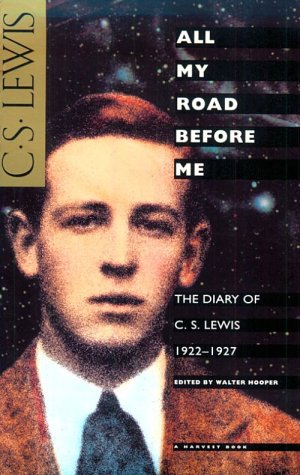
Rare early picture of CS Lewis, on the cover of “All My Road Before Me” — from his early and agnostic or atheistic days.A Christian Conversion Experience:  C.S. Lewis

Contemporary apologetics so often focus on the issues of biblical reliability and understanding in relation to science, and on the question of evil, as these are the currently contested concerns.  One apologetic that points towards the existence of God, however, is one that is generally not “scientific” enough, and that is a changed life.  Not a temporary change, which can indicate a simple excitement of a person’s will, but a permanent change evidenced by the long term.   So let’s look at the conversion experience of a well-known person, C.S. (Jack) Lewis.  Lewis was an Oxford and Cambridge Professor (English and Philosophy) and the well-known author of both fictional works like The Chronicles of Narnia and of highly valued scholarly works.

To anyone who comes in contact with atheistic thought, what Lewis wrote to his best friend in 1916 (below) will seem quite familiar.  What made him come to that conclusion, and what made him change his mind?

“I believe in no religion.  There is absolutely no proof for any of them, and from a philosophical standpoint Christianity is not even the best.  All religions, that is, all mythologies to give them their proper name, are merely man’s own invention” (Hooper p. 9).

Lewis, or Jack, was brilliant from early age, having been tutored at home until he was nine, when his mother died.  As if this great sorrow was not enough, Lewis’ dad sent him away to school, from their home in Ireland to England.  Lewis’ older brother, Warnie, attended the very small school with him, but Jack hated it, and with good reason.  The headmaster, a Reverend, was abusive and eventually deemed insane.  At his next school, Lewis experienced an occultist head matron.

One can see the progression of Lewis’ road to apostasy from his parents’ Anglican faith:  God did not heal his mother, one school leader was a cruel and crazy believer, and the other was a non-believing occultist.  By the time Lewis attended his third school, he was an atheist.  Hating this school as well, Lewis’ father sent him to learn under a distinguished tutor, who happened to be an atheist also.  Lewis was superb at languages and translating.  As his tutor wrote, Jack had “a sort of genius for translating . . . .  He is the most brilliant translator of Greek plays I have ever met” (Gromley p. 36).

He went on to learn and teach at Oxford, with WWI service (and related injury and recovery) sandwiched in.  After the war he lived with his adopted family, a much older atheist woman and her daughter.

So what would cause Lewis to stray from his atheism?  A couple of strongly held ideas played their parts.  One was the concept and experience of what Lewis termed “joy” – a pang of intense bliss and longing, followed by a strong desire to experience it again.  The other was his concern, from an early age, that if Christianity were true it could be shown that paganism prefigured it, or that Christianity fulfilled paganism.  Indeed, Lewis felt his pangs of “joy” when reading the northern pagan mythologies that he loved so much.

Jack Lewis wanted to be his own man; he did not want to acknowledge a power or diety that demanded loyalty.  Through the years, however, seeking truth and being drawn to authors and friends who helped him with answers to his search for “joy” as well as his concern over God’s communication with the pagan world, Lewis’ heart and mind opened enough to hear God give him a choice.

“. . . a fact about myself was somehow presented to me.  I became aware that I was holding something at bay, of shutting something out. . . .  I felt myself being, there and then, given a free choice. . . .  I could unbuckle the armor or keep it on. . . .  The choice appeared to be momentous but it was also strangely unemotional.  I was moved by no desires or fears.  In a sense I was not moved by anything.  I chose to open . . . .  Then came the repercussion on the imaginative level.  I felt as if I were a man of snow at long last beginning to melt.  The melting was starting in my back – drip-drip and presently trickle-trickle.  I rather disliked the feeling” (Lewis p. 123).

This experience of Lewis’ happened in 1929, and it was “conversion” to belief in God, not in an afterlife or in Jesus Christ.  Lewis still thought that parts of Christianity were a kind of myth, yet he wanted to know the truth and to live truth.  God gave Lewis many nudges, even via an ardent atheist who thought that it really did seem as though God made the pagan myths come true through Jesus Christ.  This atheist’s admission shocked Lewis.  Jack’s good friend J.R.R. Tolkien helped him with this issue, too, as did Hugo Dyson, on a pivotal walk in September 1931:

“Tolkien was convinced that myth, such as the Norse myth of the death of Balder, or the Greek myth of Psyche and Eros, was not the opposite of fact.  These stories were a way of expressing truths deeper than fact. . . .  [Tolkien declared that] not only did the truth in myths come from God, but a writer of myths could be doing God’s work in the world.1 As Tolkien talked, there was a sudden rush of wind out of nowhere, as if to underline the message.  The three men held their breath, feeling the importance of the moment” (Gormley p. 95).

Later that month Lewis had a second, more subtle, conversion experience.

“As I drew near the conclusion, I felt a resistance almost as strong as my previous resistance to Theism. . . .  Every step I had taken, from the Absolute to ‘Spirit’ and from ‘Spirit’ to ‘God,’ had been a step toward the more concrete, the more imminent, the more compulsive.  At each step one had less chance ‘to call one’s soul one’s own.’ . . .  I know very well when, but hardly how, the final step was taken.  I was driven to Whipsnade [Zoo] one sunny morning.  When we set out I did not believe that Jesus Christ is the Son of God, and when we reached the zoo I did.  Yet I had not exactly spent the journey in thought.  Nor in great emotion. . . .  It was more like when a man, after long sleep, still lying motionless in bed, becomes aware that he is now awake” (Lewis pp. 129-130).

So, finally, Lewis found that myth had become fact (that is, Jesus was “the god that died”) and that the pangs of “joy” had been sign posts to God.

As Lewis had written in Surprised by Joy, “all” is required of a person who acknowledges and worships his maker, and Lewis gave his all.  He is considered to be the greatest apologist of the 20th century, having written Mere Christianity, The Problem of Pain, The Screwtape Letters, and more.  In addition, he was a very popular layman preacher in Oxford.  As a “secular” scholar and author, he wrote poetry, the highly regarded “A Preface to Paradise Lost,” The Discarded Image, and others.   Lewis was the president of Oxford’s Socratic Club from 1942-1955; this was a philosophy group that delved into the pros and cons of the Christian faith.

As if the schedule demanded by all that was not enough2 – don’t forget that he taught as well – Lewis was kind enough to answer all his letters (as he became “popular” he had the help of his brother, and then his wife).  He always helped those in need–in a very personal way when the opportunity arose–and in a more general way through significant monetary giving.  His apologetics show a concern and love for the common man, being theological and philosophical explanations open and accessible to all.   Jack’s life was one humanly lived and beautifully lived.

_____________

Notes

  1. Indeed, as probably all of you readers know, J.R.R. Tolkien wrote the great “modern myth,” The Lord of the Rings.   It’s likely that many fewer are aware of Lewis’ re-told myth of Psyche and Cupid (or Eros) in Till We Have Faces.
  2. Lewis had a truly unbelievable photographic memory, easily quoting pages from books that someone happened to mention.  This gift was obviously a very great help to his studies, writing, lectures, etc.

____________

Sources

Gormley, Beatrice. C.S. Lewis: Christian and Storyteller. Grand Rapids: Eerdmans Books for Young Readers, 1998.

Hooper, Wlater. C.S. Lewis: A Complete Guide to His Life & Works. New York: HarperSanFrancisco, 1996.

Lewis, C.S. “Surprised by Joy.” In The Inspirational Writings of C.S. Lewis, by C.S. Lewis, 1-130. New York: Inspirational Press, 1994 (1955).

© Vicki Priest 2012 (this is an edited version of my article at Examiner.com, published 2011)


What does God say about employer obligations, worker rights?

Hall-Scott Factory workers, undated (late 1800s to early 1900s; http://theoldmotor.com/?p=18973).

In the Old Testament, Micah tells Israel, “He has showed you, O man, what is good.  And what does the Lord require of you?  To act justly and to love mercy and to walk humbly with your God” (Micah 6:8).  Indeed, chapter six of Micah concerns the Lord’s decision to punish Israel because of its practices that opposed God’s laws and intentions:  Israel was full of those who used dishonest scales, who lied, and who were violent.

Many of God’s OT regulations were meant to protect those in weaker social and economic situations. Psalm 146 is a praise to God who, unlike mortal men, “upholds the cause of the oppressed and gives food to the hungry.  The Lord sets prisoners free, the Lord gives sight to the blind, the Lord lifts up those who are bowed down, the Lord loves the righteous.  The Lord watches over the alien and sustains the fatherless and the widow, but he frustrates the ways of the wicked” (7-9).

These ideals are certainly carried through into the New Testament, where it is emphasized that all are to be treated with respect and as one would like to be treated themselves, and that all persons are equal in God’s sight (Matthew 7:12; Galatians 3:28; 1 Peter 3:8). So what did God command concerning the rights of workers?  What was expected of the employer (or master)?  For one, all persons, including hired people and servants/slaves, were to have the Sabbath day for rest (Deuteronomy 5:14).  Second, workers were to be paid at the end of the day (Leviticus 19:13b; Matthew 20:1-16).  Third, employees are to be treated with gratitude, respect, and good will, as this verse from Ruth 2:4 exemplifies:  “And behold, Boaz came from Bethlehem. And he said to the reapers, ‘The LORD be with you!’ And they answered, ‘The LORD bless you.’”

Verses that continue with this idea, but also provide the reason – that all humans are equal – include Job 31:13-15, Colossians 4:1, and Ephesians 6:9.  For example:  “Masters, do the same to them, and stop your threatening, knowing that he who is both their Master and yours is in heaven, and that there is no partiality with him” (Ephesians 6:9).

God also gave warnings to those who would disobey His will and laws in the employer-employee relationship.  In Malachi He says, “Then I will draw near to you for judgment.  I will be a swift witness against . . . those who swear falsely, against those who oppress the hired worker in his wages, the widow and the fatherless, against those who thrust aside the sojourner, and do not fear me” (3:5).  There’s more in Jeremiah:   “Woe to him who builds his house by unrighteousness, and his upper rooms by injustice, who makes his neighbor serve him for nothing and does not give him his wages . . .” (22:13). James did not pull any punches when he wrote:

Now listen, you rich people, weep and wail because of the misery that is coming upon you.  Your wealth has rotted, and moths have eaten your clothes.  Your gold and silver are corroded. Their corrosion will testify against you and eat your flesh like fire. You have hoarded wealth in the last days.  Look! The wages you failed to pay the workmen who mowed your fields are crying out against you.  The cries of the harvesters have reached the ears of the Lord Almighty.  You have lived on earth in luxury and self-indulgence. You have fattened yourselves in the day of slaughter.   You have condemned and murdered innocent men, who were not opposing you (5:1-6).

Another thing to consider about God’s laws and regulations is that they were more advanced and humane than those of the ancient near eastern societies that surrounded Israel.   Some slaves in Israel were the poor who became too indebted.  Instead of becoming homeless and/or being on various forms of welfare, “Someone would agree to pay their debt for six years (or fewer) of labor. After the time was over, the owner-employer sent them on their way, with funds and good.”

One law made it illegal to return runaway slaves to their masters!  “If a slave has taken refuge with you, do not hand him over to his master.  Let him live among you wherever he likes and in whatever town he chooses. Do not oppress him” (Deuteronomy 23:15-16). Laws such as these (and there are more) provided a big incentive for masters to treat all in their household fairly.   In contrast, there is hint about how poor persons were treated elsewhere.

In the story of the Prodigal Son (Luke 15), the son receives his inheritance from his still-living father and then moves to a far-off country.  He soon finds himself without any money left, “So he went and hired himself out to one of the citizens of that country, who sent him into his fields to feed pigs.   And he was longing to be fed with the pods that the pigs ate, and no one gave him anything” (15-16).  If the prodigal were paid every evening, would he be without food?  If he had been even a slave in Israel, would he be without food and shelter? I am not advocating slavery (!) but am pointing out a result of our practice and attitude toward the less successful in our country (the United States): the slaves of Israel were better off than the jobless/homeless in America.

(c) Vicki Priest 2014 [edited on September 1, 2014; previously posted by the author at Examiner.com, in 2011]

The Samaritan Woman

The Water of Life Discourse between Jesus and ...
The Water of Life Discourse between Jesus and the Samaritan woman at the well, by Giacomo Franceschini, 17-18th century (Photo credit: Wikipedia)

The story of the Samaritan woman, or the woman at the well in the gospel of John, chapter 4, is a good example of two items related to our topic:  what Jesus thought of women and what later interpreters have done with this (you will need to know the story to understand this article, and it can be read here).  Many commentaries you can read today, or pastors whom you can hear, unfoundedly portray the woman at the well in a very negative and biased light, which both degrades and takes away from the full meaning of the event.

For people who focus on belittling others and judging, the woman is seen as a (very big) sinner – apparently one that is worse than they are.  They claim that Jesus was making the woman realize her sin to feel guilty about it, in order to come to salvation – but this goes against at least some theological views about repentance and salvation.  “If repentance is cited as a condition of salvation in terms of feeling sorry for one’s sins, then it is wrong usage of the term” (Enns 342).

There is nothing in the story to actually confirm the view that the woman was “loose,” which could be an explanation for her having had many (five) husbands and current “common law” spouse.  It would seem easier to think this of a woman with such a background today, but how in biblical times?  Women could not divorce.  A man could divorce his wife easily, however.  This woman could have been married to some that died, and some that divorced her.  She could have been divorced for fairly simple things, or for not producing children.

Did this woman come to the well with any of her children?  No.  If she had older children, it would seem that at least one would help her.  If she had no children, she would feel shame for this (one could only imagine how she’d feel if they were taken from her, which was common in divorce, or had died in some way).  Being barren would be shameful for a woman at this time, as much of a woman’s worth was based on her producing children.  If she were barren and divorced, then she would have a very hard time of it in life.  It seems possible that she lived with a man because she simply needed to survive, and for whatever reason (legal or social), the man did not marry her.  All of this could be shameful to the woman, and it could simply be her “lot in life” without her being intentionally immoral.  We don’t know, but all these things are possibilities, and maybe more probable than the hussy theory.

And, it is biased for commentators or pastors not to mention that it would not exactly be righteous for a man to divorce a woman for being barren.  Men could have caused her, through no fault of her own, to be in the predicament she was in.  Remember Abraham and Sarah?  Abraham did not divorce her for not producing a child (Sarah was quite old when she gave her handmaid to Abraham so that “she” might have a child); is was not until she was considered beyond the age of conceiving that Sarah became pregnant as God said she would, with Isaac.  Remember John the Baptist’s parents?  Zechariah was a priest, and his wife Elizabeth had been barren.  Zechariah did not divorce Elizabeth because she was barren; she was quite old when she gave birth to John.  Abraham and Zechariah (and Elizabeth, too!) are called “righteous” in the bible (Genesis 15:6; Luke 1:6).

So this woman, who came to the well outside of town, alone, is feeling what?  We can’t know for sure.  The fact that she came to this more distant water source (Bruce 106), in the middle of a hot day, seems to indicate that she was in shame and perhaps something of an outcast.  She must not have had a great outlook on life.   Probably childless, older now, living in shame . . .  And what happens?  The creator of the universe meets her there.  Did he need to do that to make her feel guilty?  No.  He came for something much better.  He came to lift her up.  If indeed her husbands had died and/or divorced her, Jesus came to bring her new life, removing the sadness and disgrace.  Did she repent of her sins there?  No (not outwardly, anyway) — she got happy.

If you read the story, you will see that Jesus said some things that could have made any Samaritan quite angry.  But she was starting to guess that he was the Messiah, not just a prophet, since Samaritans did not believe in any prophets accept the One to come after Moses.   She called him a prophet, but the only prophet possible was the Messiah.  So then, what truly remarkable thing did Jesus do?  He told HER that he indeed was the Messiah!  An “unclean” Samaritan woman; at this time, many Jewish men held both women and Samaritans in contempt.  Search the New Testament and you will find that Jesus told very few people who He really was.  What happens next?  She believes him, loses all her shame and goes and tells the whole town about Jesus!  No doubt it was her transformation, and her seeming sheer nerve, that so impressed the townspeople who they believed her.

Jesus is delightful.  He did not trudge all the way to Jacob’s well in order to condemn the woman for her sins, whatever they might have been, but to transform her.  Transformed she was, running to town and preaching to and teaching men.  Both Origen (died 254) and Theophylactus (died after 1071) considered her an apostle.  That other church leaders have not thought this, or acted upon their knowledge, has nothing to do with God’s view of women, but everything to do with men’s view of women.

Sources:  The Gospel & Epistles of John (FF Bruce); The Moody Handbook of Theology (Paul Enns); Believer’s Bible Commentary (W MacDonald); How Christianity Changed the World and Veiled and Silenced: How Culture Shaped Sexist Theology (Alvin J Schmidt).

Vicki Priest (c) 2012.