I love this image and wanted to share! It’s from a Tumblr, “Our July in the Rain” (Tess).


I love this image and wanted to share! It’s from a Tumblr, “Our July in the Rain” (Tess).

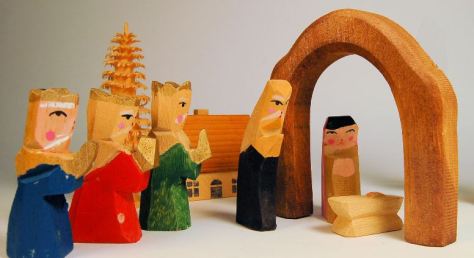 MARY’S SONG
By LUCI SHAW
Blue homespun and the bend of my breast
keep warm this small hot naked star
fallen to my arms. (Rest . . .
you who have had so far
to come.) Now nearness satisfies
the body of God sweetly. Quiet he lies
whose vigour hurled
a universe. He sleeps
whose eyelids have not closed before.
His breath (so slight it seems
no breath at all) once ruffled the dark deeps
to sprout a world.
Charmed by dove’s voices, the whisper of straw,
he dreams,
hearing no music from his other spheres.
Breath, mouth, ears, eyes
he is curtailed
who overflowed all skies,
all years.
Older than eternity, now he
is new. Now native to earth as I am, nailed
to my poor planet, caught that I might be free,
blind in my womb to know my darkness ended,
brought to this birth
for me to be new-born,
and for him to see me mended
I must see him torn.
In The Poetic Bible, C Duriez ed. (Hendrickson Pub.s 2001), 113.
___________
By W.H. AUDEN
O shut your bright eyes that mine must endanger
With their watchfulness; protected by its shade
Escape from my care: what can you discover
From my tender look but how to be afraid?
Love can but confirm the more it would deny.
Close your bright eye.
Sleep. What have you learned from the womb that bore you
But an anxiety your Father cannot feel?
Sleep. What will the flesh that I gave do for you,
Or my mother love, but tempt you from his will?
Why was I chosen to teach his Son to weep?
Little One, sleep.
Dream. In human dreams earth ascends to Heaven
Where no one need pray nor ever feel alone.
In your first few hours of life here, O have you
Chosen already what death must be your own?
How soon will you start on the Sorrowful Way?
Dream while you may.
In The Poetic Bible, C Duriez ed. (Hendrickson Pub.s 2001), 112.
___________
By T.S. ELIOT
‘A cold coming we had of it,
Just the worst time of the year
For a journey, and such a long journey:
The ways deep and the weather sharp,
The very dead of winter.’
And the camels galled, sorefooted, refractory,
Lying down in the melting snow.
There were times we regretted
The summer palaces on slopes, the terraces,
And the silken girls bringing sherbet.
Then the camel men cursing and grumbling
and running away, and wanting their liquor and women,
And the night-fires going out, and the lack of shelters,
And the cities hostile and the towns unfriendly
And the villages dirty and charging high prices:
A hard time we had of it.
At the end we preferred to travel all night,
Sleeping in snatches,
With the voices singing in our ears, saying
That this was all folly.
Then at dawn we came down to a temperate valley,
Wet, below the snow line, smelling of vegetation;
With a running stream and a water-mill beating the darkness,
And three trees on the low sky,
And an old white horse galloped away in the meadow.
Then we came to a tavern with vine-leaves over the lintel,
Six hands at an open door dicing for pieces of silver,
And feet kiking the empty wine-skins.
But there was no information, and so we continued
And arriving at evening, not a moment too soon
Finding the place; it was (you might say) satisfactory.
All this was a long time ago, I remember,
And I would do it again, but set down
This set down
This: were we led all that way for
Birth or Death? There was a Birth, certainly
We had evidence and no doubt. I had seen birth and death,
But had thought they were different; this Birth was
Hard and bitter agony for us, like Death, our death.
We returned to our places, these Kingdoms,
But no longer at ease here, in the old dispensation,
With an alien people clutching their gods.
I should be glad of another death.
In The One Year Book of Poetry, P Comfort and D Partner, compilers (Tyndale House Pub.s 1999), December 28 & 29.


I don’t know about you, but one of my little enjoyable pastimes is to read the searches that have led people to my blog. Most are pretty straightforward and it’s obvious why the person decided to check one of my posts out. Others are just unexpected and funny, and still others seem too general or off-the-subject; of the latter, I’m glad the person visited. I wish very much that these people (anyone who visits here, really) would leave comments or questions – that would be fun!
“the samarathon woman” She probably was in good enough shape to run a marathon after constantly lugging around jugs full of water in the middle of hot desert days.
“stormcloak officer armor revealing” Really?!
“adam lanza christian fanatic” Why not “adam lanza muslim fanatic”? Just wondering . . .
“christian poem on the tongue” (No comment . . . ha ha, perhaps they’re referring to James chapter 3, which has some very harsh words regarding the use of our tongue in conveying lies, evil and hurt.)
“butter my heart three person’d god” This has made me laugh out loud more than once. Of course, it’s supposed to be “batter” my heart, not butter my heart . . . makes me feel like a turkey being prepared for God’s oven.
“hellokitty skyrim” I wonder what they’re looking for? Knowing Sanrio, they’re working to contract something with Bethesda, surely.
“skyrim 1800s” ?!??! Seriously?
“evil bible king’s famous instrument for telling time” If anyone can explain this one to me, I’d be grateful.
“can christians play skyrim” (“skyrim seems like a bad game for christians”) CAN they? Do they need permission from some pastor? You know what’s bad for Christians? Living in this world with so much evil in it! I’m not questioning God’s motive for having us live in this world, I’m only making a point. Skyrim is a game, and by today’s standards, a quite clean one that actually enjoys playing around with religious ideas and culture, and the complexities of people and politics.
“how women should play skyrim” =D Well, they could ask . . .
“god is evil quotes” Just weird and sad; glad they stopped by, though. But then again, maybe they were simply doing some research.
“what do christians think of hello kitty story” Is there a story? If I knew the story, I could form an opinion. As far as I know, Hello Kitty is simply a very successful product venture. There are some unsavory HK products out there, but if some people want to abuse the cute feline, that’s their business.
“short intellectual quotes” Out of all the pages the searcher must have gotten from this search, I’m surprised they found my page url . . . and actually stopped by.
“religious poems for dads that died” I know it’s perhaps morbid to call out this one, but it still made me laugh a bit. How can you give a poem to a dead person? Did they want poems about dads that died, or a poem for the children whose dads died? My dad died when I was young and it was completely devastating; I never thought of writing any type of poem about it.
“unthink christmas card” Not sure about this one . . . but please, don’t unthink Christmas, unless it’s the commercial aspect of today’s holiday.
There’s a search that, even though it’s from more than a year ago, I still remember and consider the oddest one to lead someone to my blog (my old blog, which DID have a recipe for a great sandwich on it), so I just wanted to share it, though it’s adult material (sort of!): “Is there a good sandwich that can make up for bad sex?” Well, a pile of McDonald’s fish filets (with some fries on the side) just might do it for me.


The “Dragonborn” addition to the Skyrim video game, which came out earlier this month (December 2012) for XBOX, has – I think – the most “Christian” oriented content overall (in Skyrim, not the other Elder Scroll games). I wish I had written down certain dialog as I played it with my high-level character, but I simply wasn’t expecting anything out of the ordinary to takes notes on! (If I start a new game, it will be some time before I can get to those dialogs again – for now, this commentary without quotes will have to do.)
This latest DLC adds additional land mass via a large island known in the Elder Scroll series as Solstheim. (Update of Dec. 24: it appears to be playable from the beginning of a new game, as I went to Soltstheim at level 6, after I fought my first dragon and made my way to Windhelm). It is no doubt loved by Elder Scroll fans since it brings in elements from Morrowind (the home of the Dunmer, or Dark Elves), and indeed, the flavor of the place is quite a bit different from Skyrim (the home of the Nords). There are various quests to be found and accomplished, but the main quest involves the defeat of the first dragonborn, Miraak, who still exists after ages because of his service to Hermeus Mora, the powerful spirit being of knowledge and fate. Miraak desired power and thus made a “pact with the devil” – a safe allusion to Mora and his top minion. The DLC takes place when Miraak has used his powers to enslave the sleeping minds and bodies of the denizens of Solstheim, whom he is using to build a temple to himself. Miraak has only a small amount of dialog, but that small amount sounds an awful lot like satanic desires and promises. In addition, he has his hypnotized followers say things that are a copy, and thus a sick mockery, of true spiritual expression.
What’s interesting, from a Christian-in-the-current-world point of view, is that Hermeus Mora’s realm is called Apocrypha. (“Apocrypha” are extra-biblical writings of various qualities some are legitimate but have some textual or factual issues, while others are outright forgeries with false “witness”). It is dark and hazy and is made up of books (literally – the walls are made of books), and all underneath and around walkable areas is a very black sea. This “sea” has black slithery arms coming out of it all of the time, and they will whip you and hurt you if they can. The most dangerous creatures that stalk the place look very much akin to the old “creature from the black lagoon.” The other dangerous creatures are “seekers,” whose hideous appearance includes a lamprey-like mouth where their stomach is. These seekers of “knowledge” are never satisfied, but devour what their gut desires and not what their heart and mind discerns as true. This is my take on them, anyway, which I see as the problem with seeking and using secret – usually false – knowledge, and which is the point of this dark and eery place.
When it comes to Christianity, God chose to communicate with man and it was His desire to be known and understood. Those who purport to have “secret” knowledge of Him in order to steer someone away from God’s revelation, are not working within God’s desires for mankind.
On the other side of the coin are the Skaal of Solstheim. They are Nords of the ancient way and claim to have been given Solstheim by the All-Maker. They believe in one creator God, and the way they talk about creation and how we are to be in it, generally fits in with the Judeo-Christian biblical message. You can have an interesting conversation with Wulf Wild-Blood of the Skaal, who asks you if you can find his run-away brother whom he believes turned into a werebear (like a werewolf, only a bear). His brother could go down that path only be rejecting the call of the All-Maker. While the Skaal have beliefs that mesh with scriptures, they have others that do not – they believe in reincarnation. Conversations with fellow Skyrim players about how reincarnation doesn’t at all mesh with a loving creator God, and how it is wholly incompatible with Christ’s message and work, is a possible real-world benefit of playing this game.*
If, as a Christian, you will only play games that have pure Christian messages and signs, then Skyrim and Dragonborn aren’t for you. But if you want to play a game that actually gives a nod to God and certain Judeo-Christian beliefs and virtues in today’s world, then Skyrim is an OK game for that. I wrote about Skyrim earlier, here. That review by no means covers all the aspects of Skyrim. There are things about the game I don’t like and scratch my head at, wondering about the game maker (Bethesda) every time I think of them (there are aspects of the game you can only play if you decide to do bad and dishonorable things).
Hopefully I’ll be able to flush this review out in the future, with quotes and such. In the meantime, enjoy the Dragonborn and listen to the new leader of the Skaal: do not follow Hermeus Mora, but follow the path laid out for you (and to the Skaal, this would be by the All-Maker).
* These last two sentences were edited in after the initial posting of this review (12-20-12).
A post that updates, or adds to, this post can be found at Dragonborn DLC Playability and the Skaal Religion. Thanks!

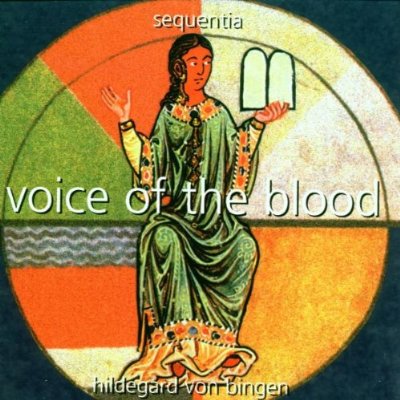
In church last weekend the thought came to me that the beauty of human singing is an example of a God given gift or virtue. How can singing, beautiful singing, be considered a trait that evolved? Our voices are so varied to begin with that it’s hard to think that somehow that variety evolved, but then there is also singing. Can you imagine a chimp or ape singing? The thought is laughable.
The theory of evolution is based on the survival of the fittest. Surely that works at a basic level in any environment with any species. But there are many problems with the time frame for species to actually diverge and develop (despite what basic level text books say . . . they make it sound like all is fact when it is not); and it can easily be shown that there has not been enough time for humans to have developed to their present state from their nearest assumed ancestor (for more on this, see “Science and Human Origins” Informational Review).
So besides all the other differences between us and the very small and very ape-like ancestor of ours, singing had to develop somehow, right? As already mentioned, environment plays a factor in who lives and who does not. But a biggy that evolutionists use is sexual selection. I’m not writing a scientific discourse here, but am going by my past studies (I have a degree in anthropology with an emphasis on human evolution and archaeology).
Here’s an example. Why are human female breasts so big (usually, and compared to other primates)? Well, you can imagine the answer: males had more sex with females with bigger breasts, producing more big-breasted females. And you might reflect on how that answer just doesn’t seem valid based on human sexuality, that while many men find large breasts attractive, most men wouldn’t care about that when it came to the chance for sex. And if you imagine it from a purely scientific, non-Christian viewpoint, “evolving” men probably cared even less and raped more. At any rate, scientists may try to argue that human singing is a result of not survival of the fittest in the environment, but survival of the most reproduced based on attraction, just like the breast example.
Do you think that could be so, really? A good singer (or any other charismatic person, for that matter), may have more sex partners – which in the past would result in more offspring. But, considering how beautiful good singing is, wouldn’t we all be great singers by now? Or, wouldn’t some populations have a very high per cent of great singers by now, and some have mostly lousy singers? And, of course, this type of argument can’t account for the amazing nuances/differences of the human voice itself.
No, we were created with these traits. Singing is often, if not always, associated with the spiritual. I don’t mean that singing is always spiritual, but that is has always been used in spiritual contexts as far as I’m aware. Singing is emotional, it’s often spiritual, it can induce or promote thoughts of love. We as humans think musically and mathematically, with thoughts of the music of the spheres and the singing of angels. This all coming from the survival of the fittest? I don’t think so. When we see human aggression and greed, the survival of the fittest makes sense, but when it comes to beauty like human singing, it does not.
[Edited on December 23, 2014]

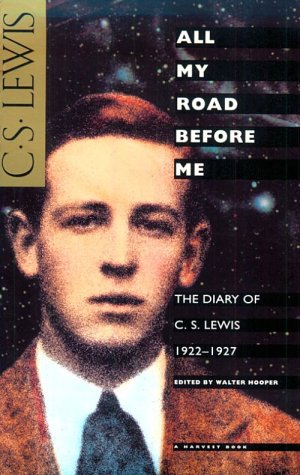
Contemporary apologetics so often focus on the issues of biblical reliability and understanding in relation to science, and on the question of evil, as these are the currently contested concerns. One apologetic that points towards the existence of God, however, is one that is generally not “scientific” enough, and that is a changed life. Not a temporary change, which can indicate a simple excitement of a person’s will, but a permanent change evidenced by the long term. So let’s look at the conversion experience of a well-known person, C.S. (Jack) Lewis. Lewis was an Oxford and Cambridge Professor (English and Philosophy) and the well-known author of both fictional works like The Chronicles of Narnia and of highly valued scholarly works.
To anyone who comes in contact with atheistic thought, what Lewis wrote to his best friend in 1916 (below) will seem quite familiar. What made him come to that conclusion, and what made him change his mind?
“I believe in no religion. There is absolutely no proof for any of them, and from a philosophical standpoint Christianity is not even the best. All religions, that is, all mythologies to give them their proper name, are merely man’s own invention” (Hooper p. 9).
Lewis, or Jack, was brilliant from early age, having been tutored at home until he was nine, when his mother died. As if this great sorrow was not enough, Lewis’ dad sent him away to school, from their home in Ireland to England. Lewis’ older brother, Warnie, attended the very small school with him, but Jack hated it, and with good reason. The headmaster, a Reverend, was abusive and eventually deemed insane. At his next school, Lewis experienced an occultist head matron.
One can see the progression of Lewis’ road to apostasy from his parents’ Anglican faith: God did not heal his mother, one school leader was a cruel and crazy believer, and the other was a non-believing occultist. By the time Lewis attended his third school, he was an atheist. Hating this school as well, Lewis’ father sent him to learn under a distinguished tutor, who happened to be an atheist also. Lewis was superb at languages and translating. As his tutor wrote, Jack had “a sort of genius for translating . . . . He is the most brilliant translator of Greek plays I have ever met” (Gromley p. 36).
He went on to learn and teach at Oxford, with WWI service (and related injury and recovery) sandwiched in. After the war he lived with his adopted family, a much older atheist woman and her daughter.
So what would cause Lewis to stray from his atheism? A couple of strongly held ideas played their parts. One was the concept and experience of what Lewis termed “joy” – a pang of intense bliss and longing, followed by a strong desire to experience it again. The other was his concern, from an early age, that if Christianity were true it could be shown that paganism prefigured it, or that Christianity fulfilled paganism. Indeed, Lewis felt his pangs of “joy” when reading the northern pagan mythologies that he loved so much.
Jack Lewis wanted to be his own man; he did not want to acknowledge a power or diety that demanded loyalty. Through the years, however, seeking truth and being drawn to authors and friends who helped him with answers to his search for “joy” as well as his concern over God’s communication with the pagan world, Lewis’ heart and mind opened enough to hear God give him a choice.
“. . . a fact about myself was somehow presented to me. I became aware that I was holding something at bay, of shutting something out. . . . I felt myself being, there and then, given a free choice. . . . I could unbuckle the armor or keep it on. . . . The choice appeared to be momentous but it was also strangely unemotional. I was moved by no desires or fears. In a sense I was not moved by anything. I chose to open . . . . Then came the repercussion on the imaginative level. I felt as if I were a man of snow at long last beginning to melt. The melting was starting in my back – drip-drip and presently trickle-trickle. I rather disliked the feeling” (Lewis p. 123).
This experience of Lewis’ happened in 1929, and it was “conversion” to belief in God, not in an afterlife or in Jesus Christ. Lewis still thought that parts of Christianity were a kind of myth, yet he wanted to know the truth and to live truth. God gave Lewis many nudges, even via an ardent atheist who thought that it really did seem as though God made the pagan myths come true through Jesus Christ. This atheist’s admission shocked Lewis. Jack’s good friend J.R.R. Tolkien helped him with this issue, too, as did Hugo Dyson, on a pivotal walk in September 1931:
“Tolkien was convinced that myth, such as the Norse myth of the death of Balder, or the Greek myth of Psyche and Eros, was not the opposite of fact. These stories were a way of expressing truths deeper than fact. . . . [Tolkien declared that] not only did the truth in myths come from God, but a writer of myths could be doing God’s work in the world.1 As Tolkien talked, there was a sudden rush of wind out of nowhere, as if to underline the message. The three men held their breath, feeling the importance of the moment” (Gormley p. 95).
Later that month Lewis had a second, more subtle, conversion experience.
“As I drew near the conclusion, I felt a resistance almost as strong as my previous resistance to Theism. . . . Every step I had taken, from the Absolute to ‘Spirit’ and from ‘Spirit’ to ‘God,’ had been a step toward the more concrete, the more imminent, the more compulsive. At each step one had less chance ‘to call one’s soul one’s own.’ . . . I know very well when, but hardly how, the final step was taken. I was driven to Whipsnade [Zoo] one sunny morning. When we set out I did not believe that Jesus Christ is the Son of God, and when we reached the zoo I did. Yet I had not exactly spent the journey in thought. Nor in great emotion. . . . It was more like when a man, after long sleep, still lying motionless in bed, becomes aware that he is now awake” (Lewis pp. 129-130).
So, finally, Lewis found that myth had become fact (that is, Jesus was “the god that died”) and that the pangs of “joy” had been sign posts to God.
As Lewis had written in Surprised by Joy, “all” is required of a person who acknowledges and worships his maker, and Lewis gave his all. He is considered to be the greatest apologist of the 20th century, having written Mere Christianity, The Problem of Pain, The Screwtape Letters, and more. In addition, he was a very popular layman preacher in Oxford. As a “secular” scholar and author, he wrote poetry, the highly regarded “A Preface to Paradise Lost,” The Discarded Image, and others. Lewis was the president of Oxford’s Socratic Club from 1942-1955; this was a philosophy group that delved into the pros and cons of the Christian faith.
As if the schedule demanded by all that was not enough2 – don’t forget that he taught as well – Lewis was kind enough to answer all his letters (as he became “popular” he had the help of his brother, and then his wife). He always helped those in need–in a very personal way when the opportunity arose–and in a more general way through significant monetary giving. His apologetics show a concern and love for the common man, being theological and philosophical explanations open and accessible to all. Jack’s life was one humanly lived and beautifully lived.
_____________
Gormley, Beatrice. C.S. Lewis: Christian and Storyteller. Grand Rapids: Eerdmans Books for Young Readers, 1998.
Hooper, Wlater. C.S. Lewis: A Complete Guide to His Life & Works. New York: HarperSanFrancisco, 1996.
Lewis, C.S. “Surprised by Joy.” In The Inspirational Writings of C.S. Lewis, by C.S. Lewis, 1-130. New York: Inspirational Press, 1994 (1955).
© Vicki Priest 2012 (this is an edited version of my article at Examiner.com, published 2011)

An educational resource for topics of architectural styles, and related historic trends.
Philosophy. Ethics. Theology. Culture.
Unflinching Investigation of Sustainability Realities
2girls1up!
Reflections on Canadian Culture From Below the Border
Poems, Prayers, & Proverbs that speak to what it means to be a "living curriculum" of the Christian Life.
(collpase into now)
It's a Rare Thing
Gaming, Music & Movies
Gain Long-term Freedom From Addiction
Secret Knowledge of Spaces
Vince Michael on history, preservation, planning and more
we advocate for Michigan's historic places because they contribute to our economic vitality, sense of place and connection to the past.
Blue Water Area Local History
 With Christian Eyes