Prior to my pastor’s recent sermon on having faith that you’re saved even when you feel inadequate and have doubts, I was wondering about the meaning of what Jesus said in the “Parable of the 10 Virgins” in Matthew (25:1-13). Whenever this parable was brought to my attention, it bothered me, and it was on my mind prior to that sermon. Maybe God was trying to tell me that my concerns about the parable were not applicable to me, and followers of Christ like me, and that there was another meaning to it that I simply wasn’t grasping. In my 19 years of having been a Christian, I had not come to terms with this parable, which seems kind-of pathetic and embarrassing. I want to dig deeper into this parable—car to come along? Here is the parable (NIV):
“At that time the kingdom of heaven will be like ten virgins who took their lamps and went out to meet the bridegroom. 2 Five of them were foolish and five were wise. 3 The foolish ones took their lamps but did not take any oil with them. 4 The wise ones, however, took oil in jars along with their lamps. 5 The bridegroom was a long time in coming, and they all became drowsy and fell asleep. 6 “At midnight the cry rang out: ‘Here’s the bridegroom! Come out to meet him!’ 7 “Then all the virgins woke up and trimmed their lamps. 8 The foolish ones said to the wise, ‘Give us some of your oil; our lamps are going out.’ 9 “‘No,’ they replied, ‘there may not be enough for both us and you. Instead, go to those who sell oil and buy some for yourselves.’ 10 “But while they were on their way to buy the oil, the bridegroom arrived. The virgins who were ready went in with him to the wedding banquet. And the door was shut. 11 “Later the others also came. ‘Lord, Lord,’ they said, ‘open the door for us!’ 12 “But he replied, ‘Truly I tell you, I don’t know you.’ 13 “Therefore keep watch, because you do not know the day or the hour.
The concluding verse exhorts us to keep watch always. And that is good and necessary, and is repeated elsewhere: “You also must be ready, because the Son of Man will come at an hour when you do not expect him” (Luke 12:40; see also Matt 24:42, 44; Mark 13:35). The problem is, the young ladies weren’t keeping watch in an ordinary New Testament sense. The five that got into heaven fell asleep just like the five that didn’t get into heaven. The difference was in the oil–in their preparedness–not in their actual watchfulness (being awake, having one’s eyes open, looking toward Christ, etc.).
And the problem with this, the oil issue, is at least twofold. One, oil is commonly known to be symbolic of the Holy Spirit, which we receive from God (we don’t take it or buy it). Related to this is, (2) how much of our own work do we need to do to be saved? First, one must read and understand the parable correctly. Depending on the version I had read in the past, it wasn’t always clear to me that the five foolish virgins didn’t have any oil at all. This needs to be clear: five of the virgins brought lamps with them that were . . . empty! Who does that!? These were the foolish virgins, we’re told, but it still took a lot of time for my mind to register that someone would bother to bring lamps that didn’t have any oil. (Truly, what is the point? It’s like pushing your gasless car somewhere, expecting to drive it off later without filling it up.) For a long time I thought that the virgins in question had oil in their lamps when they left their homes, and that they didn’t bother bringing extra and thus ran out (this is the take on it that Kaiser et al present, too). But that’s not what the parable says. In any case, let’s look at the oil issues I mentioned.
If oil represents the Holy Spirit in this parable, as it does elsewhere in the Bible, then the foolish virgins didn’t have the Holy Spirit. They wanted into heaven, but they didn’t really accept God (God’s spirit); they weren’t true believers. If you are sincere in wanting to be with God, God will give you His Holy Spirit; if you just want the goodies of heaven without acknowledging God’s will, your heart is in the wrong place. So, the only work necessary is to actually believe in God and His son’s work: “The work of God is this: to believe in the one he has sent (John 6:29). And according to the parable, if you have God and His Holy Spirit you will be saved even if you get drowsy waiting. This is quite comforting, and the opposite meaning of what I had originally thought regarding this parable.
One reason why I had a bit of a hard time with this parable is that it didn’t seem logically cohesive. What I mean by that is, we believers are the church, which is referred to as Christ’s bride in the New Testament. So, why would the ten virgins (and thus the message) refer to believers, who are already behind the door in the parable (as the bride)? The virgins are attendants, not the bride; the Syriac and Vulgate versions of the New Testament make this clearer by adding in verse 10 that Christ came with his bride.
We know that the context of the parable is eschatological, that is, regarding the end times. Only two of the commentaries I have here address the actual relevance of this issue, and they appear to disagree: Enns 2008, which mentions the theological stance that the wedding takes place in heaven, while the banquet takes place on earth after Christ’s second coming, and MacDonald 1995, which seems to place the wedding and the banquet together (in heaven). The time is during the tribulation, so the virgins represent true believers and those who aren’t true. But, why use the term virgin, instead of just person? Since Christ’s bride – the church – is already in heaven (behind the door), then why are the people in the parable referred to as virgins? It makes me think Jesus is talking about the Jews during the tribulation period. Certainly his audience at the time was made up of Jews, and MacDonald (1297) refers to them as those with messianic hope.
Israel is specifically called out in Revelation 7, where during the time of the opening of the Sixth Seal a certain number of Jews will be marked as saved; that is, sealed. In the New Testament, God seals us with, and gives us, the Holy Spirit (2 Cor.s 1:22; Eph.s 1:13, 4:30). But whether or not the “virgins” refer to Jews alone, or the wedding feast takes place in heaven or on earth (or even if that has any relevance), people will indeed be saved during the tribulation and the mark of this is the seal of the Holy Spirit, just as it is prior to the tribulation. The admonition to always be ready and waiting for the Lord’s return is true at all times prior to the actual wedding banquet, announced in Revelation 19, which happens after all the seals are opened, all the bowls of judgment are emptied, and all the trumpets sounded, but before the final battle and binding of Satan (this order is according to the literal reading of Revelation).
The message to walk away with is, don’t be foolish but wise and receive the Holy Spirit, and after that keep vigilant in waiting for the king’s return. However, we can take comfort that Jesus “knew” the five virgins who did in fact drift off to sleep, but who had held on to God’s seal.
_____
Sources
Dunn, James, and Rogerson, John. Eerdmans Commentary on the Bible. Grand Rapids: William B. Eerdmans Pub Co, 2003. Print.
Enns, Paul. The Moody Handbook of Theology. Chicago: Moody Publishers, 2008. Print.
Kaiser, Jr., Walter C., et al. Hard Sayings of the Bible. Downers Grove: InterVarsity Press, 1996. Print.
MacDonald, William. Believer’s Bible Commentary. Nashville: Thomas Nelson Pub.s, 1995. Print.
Plummer, Robert L. 40 Questions About Interpreting the Bible. Grand Rapids: Kregel Publications, 2010. Print.
. . . and is joyously with the Lord (Thursday morning, Oct. 3rd). Here are a couple of article links about the man who started the nondenominational Calvary Chapels. He was sharp to the end, giving his last sermon just last month.
You may have heard already that Smith’s son-in-law, Brian Broderson, is the new senior pastor. The Orange County Register published a pretty detailed article on Chuck and Calvary Chapel Costa Mesa here, and there are links to more related articles at the Register, too.
Update 10/20: I didn’t go to the paddle out, but images of it were displayed at the service today. Very awesome! A DVD of it is planned.
I just wanted to share this comic image here, after it’s languished in my files for a while. I hope you get a laugh out of it if you haven’t seen it before. When I first saw it, I couldn’t stop laughing for some time. =D
For a well-organized and concise presentation of 50 philosophical ideas, 30-Second Philosophies: The 50 most Though-provoking philosophies, each explained in half a minute is worth reading and having around for a quick review and a handy reference (for Christians too). The title is more of a catchy, rather than an accurate, description of the book. The “30-second explanations” can take more than that time to read, of course–if you’re thinking about what you read–and there are side notes to expand on the explanations. In addition, for each section in the book there is both a glossary and a profile of the chosen exemplary philosopher. There is some introductory material and a resources section in the back as well.
It is very nice indeed that the book is divided into subject sections, instead of the philosophies being presented in either a chronological or alphabetical list. The sections are: “Language & Logic,” “Science & Epistemology,” “Mind & Metaphysics,” “Ethics & Political Philosophy,” “Religion,” “Grand Moments,” and “Continental philosophy.”
Seeing as this blog is to view things from a Christian perspective, I will opine on the “Religion” section. “30-Second Philosophies” may be a good book for a Christian to have as a basic learning tool and reference, but it is not friendly to Christian beliefs. This is no surprise, since most philosophers today are materialistic* in their beliefs and thinking (Hasker 2006). In this section Thomas Aquinas is profiled and the following philosophies are presented: “Aquinas’ five ways,” “Anselm’s ontological argument,” “Epicurus’ riddle,” “Paley’s watchmaker,” “Pascal’s wager,” and “Hume against miracles.”
As might be assumed, ending the religion section with an (old) argument against a major theology isn’t a good sign toward a positive view of Christian philosophy and thought. Each of the sections negatively criticizes Christian philosophers and theological ideas; for example, the author(s) makes a flat-out claim that the ontological argument is false, and elsewhere implies that God is false or silly since He didn’t make us all simply virtuous. The “obvious solution” of making us only virtuous would have meant no problem of evil would have sprung up. Here the author ignores the concept of actual free-willed beings, since in materialism there can be no true free will.
Regarding the Ontological Argument, please see the Sennett/Plantinga source below, which contains a chapter on the argument. In that chapter (which is basically reproduced here), Plantinga goes through the history of the argument and provides a final and valid restatement of it (Plantinga is a professor of philosophy emeritus at The University of Notre Dame). Secondly, regarding the problem of evil, the reader might like to view the William Lane Craig article provided in the Sources and Recommendations section. There is no shortage of Christian writings on this subject, since, as Craig wrote,
I did not write of all the criticisms the authors had for Christian philosophy in “30-Second Philosophies,” but you are encouraged to check them out and seek the answers. If you can imagine someone picking up this book and only reading the summary explanations and criticisms, then you will get an idea of what the average person or student thinks. You can find this level of knowledge and thinking all over the internet (and no doubt in our more physical interactions), and it would behoove us to know more and have legitimate and current counter arguments and answers.
* This link will lead you to a subscriber view only article. To see the whole article without being a subscriber, do a browser search and click on the link for “What is Materialism?” by Michael Philips.
Sources and Recommendations
Beilby, James K., editor, For Faith and Clarity: Philosophical Contributions to Christian Theology (BakerAcademic 2006).
Hasker, William. “Philosophical Contributions to Theological Anthropology,” in For Faith and Clarity (Beilby 243-260).
Kreeft, Peter J. “C.S. Lewis’s Argument from Desire,” in G.K. Chesterton and C.S. Lewis: The Riddle of Joy (William B. Eerdmans Pub. Co. 1989, 249-272).
Sennett, James F., editor, The Analytic Theist: an Alvin Plantinga reader (William B. Eerdmans Pub. Co. 1998).
I feel so blessed and am encouraged in my faith by Emmaus Ministries. I found out about them only recently, which is not terribly surprising since they minster across the country from me, in Chicago.
Their mission is “to make Jesus known on the streets among men involved in survival prostitution.” Male prostitution has been pretty foreign to me and I hadn’t thought about it much. I had seen human trafficking statistics that show that a small number of males are tricked or forced into prostitution worldwide, but that’s basically as far as my knowledge went. But, male prostitutes here in the U.S. may do it “voluntarily” for a number of reasons, much like female prostitutes. Much of the information about female prostitution, below, appears to be applicable to male prostitutes too.
There are academic studies on male prostitution, which of course are not widely available on the internet. Here is a quote from one that you can access: “In February 2010, a middle-aged man was arrested on suspicion of running an illegal brothel in the city of Amersfoort. In this brothel, which was located in the house of the suspect, between 10 and 20 young men of Eastern European and South American origin were found. Their passports had been taken from them, and they had been told that they had huge debts for travelling costs which they would have to pay back by working in the brothel (Police Utrecht, 2011).” This study found that most male prostitutes in the Netherlands go into it voluntarily, but the preceding quote gives a glimpse into the ways some are forced into it.
The men Emmaus Ministries helps have come from abusive and broken homes. As they write at their site’s home page, “Who would you have become if, from age five to seven, you were sexually abused by a neighbor? What would your life look like if you never knew your parents? How would your life be different if your parents abused drugs and pimped you out as a child? These are some of the stories of the men we serve.”
Volunteers and employees meet the men they serve by walking the streets of Chicago when these men work, late at night until 2:30 am. For those men who decide they want to either check out Emmaus more, or obtain help, hospitality and companionship, they stop at the ministry center. There the men can take a shower, clean their clothes, and get a meal and a prayer. There are group prayer-and-share meetings, one-on-one counseling and discipleship sessions, and various recovery assistance activities. They help up to about 300 men a year.
If you’re not sure about all this, Emmaus has posted some testimonies from some of the men they have served. Here are two of them.
Shawne. Shawne was one of two children born into a Christian family. His father was an alcoholic who didn’t work consistently and who abused him. At 16 Shawne ran away from home. He was homeless and desperate, so he started selling himself on the streets of downtown Chicago. Shawne met Emmaus Outreach staff on those streets, but he didn’t trust them. He was sure that, since they were Christians, they would judge him because of his lifestyle.
“When I first came,” he remembers, “they were just like ‘Hey come on in. We know what you want. We know what you need. And we’re here for that.’” He ate a family-style meal with staff, volunteers, and the other guys there. He took a shower. Then he left, and so did his preconceptions about the Christians at Emmaus.
He started coming down more often and got to know the staff and volunteers. That’s when he started hearing the message that, as he puts it today, “there’s a better way to live.” But he didn’t mind it so much at that point. He knew they loved him.
“That’s the thing about Emmaus,” he says. “You don’t have to be homeless to get help. I’ve had a job and an apartment, and I’d still come around for their support, the spiritual support. And then when I’d fall, they weren’t like, ‘You’re going to Hell. You failed.’ No. They accept you and say ‘Hey, we’re going to do this all over again. What can we do for you?’” (Abridged and quoted from here).
Timothy. Timothy was seven when his parents divorced, and afterwards he, his mother, and his siblings moved around a lot, frequently staying with relatives. Some of these family members secretly abused Timothy physically and sexually.
When he was 24, a friend introduced him to hustling downtown as a way to make money. The first time he got into a car with a john (i.e., a customer), Timothy was terrified. He started drinking and using cocaine to cope with his fear and shame. After that, hustling got easier; he not only was addicted to drugs, but to delusions of personal attractiveness and conquest.
But after having experiences of sexual assault and rape, his delusions evaporated and he eventually realized that he wanted companionship. Timothy often saw Emmaus Outreach ministers on the streets, but wanted nothing to do with them. Finally, however, his curiosity got the better of him and he found himself at the Ministry Center.
“To Timothy’s surprise, at Emmaus he found not only a safe place where they served good food, but people who talked with him as a human being, not an object to be used. He quickly realized that, at the Ministry Center, he could be honest about everything in his life. After a week . . . he felt at home–the first time he had experienced that sensation since his parents’ divorce. Timothy saw that he had a spiritual void that he hadn’t been able to fill, and began to hope that maybe he could find a way to become whole again.
In 2008, with Emmaus’s help, Timothy went into drug treatment for three months. He came out fully sober for the first time in almost 10 years. . . . That summer, he went on a retreat with Emmaus to Plow Creek Farm in central Illinois, the first time he had ever been out of the city. That first night, he went outside and saw a sky full of stars for the first time. He was struck by God’s majesty and mercy at that moment, and by how amazing it was that a God who created the stars cared about him. After the retreat, his faith and understanding of God continued to grow . . . and he realized that the spiritual void he’d felt almost all of his life had finally been filled.
Today, Timothy remains clean and sober. He works for a suicide prevention hotline, and takes classes at Chicago State University. He continues to come to the Ministry Center a few times a month, now as a volunteer and mentor.” (Quoted and abridged from here).
This isn’t a perfect article on the attack that happened yesterday, but it’s still very good. The latest reports indicate that at least 100 more have been injured.
Here is the start of the article, and more, but please click the link to read the rest. This might be an eye-opener for many.
In a horrific mid-day attack on Saturday, September 21, 2013 in downtown Nairobi, Kenya, jihadist assailants invaded an upscale shopping mall, slaughtering and injuring dozens of terrified shoppers with grenades and automatic weapons.
As of early Sunday morning, even as the stand-off between the attackers and Kenyan security forces continued inside the mall, the death count stood at 59, a number sure to rise in coming hours.
According to reports, at least an additional 150 have been injured. People fleeing from the modern Westgate mall reported that the attackers had singled out non-Muslims to kill after telling Muslims to get out. . . .
Local mosques in U.S. areas with a heavy Somali immigrant population, such as Minnesota, play leading roles in recruiting young men, often born and raised in the U.S., to sign up for jihad in Somalia. . . .
[One of these is ] Al-Hammami, a 28-year-old from Alabama . . . The son of a Christian mother and a Syrian-born Muslim father, al-Hammami likely was recruited to jihad at the University of South Alabama, where he was president of the Muslim Student Association (MSA), the original and still one of the largest Muslim Brotherhood front groups in the U.S.
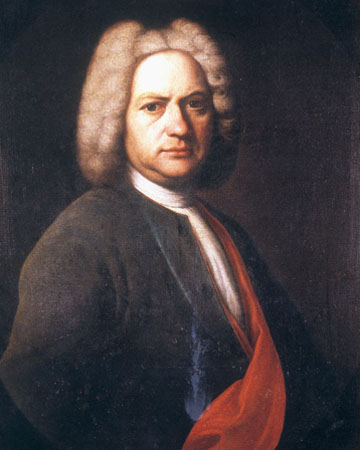
Princess Leia, older? No, Johann Sebastian Bach in 1720.
God truly favored Bach. How else can you explain that time stood still for him? How do I know this? I mean, everyone would know, right, if such a miracle happened (over and over again)? No, no one would know. He’d be sitting there writing one of his 1,000+ scores while changing one of his 20 kids’ diapers while the world around him was still and silent.
Yes, time stood still for him. Richard Wagner said that Bach’s work was “the most stupendous miracle in all music” (Kavanaugh 26). See?
At any rate, that’s my excuse for getting such a piddly amount of things done in my life; God has not favored me with time stoppages. And I don’t have a photographic memory, as perhaps Bach did, and as C.S. Lewis did, who was also crazily prolific in his life. A photographic memory helps . . . a lot. And God making time stand still for you.
To make things a bit clearer about Bach and his miraculous output, here are some perspective builders.
Both his parents died when he was nine. He did not inherit wealth and therefore did not have lots of extra time. (In fact, during his lifetime only 8 – 10 of his works were published, so he didn’t acquire wealth–and the extra time it can afford– from his compositions.)
He played a variety of musical instruments (and sang) from childhood. He worked at a number of churches as church musician, primarily, but also was employed as “Capellmeister” for Prince Leopold. Eventually spurning the Prince’s secular position, he went to St. Thomas’ in Leipzig to become Cantor and Music Director.
His first wife died, then he married a second young wife. As mentioned, he had 20 children altogether (not all reached adulthood). This makes me hope that God made time stand still for his wives some, too.
Bach not only worked at churches, composed music (and in a large variety of styles), and helped make lots of babies, but he also taught. He taught Latin AND music, to outside students as well as his own children. I must be missing something here. He taught Latin and music, while doing all the rest of his daily genius stuff . . . he must’ve taught a third subject or laid golden eggs or something, right? Oh, that’s right, he . . .
. . . and his wife (or wives) were very social and hospitable and always had people over at their place!
His eyesight worsened as he aged. By the time of his death at age 65 (1685-1750), he was blind.
Maybe I’m wrong about God stopping time for Bach. But if so, the only other possibility is that he never slept. God either made time stand still for Bach, or gave him the gift of sleeplessness. This might better explain his 20 children, too.
___
SOURCES:
Kavanaugh, Patrick, Spiritual Lives of the Great Composers (Zondervan 1996).
Maybe the media think the black lady that very brutally and sadistically murdered an innocent 12 year old white kid think she was simply crazy and wasn’t acting out any racial hatred. Well . . . then they should’ve never went through all the trouble they did with the non-racist Zimmerman.
They basically tried to start a race war – I don’t see how else to view it. There are many lies out there about Zimmerman and people just eat it up! Amazing. If you look at my previous reblog, “I am not Trayvon . . . .” you can find a link to Zimmerman’s parents’ page. Zimmerman went way above and beyond in helping a homeless black man against police – what he did was rare. His black neighbors really like him. So WHY the witch hunt, lynching mob, officiated by the Obama white house, even? And, of course, the racism (and homophobism) from Trayvon and his friend were ignored. None of us are safe from the media or government of our own country anymore.
Anyway, I didn’t know about Jonathan Foster; it wasn’t reported on much when he died, and the trial is not being reported on by the general media. We all should have been informed about him. This poor kid deserved to be remembered, and his family deserves our prayers and sympathy. But does the media care? No. They just care about smearing an innocent man and his family to death (Zimmerman’s family also has had many many death threats, can’t live at their home, his sister had to quit her government job [!], etc.). It’s all not just beyond belief, but beyond all reason.
See also (and these are all very recent):
Why is Joshua Chellew less important than Trayvon Martin? A different article on Joshua’s murder said it wasn’t racially motivated, but gang on gang, because Joshua – a completely white/pink guy in his 30s – flashed a rival gang symbol. AND, this came from police investigators. PLEASE, seriously, do you all think we’re THAT stupid? Talk about blaming the victim! We need to change our country (write the Cobb County police?.
In near-fatal East Side beating, three more teens charged This poor guy. I DID read about it when it happened, but there wasn’t all that much news on it. This guy would be dead if not for modern medicine, but even so, he will suffer permanent brain damage (according to one source). At least the police didn’t have the audacity to claim that Ray flashed a gang symbol and therefore kind-of deserved to be attacked . . .
Nazareth Hospital (Christian), in Nazareth, Israel
. . . the crowds followed him on foot from the towns. When Jesus landed and saw a large crowd, he had compassion on them and healed their sick (Matthew 13b-14).
Jesus went through all the towns and villages, teaching in their synagogues, proclaiming the good news of the kingdom and healing every disease and sickness. When he saw the crowds, he had compassion on them, because they were harassed and helpless, like sheep without a shepherd. Then he said to his disciples, “The harvest is plentiful but the workers are few. Ask the Lord of the harvest, therefore, to send out workers into his harvest field.” Jesus called his twelve disciples to him and gave them authority to drive out impure spirits and to heal every disease and sickness. As you go, proclaim this message: ‘The kingdom of heaven has come near.’ Heal the sick, raise the dead, cleanse those who have leprosy, drive out demons. Freely you have received; freely give (Matthew 9:35-38, 10:1,7-8).
But he was pierced for our transgressions, he was crushed for our iniquities; the punishment that brought us peace was on him, and by his wounds we are healed (Isaiah 53:5).
“Freely you have received: freely give,” Jesus told his disciples. Are we not also his disciples?
Jesus went throughout Galilee, teaching in their synagogues, proclaiming the good news of the kingdom, and healing every disease and sickness among the people. News about him spread all over Syria, and people brought to him all who were ill with various diseases, those suffering severe pain, the demon-possessed, those having seizures, and the paralyzed; and he healed them (Matthew 4:23-24).
Jesus healed everyone. In the passages above (and in many others), people came to Jesus because of his good news and the healing he did to back up his claims. Jesus also commanded his disciples to go and heal, right along with his command to proclaim the good news. We may not all have the gift of healing, or perhaps we, in reality, don’t have the faith for it. But . . . instead of people coming to us, why are they repulsed?
Is it only because we haven’t healed someone through faith? Why, in this country (the USA), would anyone come to us when so many “Christians” are out there loudly proclaiming that the poor don’t deserve health care (can you imagine Jesus saying that after reading all the verses about him healing the poor, the sinners)? Why would anyone come to our churches when so many loudly proclaim that the poor shouldn’t receive health care from the government, when they can’t get it from anywhere else? Did Jesus give us the story of the Good Samaritan (provided below as well) so we can only nod in admiration, instead of actually living it (or at least trying to)? Did he ever say, or even hint, that a Christian’s business is somehow separate from his spiritual life (of course not – our faith and obedience come first–in fact, they are all)?
Below are many bible excerpts, but by no means all (I did not provide much cross-referencing of verses here, either), on healing. It seems to me that Christians often gloss over these as they read. Certainly, most don’t take them to heart like the early church did, or the later church that set up hospitals. A forthcoming post will address the healings in Acts and how earlier Christians tended the sick who were poor, and set up hospitals. There are still some hospitals around that are owned and operated by Christians, but cries for all those who have no health care in the USA to somehow pay today’s hospital bills on their own muffle out – like cattle stampeding over feathers – the small, quiet, and steady work of the Christians who still obey Christ’s call to heal.
Luke 10 (The Parable of the Good Samaritan)
25 On one occasion an expert in the law stood up to test Jesus. “Teacher,” he asked, “what must I do to inherit eternal life?”
26 “What is written in the Law?” he replied. “How do you read it?”
27 He answered, “‘Love the Lord your God with all your heart and with all your soul and with all your strength and with all your mind’; and, ‘Love your neighbor as yourself.’”
28 “You have answered correctly,” Jesus replied. “Do this and you will live.”
29 But he wanted to justify himself, so he asked Jesus, “And who is my neighbor?”
30 In reply Jesus said: “A man was going down from Jerusalem to Jericho, when he was attacked by robbers. They stripped him of his clothes, beat him and went away, leaving him half dead. 31 A priest happened to be going down the same road, and when he saw the man, he passed by on the other side. 32 So too, a Levite, when he came to the place and saw him, passed by on the other side. 33 But a Samaritan, as he traveled, came where the man was; and when he saw him, he took pity on him. 34 He went to him and bandaged his wounds, pouring on oil and wine. Then he put the man on his own donkey, brought him to an inn and took care of him. 35 The next day he took out two denarii and gave them to the innkeeper. ‘Look after him,’ he said, ‘and when I return, I will reimburse you for any extra expense you may have.’
36 “Which of these three do you think was a neighbor to the man who fell into the hands of robbers?”
37 The expert in the law replied, “The one who had mercy on him.”
Jesus told him, “Go and do likewise.”
Matthew 8
When Jesus came down from the mountainside, large crowds followed him. 2 A man with leprosy came and knelt before him and said, “Lord, if you are willing, you can make me clean.”
3 Jesus reached out his hand and touched the man. “I am willing,” he said. “Be clean!” Immediately he was cleansed of his leprosy. 4 Then Jesus said to him, “See that you don’t tell anyone. But go, show yourself to the priest and offer the gift Moses commanded, as a testimony to them.”
5 When Jesus had entered Capernaum, a centurion came to him, asking for help. 6 “Lord,” he said, “my servant lies at home paralyzed, suffering terribly.”
7 Jesus said to him, “Shall I come and heal him?”
8 The centurion replied, “Lord, I do not deserve to have you come under my roof. But just say the word, and my servant will be healed. 9 For I myself am a man under authority, with soldiers under me. I tell this one, ‘Go,’ and he goes; and that one, ‘Come,’ and he comes. I say to my servant, ‘Do this,’ and he does it.”
10 When Jesus heard this, he was amazed and said to those following him, “Truly I tell you, I have not found anyone in Israel with such great faith. . . .” 13 Then Jesus said to the centurion, “Go! Let it be done just as you believed it would.” And his servant was healed at that moment.
14 When Jesus came into Peter’s house, he saw Peter’s mother-in-law lying in bed with a fever. 15 He touched her hand and the fever left her, and she got up and began to wait on him.
16 When evening came, many who were demon-possessed were brought to him, and he drove out the spirits with a word and healed all the sick. 17 This was to fulfill what was spoken through the prophet Isaiah [53:4]: “He took up our infirmities and bore our diseases.”
Matthew 15:30-31. Great crowds came to him, bringing the lame, the blind, the crippled, the mute and many others, and laid them at his feet; and he healed them. The people were amazed when they saw the mute speaking, the crippled made well, the lame walking and the blind seeing. And they praised the God of Israel.
Matthew 19:1-2. When Jesus had finished saying these things, he left Galilee and went into the region of Judea to the other side of the Jordan. Large crowds followed him, and he healed them there.
Luke 13:10-13. On a Sabbath Jesus was teaching in one of the synagogues, and a woman was there who had been crippled by a spirit for eighteen years. She was bent over and could not straighten up at all. When Jesus saw her, he called her forward and said to her, “Woman, you are set free from your infirmity.” When he put his hands on her, and immediately she straightened up and praised God.
Luke 18
35 As Jesus approached Jericho, a blind man was sitting by the roadside begging. 36 When he heard the crowd going by, he asked what was happening. 37 They told him, “Jesus of Nazareth is passing by.”
38 He called out, “Jesus, Son of David, have mercy on me!”
39 Those who led the way rebuked him and told him to be quiet, but he shouted all the more, “Son of David, have mercy on me!”
40 Jesus stopped and ordered the man to be brought to him. When he came near, Jesus asked him, 41 “What do you want me to do for you?”
“Lord, I want to see,” he replied.
42 Jesus said to him, “Receive your sight; your faith has healed you.” 43 Immediately he received his sight and followed Jesus, praising God. When all the people saw it, they also praised God.
Matthew 21:14-15. The blind and the lame came to him at the temple, and he healed them. But when the chief priests and the teachers of the law saw the wonderful things he did and the children shouting in the temple courts, “Hosanna to the Son of David,” they were indignant.
Matthew 12
. . . he went into their synagogue, 10 and a man with a shriveled hand was there. Looking for a reason to bring charges against Jesus, they asked him, “Is it lawful to heal on the Sabbath?”
11 He said to them, “If any of you has a sheep and it falls into a pit on the Sabbath, will you not take hold of it and lift it out? 12 How much more valuable is a person than a sheep! Therefore it is lawful to do good on the Sabbath.”
13 Then he said to the man, “Stretch out your hand.” So he stretched it out and it was completely restored, just as sound as the other. 14 But the Pharisees went out and plotted how they might kill Jesus.
15 Aware of this, Jesus withdrew from that place. A large crowd followed him, and he healed all who were ill. 16 He warned them not to tell others about him. 17 This was to fulfill what was spoken through the prophet Isaiah:
18 “Here is my servant whom I have chosen,
the one I love, in whom I delight;
I will put my Spirit on him,
and he will proclaim justice to the nations. 19 He will not quarrel or cry out;
no one will hear his voice in the streets. 20 A bruised reed he will not break,
and a smoldering wick he will not snuff out,
till he has brought justice through to victory. 21 In his name the nations will put their hope.”
22 Then they brought him a demon-possessed man who was blind and mute, and Jesus healed him, so that he could both talk and see.
Mark 5 (see also Matthew 9 and Luke 8)
21When Jesus had again crossed over by boat to the other side of the lake, a large crowd gathered around him while he was by the lake. 22 Then one of the synagogue leaders, named Jairus, came, and when he saw Jesus, he fell at his feet. 23 He pleaded earnestly with him, “My little daughter is dying. Please come and put your hands on her so that she will be healed and live.” 24 So Jesus went with him.
A large crowd followed and pressed around him. 25 And a woman was there who had been subject to bleeding for twelve years. 26 She had suffered a great deal under the care of many doctors and had spent all she had, yet instead of getting better she grew worse. 27 When she heard about Jesus, she came up behind him in the crowd and touched his cloak, 28 because she thought, “If I just touch his clothes, I will be healed.” 29 Immediately her bleeding stopped and she felt in her body that she was freed from her suffering.
30 At once Jesus realized that power had gone out from him. He turned around in the crowd and asked, “Who touched my clothes?”
31 “You see the people crowding against you,” his disciples answered, “and yet you can ask, ‘Who touched me?’ ”
32 But Jesus kept looking around to see who had done it. 33 Then the woman, knowing what had happened to her, came and fell at his feet and, trembling with fear, told him the whole truth. 34 He said to her, “Daughter, your faith has healed you. Go in peace and be freed from your suffering.”
35 While Jesus was still speaking, some people came from the house of Jairus, the synagogue leader. “Your daughter is dead,” they said. “Why bother the teacher anymore?”
36 Overhearing what they said, Jesus told him, “Don’t be afraid; just believe.”
37 He did not let anyone follow him except Peter, James and John the brother of James. 38 When they came to the home of the synagogue leader, Jesus saw a commotion, with people crying and wailing loudly. 39 He went in and said to them, “Why all this commotion and wailing? The child is not dead but asleep.” 40 But they laughed at him.
After he put them all out, he took the child’s father and mother and the disciples who were with him, and went in where the child was. 41 He took her by the hand and said to her, “Talitha koum!” (which means “Little girl, I say to you, get up!”). 42 Immediately the girl stood up and began to walk around (she was twelve years old). At this they were completely astonished. 43 He gave strict orders not to let anyone know about this, and told them to give her something to eat.
Luke 7
11Soon afterward, Jesus went to a town called Nain, and his disciples and a large crowd went along with him. 12 As he approached the town gate, a dead person was being carried out—the only son of his mother, and she was a widow. And a large crowd from the town was with her. 13 When the Lord saw her, his heart went out to her and he said, “Don’t cry.”
14 Then he went up and touched the bier they were carrying him on, and the bearers stood still. He said, “Young man, I say to you, get up!” 15 The dead man sat up and began to talk, and Jesus gave him back to his mother.
16 They were all filled with awe and praised God. “A great prophet has appeared among us,” they said. “God has come to help his people.”
Mark 6:4-6. Jesus said to them, “A prophet is not without honor except in his own town, among his relatives and in his own home.” He could not do any miracles there, except lay his hands on a few sick people and heal them. He was amazed at their lack of faith.
John 9
1As he went along, he saw a man blind from birth. 2 His disciples asked him, “Rabbi, who sinned, this man or his parents, that he was born blind?”
3 “Neither this man nor his parents sinned,” said Jesus, “but this happened so that the works of God might be displayed in him. 4 As long as it is day, we must do the works of him who sent me. Night is coming, when no one can work. 5 While I am in the world, I am the light of the world.”
6 After saying this, he spit on the ground, made some mud with the saliva, and put it on the man’s eyes. 7 “Go,” he told him, “wash in the Pool of Siloam” (this word means “Sent”). So the man went and washed, and came home seeing.
8 His neighbors and those who had formerly seen him begging asked, “Isn’t this the same man who used to sit and beg?” 9 Some claimed that he was.
Others said, “No, he only looks like him.”
But he himself insisted, “I am the man.”
10 “How then were your eyes opened?” they asked.
11 He replied, “The man they call Jesus made some mud and put it on my eyes. He told me to go to Siloam and wash. So I went and washed, and then I could see.”
12 “Where is this man?” they asked him.
“I don’t know,” he said.
13 They brought to the Pharisees the man who had been blind. 14 Now the day on which Jesus had made the mud and opened the man’s eyes was a Sabbath. 15 Therefore the Pharisees also asked him how he had received his sight. “He put mud on my eyes,” the man replied, “and I washed, and now I see.”
16 Some of the Pharisees said, “This man is not from God, for he does not keep the Sabbath.”
But others asked, “How can a sinner perform such signs?” So they were divided.
17 Then they turned again to the blind man, “What have you to say about him? It was your eyes he opened.”
The man replied, “He is a prophet.”
18 They still did not believe that he had been blind and had received his sight until they sent for the man’s parents. 19 “Is this your son?” they asked. “Is this the one you say was born blind? How is it that now he can see?”
20 “We know he is our son,” the parents answered, “and we know he was born blind. 21 But how he can see now, or who opened his eyes, we don’t know. Ask him. He is of age; he will speak for himself.” 22 His parents said this because they were afraid of the Jewish leaders, who already had decided that anyone who acknowledged that Jesus was the Messiah would be put out of the synagogue. 23 That was why his parents said, “He is of age; ask him.”
24 A second time they summoned the man who had been blind. “Give glory to God by telling the truth,” they said. “We know this man is a sinner.”
25 He replied, “Whether he is a sinner or not, I don’t know. One thing I do know. I was blind but now I see!”
26 Then they asked him, “What did he do to you? How did he open your eyes?”
27 He answered, “I have told you already and you did not listen. Why do you want to hear it again? Do you want to become his disciples too?”
28 Then they hurled insults at him and said, “You are this fellow’s disciple! We are disciples of Moses! 29 We know that God spoke to Moses, but as for this fellow, we don’t even know where he comes from.”
30 The man answered, “Now that is remarkable! You don’t know where he comes from, yet he opened my eyes. 31 We know that God does not listen to sinners. He listens to the godly person who does his will. 32 Nobody has ever heard of opening the eyes of a man born blind. 33 If this man were not from God, he could do nothing.”
34 To this they replied, “You were steeped in sin at birth; how dare you lecture us!” And they threw him out.
35 Jesus heard that they had thrown him out, and when he found him, he said, “Do you believe in the Son of Man?”
36 “Who is he, sir?” the man asked. “Tell me so that I may believe in him.”
37 Jesus said, “You have now seen him; in fact, he is the one speaking with you.”
38 Then the man said, “Lord, I believe,” and he worshiped him.
39 Jesus said, “For judgment I have come into this world, so that the blind will see and those who see will become blind.”
Matthew 13:5. For this people’s heart has become calloused; they hardly hear with their ears, and they have closed their eyes. Otherwise they might see with their eyes, hear with their ears, understand with their hearts and turn, and I would heal them.’
2 Kings 5
1Now Naaman was commander of the army of the king of Aram. He was a great man in the sight of his master and highly regarded, because through him the Lord had given victory to Aram. He was a valiant soldier, but he had leprosy.
2 Now bands of raiders from Aram had gone out and had taken captive a young girl from Israel, and she served Naaman’s wife. 3 She said to her mistress, “If only my master would see the prophet who is in Samaria! He would cure him of his leprosy.”
4 Naaman went to his master and told him what the girl from Israel had said. 5 “By all means, go,” the king of Aram replied. “I will send a letter to the king of Israel.” So Naaman left, taking with him ten talents of silver, six thousand shekelsof gold and ten sets of clothing. 6 The letter that he took to the king of Israel read: “With this letter I am sending my servant Naaman to you so that you may cure him of his leprosy.”
7 As soon as the king of Israel read the letter, he tore his robes and said, “Am I God? Can I kill and bring back to life? Why does this fellow send someone to me to be cured of his leprosy? See how he is trying to pick a quarrel with me!”
8 When Elisha the man of God heard that the king of Israel had torn his robes, he sent him this message: “Why have you torn your robes? Have the man come to me and he will know that there is a prophet in Israel.” 9 So Naaman went with his horses and chariots and stopped at the door of Elisha’s house. 10 Elisha sent a messenger to say to him, “Go, wash yourself seven times in the Jordan, and your flesh will be restored and you will be cleansed.”
11 But Naaman went away angry and said, “I thought that he would surely come out to me and stand and call on the name of the Lord his God, wave his hand over the spot and cure me of my leprosy. 12 Are not Abana and Pharpar, the rivers of Damascus, better than all the waters of Israel? Couldn’t I wash in them and be cleansed?” So he turned and went off in a rage.
13 Naaman’s servants went to him and said, “My father, if the prophet had told you to do some great thing, would you not have done it? How much more, then, when he tells you, ‘Wash and be cleansed’!” 14 So he went down and dipped himself in the Jordan seven times, as the man of God had told him, and his flesh was restored and became clean like that of a young boy.
15 Then Naaman and all his attendants went back to the man of God. He stood before him and said, “Now I know that there is no God in all the world except in Israel. So please accept a gift from your servant.”
16 The prophet answered, “As surely as the Lord lives, whom I serve, I will not accept a thing.” And even though Naaman urged him, he refused.
17 “If you will not,” said Naaman, “please let me, your servant, be given as much earth as a pair of mules can carry, for your servant will never again make burnt offerings and sacrifices to any other god but the Lord. 18 But may the Lord forgive your servant for this one thing: When my master enters the temple of Rimmon to bow down and he is leaning on my arm and I have to bow there also—when I bow down in the temple of Rimmon, may the Lord forgive your servant for this.”







 With Christian Eyes