Category Archives: Christianity

Video game violence: Skyrim vs Fallout 3

If you’ve read any of my Skyrim posts, you’ll know that I like Skyrim quite a lot and recommend it.  I’m writing this little post for parents, basically, who don’t know that much about video games.  When I wrote my first post on Skyrim, I knew that there were games that were more violent and had more gore in them than Skyrim, of course.  But after playing Fallout 3 – another Bethesda game with similarities to Skyrim, I wanted to share some thoughts.

Fallout 3 (2008) is violent and gory, no doubt about it.  It is rated M for mature, but so is Skyrim (2011).  Now, Fallout 3 is far gorier and has much more foul language in it (especially when the DLCs are added in), than Skyrim.  So, how can anyone know about these games unless they play them?  I mentioned in other posts how Skyrim has “passive gore” (bloody skeletons lying around), but that the game can become gorier if the right “perks” are chosen.  With Fallout 3, one cannot turn down the gore.  Comparing these two games, I’m surprised Skyrim isn’t rated T for teens; if the gore couldn’t be “turned up,” I imagine that it could be so rated.

Fallout 3 is definitely a grown up game, if anyone is interested in playing games like that.  It is a high quality game, with lots to do and actually much humor.  It has a lot more humor in it than Skyrim, and it is far far less glitchy, too.  It is more challenging, for sure, and the atmosphere and information in it are worth thinking about (the game takes place 200 years from now, after China and the USA have a major nuclear war).  It is like a morbid, crazy, and humorous Easter egg hunt for grown-ups.  But, all in all, these games are for people who want to relax and have the time to do them.  When I was a young adult, I was interested in my education and career, and rarely even watched TV.  I’m not sure how alluring these games would have been to me, since they are quite “addictive” (who wants to stop looking for eggs in the middle of the hunt?), however.   I believe this is something to consider when addressing game play of any kind with one’s kids.

From a Christian-cultural perspective, there’s one thing I think is neat about Fallout 3, and I wonder if it holds true for Fallout New Vegas (2010) or for the upcoming Fallout 4.   This is the fact that Jesus is held to be the epitome of good in the game.  Jesus is not talked about (that I know of right now), but when you behave well in the game and seek to be a good character, the term “karma” is used, but the image shown for the best levels are an image easily recognized as Jesus.  While the game makes fun of people following any old thing in the name of religion, it obviously gives a nod to true good.  There’s nothing wrong with pointing out how people make up religion and follow false prophets – it is something Christians should probably talk about publicly more, in fact.  Are we interested in people knowing the truth and getting into heaven, or could we care less that people are so easily led astray?  We are compared to sheep in the Bible, after all.

Note:  If you’re interested in finding out more about the Fallout series, my related articles are:  Fallout 4. Sometimes Bigger Isn’t Better (Overview),   Fallout 4. Sometimes Bigger Isn’t Better (Story); a detailed look at the Honest Hearts FNV DLC and its By the Waters of Babylon theme; and Fallout New Vegas: Comments from a Christian earlier.  Thanks for checking them out!

Christian Poems XI: Eliot, and a prayer from Kierkegaard

ASH WEDNESDAY (FROM CANTO I)

By T.S. Eliot

Because I do not hope to turn again
Because I do not hope
Because I do not hope to turn
Desiring this man’s gift and that man’s scope
I no longer strive to strive toward such things
(Why should the aged eagle stretch its wings?)
Why should I mourn
The vanished power of the usual reign?

Because I do not hope to know again
The infirm glory of the positive hour
Because I do not think
Because I know I shall not know
The one veritable transitory power
Because I cannot drink
There, where trees flower, and springs flow, for there is nothing again

Because I know that time is always time
And place is always and only place
And what is actual is actual only for one time
And only for one place
I rejoice that things are as they are and
I renounce the blessed face
And renounce the voice
Because I cannot hope to turn again
Consequently I rejoice, having to construct something
Upon which to rejoice

And pray to God to have mercy upon us
And I pray that I may forget
These matters that with myself I too much discuss
Too much explain
Because I do not hope to turn again
Let these words answer
For what is done, not to be done again
May the judgement not be too heavy upon us

Because these wings are no longer wings to fly
But merely vans to beat the air
The air which is now thoroughly small and dry
Teach us to care and not to care
Teach us to sit still.

Pray for us sinners now and at the hour of our death
Pray for us now and at the hour of our death.

In A Sacrifice of Praise (2nd ed), James H. Trott, editor (Cumberland House 2006), 714-715.

heart2-1

___________

AT THE LORD’S TABLE

(One of seven entries in the source cited)

By Soren Kierkegaard

O Lord Jesus Christ, who didst first love us, who until the end didst love them whom Thou didst love from the beginning, who unto the end of days dost continue to love him who would belong to Thee; Thy faithfulness cannot deny itself–oh, only when a man denies Thee can he compel Thee as it were to deny him also, Thou loving One.  So be this our comfort when we must accuse ourselves of the offences we have committed and of the things we have left undone, of our weakness in temptation, unfaithfulness to Thee, to whom once in early youth and ofttimes again we promised faithfulness–this be our comfort, that even if we are unfaithful, Thou dost remain faithful, Thou canst not deny Thyself.

In The Prayers of Kierkegaard, P.D. LeFevre, editor and author (Univ of Chicago Press 1956), 120.

Lent, the Rich and Poor in Orange County, and low-income housing


The average prA Place at the TAbleice of a home in Orange County, CA, where we live is over $646,000 (the average for CA as a whole is over $345,000).  This simply floors me.  You cannot be low income and really live in this county, yet there are poor everywhere.  The gap between rich and poor is amazing.  There are homeless in the plazas I walk to, along the sidewalks and in McDonald’s (and there are a great many that hang out at the library a bit farther away) and some have died in these places recently.  I have more than they do, by far, and we are low income.  So what are all the wealthy here doing?  Surely many must be millionaires here for the average price of a home to be over half a million dollars.

I just got done looking over a property that we’re trying to buy through a low income housing project.  Only one unit is available, and it is farther away from where we work than I’d like . . . but seeing how the prices are only going up now, we should take it if we happen to be chosen to buy it.  Who knows how they decide that . . .  The average price for a home in the city in which it is in – though it is on the boarder of an even poorer city – is almost $426,000; if you can believe it, the average one year ago was over $100,000 less (hurrah for economic recovery???).  I think, honestly, that the price for the low income home we’re trying to get is too high.  I think the bank owns the whole property or something, and is asking “market value,” but providing loans that are not normally available.  I’ll find out tomorrow.

Anyway, I come to this after reading the short introductory chapters of A Place at the Table: 40 Days of Solidarity with the Poor (by Chris Seay).  Our church is using this book this Lenten season.  I don’t know why most nondenominational Christian churches do not emphasize fasting at all.  Some will talk about it and encourage people to do it, but this is somewhat rare from my experience.  The new church we’re going to is affiliated with the Evangelical Covenant Church denomination. It’s not Catholic-related by any means (they emphasize Christ’s church in the world, and de-emphasize themselves, more than any church I’ve attended), but they observe Lent.  Christ fasted for 40 days before His public ministry began, and He said that His followers would fast after he ascended, so I don’t know why we don’t emphasize it more.  Anyway, reading this book and considering its messages, is humbling.

It says in here that there are 2.2 billion children in the world – and guess how many live in poverty? – almost half, 1 billion.  Also, stunningly, a child dies every 15 seconds for lack of clean water to drink.  Drink clean water and thank God for all He gives us.  The book, and our church, suggest eating simply for Lent and giving the difference of what we would normally spend on our food to the poor.  I hadn’t thought about it much yet, but I’ll see what we come up with.

“Humanism for Children”: Wm Lane Craig via The Washington Post.

Humanism for children – Guest Voices – The Washington Post.

I need to “get out” more on the internet, as I hadn’t seen this until today.  Nice little article.  It’s funny how some defenders of humanism, in the comments, complain that he didn’t mention the guys on their side.  Why should he, specifically?  He did mention them in passing, as having weak arguments.  It can be viewed as being more polite and academic to not attack everyone, but to primarily present one’s argument instead.  And the high rhetoric of some of humanism’s defenders is very funny too – it’s exactly the point.  Without a basis for claiming their moral authority, they end up looking like self-promoters of humanity, which often leads to despotism.  And around the web, there are no shortage of little bully despots running around daily, blindly insulting anyone who doesn’t agree with him.  What a wonderful, happy, and moral world the humanists are creating!

Here is an example from the academic realm of how humanists or naturalists (I can’t say for sure based on the info provided) equate belief in God with stupidity, and that somehow their views are superior.  They can’t even see how their opinions show that they think their views are obviously superior, instead of letting people have faith, and, actually talking about their differing views as equals.  They said that the man in question, Ben Carson,  claimed that evolutionists could not have the same level of ethics as theists (basically).  This is a philosophical argument, if it’s true what they said, and they need to address it seriously instead of whining about it. 

Dr. Ben Carson’s Beliefs On Evolution Stir Controversy At Emory University

As it turns out, Dr. Carson delivered the Presidential Prayer Breakfast speech shortly after I had made this post:

See the Prayer Breakfast Speech That’s Grabbing Headlines: Doctor Attacks Political Correctness, National Debt in Front of Obama

“Against Calvinism,” a counterpoint book by Roger E. Olson

Against CalvinismI believe someone needs finally to stand up and in love firmly say “No!” to egregious statements about God’s sovereignty often made by Calvinists.  Taken to their logical conclusion, that even hell and all who will suffer there eternally are foreordained by God, God is thereby rendered morally ambiguous at best and a moral monster at worst.  I have gone so far as to say that this kind of Calvinism, which attributes everything to God’s will and control, makes it difficult (at least for me) to see the difference between God and the devil” (p 23).

I’m not one to go out of my way to either belittle or cause a fight between Christians, but the fact that I bought and read this book is a testament to the harsh treatment I’ve received from (at least some) Calvinists.  From my understanding of God and scripture, the “new Calvinist” belittling of other Christians and fighting with them publicly is not of Christ.  The author of Against Calvinism is like minded, but has had even worse unChrist-like jewels thrown at him than I have, presumably because he is a professor.  He had students, anonymously and not, tell him he wasn’t a Christian and that he was going to hell – simply for not believing their interpretation of scripture.  Whenever I come across this behavior – insulting people personally instead of addressing the parts of scripture they point to for consideration – it raises a big . . . red . . . flag.  (And, of course, it’s a very bad witness for Christ.)

I’ve encountered this with the proponents of post-tribulation rapture as well, and after looking into the scriptural arguments for pre- mid- and post-tribulation raptures, the post-tribs seem to have the least going for them in my view.  And so they make personal attacks, saying that those who don’t go along with them are just wimps who can’t stomach the idea of going through the tribulation.   Me: “rolls eyes and is reminded of cults.”  But “new Calvinists” do the same thing.  Instead of making an effort to understand where non-Calvinists are coming from, they make incredibly insulting claims towards them that are very far from the truth.   They even have the audacity to call everyone who doesn’t agree with them Arminians (and the name calling has had the impact of turning that theology into a bad label), even though it’s obvious that they don’t understand that theology, and the additional audacity to make it seem that if you are Reformed, you are Calvinist.   This whole scenario should make anyone wonder how (or how well) they assimilate their own theology.

I have no interest in man-centered theology; I am intensely interested in worshiping a God who is truly good and above reproach for the Holocaust  and all other evils too numerous to mention.  Too many Calvinist authors misrepresent non-Calvinist theologies as if they are all man-centered, humanistic, less-than-God-honoring, and even unbiblical without ever acknowledging the problems of their own theology.  Too many young, impressionable followers have not yet figured out what those problems are.  I write this to help them (p 24).

I will argue throughout this book that high Calvinism is not the only or the best way of interpreting Scripture.  It is one possible interpretation of isolated texts, but in light of the whole witness of Scripture it is not viable.  Furthermore, I will argue that high Calvinism stands in tension with the ancient faith of the Christian church and much of the heritage of evangelical faith.  Some of its crucial tenets cannot be found before the church father Augustine in the fifth century, and others cannot be found before a heretic named Gottschalk (d. circa 867) or from him until Calvin’s successor, Theodore Beza (p 24).

As a note, it’s good to keep in mind that both Calvinism and Arminianism are theologies that do not fully reflect their namesakes – they both were altered some after Calvin and Arminius died.  Olson doesn’t cover all the aspects of this in his book, as they are not all necessary, but he does show clear evidence that Calvin did not write about, believe in, or adhere to “limited atonement.”  This is the “L” in “TULIP,” the acrostic for the five points of modern high Calvinism:  Total depravity, Unconditional election, Limited Atonement, Irresistible grace, and Perseverance.  “Four point” Calvinists do not adhere to limited atonement, but as limited atonement logically follows from the other four points and would be needed for the whole theological scheme to work, four point Calvinists are criticized both by high Calvinists and non-Calvinists alike for being inconsistent.

As I’ve seen in other written works, Olson points out that many persons who call themselves Calvinists are not actually Calvinists; in particular, many Baptists churches maintain traditional orthodox doctrine that is not Calvinist, yet they still seem to want to call themselves that.  There aren’t even any Baptist churches represented in the international organization, World Communion of Reformed Churches (WCRC).  It’s good, then, to see that another book I have here, which I’ll write about later (God willing), is written by a Baptist (C. Gordon Olson):  Getting the Gospel Right: A Balanced View of Salvation Truth (the cover shows a balanced scale with Arminianism on one side and Calvinism on the other).  A small book published by the Calvary Church group also presents a middle-ground approach, which that semi-denomination adheres to:  The Five Points of Calvinism: “Weighed and Found Wanting” (George L. Bryson).  Many of the books that Roger Olson uses and recommends are listed at the end of this post.  Three links for further reading now are also provided.

In the title of this post I wrote that Against Calvinism is a counterpoint book.  I used that term because Zondervan published For Calvinism first, and this book is the good or evil twin of that one – but Zondervan doesn’t appear to have a name for these related books (like a counterpoint series or something along those lines).  Olson calls his book little, but it’s not, really.  It has fairly small print and lots of details, though it is smaller compared with the other Olson book mentioned above (Getting the Gospel Right appears to cover more verses, passages, and various interpretations more specifically).

The point is, it has a lot in it, and it’s been hard to decide what to include in this post.   First, I’ll do the obvious thing and briefly outline the main points of high Calvinism, together with counterpoints.   Second, I’ll provide statements and/or questions that typical “new Calvinists” make, with Olson’s responses (some truncated).   And lastly, I’ll include Olson’s mini instructive scenarios that illustrate the different views of salvation grace as they are found in Semi-Pelagianism (it’s a person’s choice), Monergism (Calvinism – it’s all God’s choice), and Evangelical Synergism (Protestant Arminianism – it’s both a person’s choice and God’s choice).  Of course, for the detailed information with all the technical terms, read Olson’s book.

Main Points of High Calvinism with Counterpoints, Briefly Stated

T = Total Depravity.  This refers to humans’ total spiritual depravity, or their spiritual deadness.  Since we are spiritually dead, God needs to intervene in order for us to be regenerated.  Non-Calvinists don’t have much argument with this in general – it is the method and timing of regeneration that is at issue (see the other letters in the TULIP).

U = Unconditional Election.  This refers to being elected by God to salvation, and the believer being predestined.  All Christians believe in election, but not all believe that God chooses people and passes over other people only because God decided specifically.  Calvinists believe people have nothing at all to do with it – they don’t respond to the Gospel themselves – and that it is only God’s choice.  This logically leads to the doctrine of double predestination: there are people chosen by God to go to heaven and the others are chosen to go to hell.  This abrogates human responsibility and so is deemed immoral by non-Calvinists.

L = Limited Atonement (or particular redemption).  Non-Calvinists and some Calvinists (four-pointers) reject the idea of limited atonement outright as being unbiblical.  It denies the plain and supported meanings of  verses like 1 John 2:2, 1 Timothy 4:10, and others, that convey that Christ’s blood was and is enough for all (if the whole world accepted Christ’s work and God’s gift, Christ’s sacrifice would be enough to cover everyone).  Calvinists of course use other verses to support their theology, and try to explain away verses that say that Christ died for all.  They claim that God intended Christ’s blood for the elect only; as such, they cannot preach to an open crowd that “Christ died for your sins.”  Olson goes into detail about this (in chapter six).  As Olson wrote, “To paraphrase John Wesley, this seems to be such a love and compassion as makes the blood run cold” (p 49).

I = Irresistible Grace (or effectual or efficacious grace, or Monergism).  This seems to be the most flagrantly or glaringly contradictory claim of the lot.  While Calvinists say that God draws the elect – only – and they cannot resist it (it’s irresistible), they also claim (somehow) that it’s not forced on those chosen.  Huh?  Well yes, in Calvinism it is forced on them.  God changes their hearts without their permission; it’s only after God does this that they respond to him, in fact.   Since people are dead spiritually and can’t respond in any case, in Calvinism, it is all God’s doing.  In non-Calvinistic theologies, God has provided a type of grace that draws all people first – some accept this draw and some reject it.  “The ordinary message of the gospel for most evangelical Christians is ‘believe and be saved,’ based on Scripture passages such as John 3:1-21, in which Jesus tells Nicodemus that he must be born again and that belief in him will accomplish that (v. 14).  There is really no way to reconcile this passage with belief that regeneration precedes faith” (p 52).

P = Perseverance.  This doctrine is the least controversial and is not really discussed much by Olson.  He points out that Lutherans and Free Will Baptists reject it, but that Arminius hadn’t made up his mind about it.

Excerpts from “Responses to Calvinist Claims” (pp 188 – 192)

“1.  Any other view of God’s sovereignty than Calvinism diminishes the glory of God; only ‘the doctrines of grace’ fully honor and uphold God’s glory.  It all depends on what “God’s glory” means.  If it means power, then perhaps this is correct.  But power isn’t glorious except when guided by goodness and love.  Hitler was powerful but obviously not glorious.  Jesus Christ revealed God as ‘our Father’ and therefore as good and loving.  In fact, high Calvinism (TULIP), wrongly labeled ‘the doctrines of grace’ by Calvinists, diminishes God’s glory by depicting him as malicious and arbitrary.  Furthermore, if Calvinism is correct, nothing can ‘diminish the glory of God’ [including real or perceived views of him] because God foreordained everything for his glory.”

“2.  Non-Calvinist theologies of salvation, such as Arminianism, make salvation dependent on good works because the sinner’s decision to accept Christ is made the decisive factor in his or her salvation.  It seems more the case that Calvinism makes salvation dependent on good works or something good about person elected to salvation, or else how does God choose them out of the mass of people destined for hell?  It’s either something God sees in them, or else God’s choice of them is arbitrary and capricious.  Furthermore, Arminian theology does not make salvation dependent on good works; all the ‘work’ of salvation is God’s.  The sinner is enabled to repent and believe by God’s prevenient grace and the bare decision to accept God’s salvation is not a good work; it is simply accepting the gift of grace. . . . ”

“5. Only Calvinism can account for God’s sovereignty over nature and history; unless God foreordains and controls every event, down to the smallest puff of existence and down to every thought and intention of the mind and heart, God cannot be sovereign.  This is not what ‘sovereignty’ means in any human context.  A human sovereign is in charge but not in control of what goes on in his or her realm.  God can steer the course of nature and history toward his intended goal and assure that they reach it without controlling everything.  God is like the master chess player who knows how to respond to every move his opponent makes.  There is no danger of God’s ultimate will not being done.  In fact, Calvinism cannot explain the Lord’s Prayer that teaches us to pray, ‘Your will be done on earth as it is in heaven,’ which implies that God’s will is not already being done on earth.  According to Calvinism, it is!”

“7. Reformed theology, Calvinism, is the only solid foundation for conservative, biblical Christian theology.  All other approaches, such as Arminianism, a man-centered theology, inevitably lead to liberal theology.  Arminianism is not a ‘man-centered theology’ but a God-centered theology.  It is driven entirely and exclusively by a vision of God’s unconditional goodness and love.  The one main reason Arminians and other non-Calvinists believe in free will is to preserve and protect Cod’s goodness so as not to make him the author of sin and evil.  Calvinism makes it difficult to recognize the difference between God and the devil except that the devil wants everyone go to hell and God wants many to go to hell.  Arminian theology does not lead into liberal theology.  If anything, Calvinism does that.  Friedrich Schleiermacher, the father of modern liberal theology, was a Calvinist!  He never even considered Arminianism; he moved right from conservative, high Calvinism to universalism while holding onto God’s meticulous providence even over evil.  Most of the nineteenth-century liberal theologians were former Calvinists who came to abhor its vision of God and developed liberal theology without any help from classical Arminianism. . . . ”

8. God has a right to do whatever he wants to with his creatures and especially with sinners who all deserve damnation.  His goodness is shown in his merciful rescue of some sinners; he owes nothing to anyone.  Those he passes over deserve hell.  While it may be true that everyone deserves hell, although even many Calvinists hesitate to say that about children, God is a God of love who genuinely desires all people to be saved, as the New Testament clearly testifies in 1 Timothy 2:4 ‘who wants all people to be saved and to come to a knowledge of the truth.’  There is no way to get around the fact that ‘all people’ means every single person without exception.  The issue is not fairness but love.  A God who could save everyone because he always saves unconditionally but chooses only some would  not be a good or loving God.  He would certainly not be the God of 1 Timothy 2:4 and similar passages.’

“11. Non-Calvinist theologies such as Arminianism believe in something that is impossible: libertarian free will–belief that free decisions and actions simply come from nowhere.  Calvinism and some other theologies, as well as many philosophers, know that ‘free will’ simply means doing what you want to do and people are always controlled by their strongest motives, so being able to do otherwise–libertarian free will-is an illusion.” [Apparently, these people never make tough decisions based on multiple choices, like over which house or car or whatever to buy, where to go to college, which job to take, etc. etc.]   “If ‘free will’ only means doing what you want to do even though you couldn’t do otherwise, how is anyone responsible for what they do?  If a murderer, for example, could not have done otherwise than murder, then a judge or jury should find him not guilty–perhaps by reason of insanity.  Moral responsibility, accountability, and guilt depend on ability to do otherwise–libertarian freedom.  The Calvinist view of ‘free will’ isn’t really free will at all. . . .”

Mini Scenarios that Illustrate Different Views of Saving Grace (pp 172 -173)

First, imagine a deep pit with steep, slippery sides.  Several people are lying broken and wounded, utterly helpless [reflecting our fallen and depraved nature], at the bottom of the pit.

  • Semi-Pelagianism says that God comes along and throws a rope down to the bottom of the pit and waits for a person to start pulling on it.  Once he does, God responds by yelling, “Grab it tight and wrap it around yourself.  Together we’ll get you out.”  The problem is, the person is too hurt to do that, the rope is too weak, and God is too good to wait for the person to initiate the process.
  • Monergism says God comes along, throws a rope down into the pit, and climbs down it, wrapping it around some of the people and then goes back out of the pit and pulls them to safety without any cooperation.  The problem is that the God of Jesus Christ is too good and loving to rescue only some of the helpless people.
  • Evangelical synergism says that God comes along and throws a rope down and yells, “Grab onto it and pull and together we’ll get you out!”  Nobody moves.  They are too wounded.  In fact, for all practical purposes they are “dead” because they are utterly helpless.  So God pours water into the pit and yells, “Relax and let the water lift you out!”  In other words, “Float!”  All a person in the pit has to do to be rescued is let the water lift him or her out of the pit.  It takes a decision, but not an effort.  The water, of course, is prevenient grace.

*       *       *

Thanks for reading, and let me leave you with some verses worth considering.

“My brothers, some from Chloe’s household have informed me that there are quarrels among you. What I mean is this: One of you says, “I follow Paul”; another, “I follow Apollos”; another, “I follow Cephas”; still another, “I follow Christ.” Is Christ divided?  Was Paul crucified for you?  Were you baptized into the name of Paul?” (1 Corinthians 1:11-13).

““My [Jesus’] prayer is not for them alone [those living at that time]. I pray also for those who will believe in me through their message, that all of them may be one, Father, just as you are in me and I am in you. May they also be in us so that the world may believe that you have sent me. I have given them the glory that you gave me, that they may be one as we are one: I in them and you in me.  May they be brought to complete unity to let the world know that you sent me and have loved them even as you have loved me” (John 17:20-23, emphasis added).

With how divisive and divided Christ’s church is today, how can those looking in from the outside see that God sent Christ?  Can our lack of unity, and sometimes vicious acts toward one another, actually imply that God cannot accomplish what Jesus prayed for (so they are basically false)?  I don’t know the answer for sure, since it’s all too obvious that Christians have chosen men to be leaders in the faith over Christ as the head; I don’t know how that can change in actual application.  And, considering what Paul had said (in the quote above), it seems it may be true that the great apostasy already had started in the early church.  Pray for more unity as well as guidance from the Holy Spirit for all.

*       *       *

For further reading on this subject right now, go to Molinism vs Calvinism, at Reasonable Faith (if you read this to the end then know, too, that some Calvinists have altered Molinism to fit into Calvinism more, and Olson has a small section on this in his book),  Confessions of an Arminian Evangelical, and Calvin’s Comeback? The Irresistible Reformer (in The Christian Century – you need to register to read it).

*       *       *

Recommended readings from “Against Calvinism” (in alphabetical order by title, excluding The and A):

Arminian Theology: Myths and Realities (Roger Olson, InterVarsity Press 2006).

The Doors of the Sea: Where was God in the Tsunami? (David Bentley Hart, Eerdmans 2005).

The Freedom of God: A Study of Election and Pulpit (James Daane, Eerdmans 1973).

God’s Universal Salvific Grace (Vernon C Grounds, Bethany 1975).

The Great Debate: Calvinism, Arminianism, and Salvation (Alan PF Sell, Baker 1982).

Is God to Blame? (Gregory A Boyd, InterVarsity Press 2003).

A Scandalous Providence: The Jesus Story of the Compassion of God (E Frank Tupper, Mercer Univ. Press 1995).

The Transforming Power of Grace (Thomas Oden, Abingdon Press 1993).

What the Bible says about God the Ruler (Jack Cottrell, Eerdmans 1991).

Whosoever Will: A Biblical-Theological Critique of Five-Point Calvinism (DL Allen and SW Lemke, editors, Broadman & Holman 2010).

Why I Am Not a Calvinist (J Walls and J Dongell, InterVarsity Press 2004).

Evidence of Ten Healing Miracles

ten healing miracles.   I was researching miracles and found this page.  The Lord be praised.

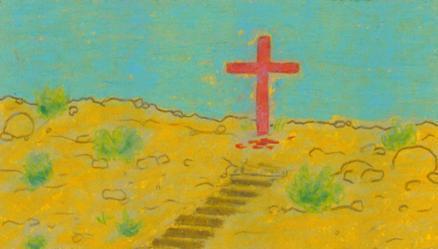
Steps to the cross.  Author image.
Steps to the cross. Author image.

On Skyrim: A Vent from a Christian Parent (a mom who plays)

Fighting a dragon in Skyrim.  From http://www.industrygamers.com/news/ps3-skyrim-its-not-nearly-as-bad-as-it-seems/
Fighting a dragon in Skyrim. From http://www.industrygamers.com/news/ps3-skyrim-its-not-nearly-as-bad-as-it-seems/

Maybe you’ve come here before and read one or more of my posts on Skyrim.  If you haven’t, and you’re a parent interested in knowing more about the game, please also read my earlier review for parents.  It would probably be better if you read that one first, actually, since it presents the positive aspects of the game.  And just by way of warning, there are all kinds of spoilers in both posts.

I decided to write this not because I didn’t know about some unpleasant things about Skyrim before (though I know more now) – from a Christian perspective – but out of frustration over the questions presented on a major website.  A great percentage of these questions show that a lot of young people like to play all of the bad aspects of the game, and miss the complexities.  If you are a Christian and let your teen play without watching and knowing what they’re doing, maybe you’ll want to.  My son hasn’t played lately, but when he did, he liked to play bad characters once to see what they were about.  I didn’t like that he played some of the roles he had, but I talked with him about it.  It gave me an opportunity to find out what he thought of things presented in the game, and if he did something bad in the game, how that might or might not reflect on his real-life actions and attitudes.

There are certain things that I really didn’t want him doing, and he didn’t – like selecting the perk where your character will be able to cut people’s heads off.  This is bad enough in quick game play, but in Skyrim slow-motion, close-up cut-scenes happen randomly and they would include the slicing off of heads.  If a parent is concerned about what their child can select as perks, they can easily see all available perks from the perk trees, viewable after selecting the Skills menu.

The problem with Skyrim is that it is made by a corporation seeking the largest possible market (the Elder Scrolls series did not start out this way, and previous games were more specifically moral).  While the Dovahkiin – your character, the Dragonborn – is SUPPOSED to be a good SAVIOR type of figure, the player can choose to do all kinds of evil things.  Not only that, but there is quite a bit more to do in the game if the player decides to do these bad things.  Please watch the video below to hear the theme song, which is awesome, and read the words of the song.  They talk of the character of the Dovahkiin and of the main quest of the game (though there is a secondary main quest too).

As a parent, you may want to know more specifically about what I’m talking of in order to decide if you want to limit your kid’s game play in these areas.

1)  The Thieves Guild.  In past Elder Scrolls games, the Thieves Guild was more like a Robin Hood sort of organization.  In Skyrim it is not, and it is controlled by Mavin Blackbriar, a super evil, powerful, business woman who has a whole heck of a lot people fooled.  The most disturbing thing about Skyrim, when I first started playing, was finding out that you cannot get rid of Mavin and stop her murders and mafia-like activities in Riften – even though it seems like the game-makers intended to let you do something.  By the way the characters in Riften talk, and by the notes you find, it seems as though bringing Mavin to justice will be a quest . . . but in the end you can’t do anything about her.  In any case, there are lots of quests to do with the Thieves Guild and lots of items unique to the guild to be had, so it would be tempting to a lot of people to be in this guild.

2)  The Dark Brotherhood.  These are assassins for hire.  Mavin is in with them too.  You get the picture.  Again, quests and loot . . . so it’s tempting to play as a bad guy.

3)  Vampires.  The Dawnguard expansion allows the player to be a vampire, but the main idea is to be a part of the Dawnguard – vampire slayers.  The castle with the vampires is pretty disgusting and I think the game makers did an OK job of making vampires a negative thing, while still providing a mass-market expansion.  Vampires of course feed on humans.

4)  Werewolves and the Companions.  Being a werewolf in Skyrim can be only a matter of being stronger once a day, but there is the option to feed off of a human (cannibalism) in order to maintain the form a bit longer. With the Dawngaurd expansion, however,  it can get nastier.  Dawnguar adds a werewolf perk tree, and unlike the other perk trees, perks can only be ge gained by eating human hearts.  Yeah, gross.   There is a non-Companions quest in Skyrim that conveys the evilness of lycanthropy.  I not only included the Companions here because it is the group where you acquire lycanthropy, but I wanted to mention the less than charitable intentions of the Companions.   They only do good works if they’re paid, and one gets the impression that the more they are paid, the more likely they will be to go out and actually do the job.   A good thing about the Companions is that you get the opportunity to cure the leader of his werewolfism, which he very much desires.

As discussed in my original review, Skyrim is a complex game if played the way it was meant to be played.  One quest that I found to be bad, that seems like a good thing to do at first, is the Gildergreen quest.  In this quest, you are to recover an evil blade (hey, a clue there), which is needed in order to collect the sap of a certain tree.  The reason you need this sap is to revive the Gildergreen tree in Whiterun.  Before you revive it, it looks dead; afterwards it looks alive and vibrant, with purple flowers.  So WHY would that be a bad thing?  Well, you wouldn’t really know at first.

The first hint is the evil blade, but then, a lot of things in Skyrim are just things and don’t necessarily live up to their names.  But there is another hint.  When you go to where the mother tree is, which is in a very large, beautiful, and tranquil lit cavern, you encounter some people there enjoying the sanctuary.  When you talk with the lady there, you can ask her about the tree and the blade, and she responds very negatively to you.  Ok.  So . . . what do you do?  It doesn’t seem that bad or anything – you just want to revive the tree in Whiterun.  But what happens, no matter how hard you try to control the situation, is that the persons in the sanctuary get killed by the guardian Spriggons when you cut the mother tree for its sap.  Is reviving an old tree in Whiterun worth the lives of those people?  Not in my book.  The Whiterun folks can get a new tree!

I think the Gildergreen quest is actually a good lesson in deciphering information and choosing to do the better thing.  Skyrim is full of mental and moral exercises such as the Gildergreen quest.  A problem with this, however, as with the evil groups and quests in Skyrim generally, is that the player must choose not to do a lot of available game play.  As an adult I’m not very tempted to join the evil groups and do evil things, but for a lot of young people these might be tempting (especially in the presence of peer pressure).  I do think Skyrim has A LOT going for it compared to other games: visual and musical beauty, complexity (good luck trying to decipher all the purposefully conflicting books and dialogue regarding the history and religion of not only Skyrim, but that of the continent it’s on, Tamriel), historical and mythological aspects, etc.  As a Christian parent, I think it’s OK for older kids to play as long as the parent(s) knows about the game and is at least somewhat involved with their kid’s gameplay.

[Section on lycanthropy updated on Jan. 23, 2013]

A Life Wasted, Others Tested? Difficult People and Depression

“We must learn to regard people less in the light of what they do or omit to do, and more in the light of what they suffer.”
― Dietrich Bonhoeffer

[edited slightly on Jan. 12, 2013]

My son is sleeping now, after having not slept last night and feeling ill for a couple of days. He’s a teen and visits his dad, and they had a roommate that was an older man and who was often difficult to deal with – though my son and him talked all the time.  My son last saw him yesterday before 1 pm. It was to be this roommates last day at the house and he was packing boxes (the dad told him he couldn’t live there anymore – part of my son’s stress-related illness, I believe). When my son and his dad came back, the roommate was gone but his stuff was all there. The dad got a call from the Sheriff’s department saying that the roommate was at the hospital, but upon contacting the hospital, and going there, nothing could be found out about the roommate. He couldn’t be visited and the hospital staff said they couldn’t relay any information until the next of kin were contacted.

Doesn’t sound good.

Some background about this older man. He’s a veteran with epilepsy, and while he had health care through the veterans program, he had to drive far away to get care. He had married a few years ago, but after he and his wife both lost their jobs and their house, his wife filed for divorce.  He didn’t have a place to live and ended up staying in a room at my son’s dad’s house.

He called his ex-wife everyday but it seems that she didn’t really care for him (she lived very far away, too). While he seemed happy enough, he argued a lot.  He snored loudly.  He had an old dog that kept peeing everywhere because it just couldn’t hold it in.  The dog was in bad shape but the roommate hadn’t had the nerve to take the dog to the vet yet . . . who knows how much he could afford, as his work was off-and-on.  He had taken to sleeping with the dog.  I imagine he was saying good-bye to it, and making his last days as good as they could be.  His dad had died a few days before Christmas and the funeral was on Christmas day; after this he became ill.

His dad just died; he lost his job, house, wife (I’m so sickened that this has happened to a lot of older people in our country); he was older, with epilepsy; he was sad that his dog was dying and he had to deal with that; he was kicked out of his residence.  Is there some reason why you would think that this person was actually dealing with life OK, even though he didn’t want to talk about stuff much? As Christians, are we to just keep going our own way and not actively asking and helping people who are having a difficult time in their lives? As Bonhoeffer said, we need to look beyond the superficial stuff in people’s lives, what they do, what they hide, and reach out and help the suffering.  Does a curmudgeonly guy deserve help any less than a sweet woman? No.

I’m not trying to say in this essay that I wouldn’t have wanted the roommate to move, I wouldn’t be able to say.  But I am saying it seems that more could have been done to ease this person’s burden, emotionally at least, so that he could deal with life’s circumstances better.  I think I and others need to try and live what the NT writer said more proactively:  “Do nothing out of selfish ambition or vain conceit, but in humility consider others better than yourselves. Each of you should look not only to your own interests, but also to the interests of others.  Your attitude should be the same as that of Christ Jesus . . .” (Phil 2:3-5).

I don’t know for sure that the roommate is dead. I just don’t know why my son’s dad wasn’t allowed to see him or find out anything about him if he was alive. But I will update later. Thanks for any prayers.

Update (Jan. 12, 2013):     The roommate died in surgery.  He had suffered a severe epileptic event while driving, which resulted in a very very bad accident.   We are not allowed to know the details of the accident, other than his car rolled over many times.  Apparently the roommate forgot to take his epilepsy medicine that day.  Both stress and age can contribute to forgetting things like taking one’s medicine, though my son thinks he may not have taken it on purpose (he had never forgotten before).  Anyway, his wife (or ex-wife) had come to see him before he went into surgery, so I’m glad of that; he used to call her everyday.

Update (Jan. 29, 2013):  I keep looking to see if a death notice or obituary is published, but there has been nothing.  I don’t understand this.  Can’t anyone who knew him or is related to him file something, out of respect?  This world is fallen, indeed.  It is easy to find two notices of when his dad died, but nothing about Dennis, but it’s as though he never existed.

“Why do Christians ‘pick and choose’ which Biblical laws to follow?”

1273151_84403885 stock.xchng ba1969I’ve seen that question asked so many times on the internet, and it surprises me that more people don’t know the answer.  But then again, I always have to check my surprise because, really, the answer isn’t taught much in churches, it seems.  I had always gone to Bible teaching churches, and the subject just doesn’t come up much (or at least it didn’t in the past).  Maybe, in a way, it just seems too obvious to pastors, but then why do people keep asking?  One law that will get a sermon now and then, since it specifically relates to non-Jews, is whether keeping the “Sabbath” “holy” is still required (this is from one of the Ten Commandments), but that specific subject is for a future post.

So what is the answer?  As so many ask, why don’t we stone homosexuals anymore?  Implying, I guess, that since we no longer stone them, then we should no longer think their actions sin anymore either.  Of course, the one action or lack thereof (capital punishment) doesn’t change what God thinks of the crime (homosexual acts); what has changed between the Old and New Testaments was the timing of judgement.  A major part of the Old Testament covers the time of the Jews, the history of the nation of Israel.  God made the nation of Israel to be a human group that was governed by God’s laws, and His specific revelations would come through Israel during that time.  They were an example that the pagan nations around them could see, and for future peoples to learn from.

But we – Christians –  are not the nation of Israel and so we don’t mete out punishments to people that sin against God.  We are to convey God’s plan of redemption to all peoples.  God’s plan is redemption, it isn’t punishment, per se.  His focus, as it was at the beginning and as it will be in the future, is for humans to have a wonderful life in fellowship with Him.  God is extending His hand to all who will accept Him during this church era, and is reserving judgement until later.  Sin is still sin.  Just because God doesn’t zap people from heaven when they sin doesn’t mean He doesn’t see it or that He has changed His mind about it.  Consider these quotes from two of the sources provided below:

The New Testament gives us further guidance about how to read the Old Testament.  Paul makes it clear in places like Romans 13:8ff that the apostles understood the Old Testament moral law to still be binding on us.  In short, the coming of Christ changed how we worship but not how we live.  The moral law is an outline of God’s own character–his integrity, love, and faithfulness. . . .   The New Testament continues to forbid killing or committing adultery, and all the sex ethic of the Old Testament is re-stated throughout the New Testament (Craig).

If we are to understand the application of the Law to ourselves, we must understand its purpose.  The law was never intended to be a permanent and full revelation of God’s mind to man but was given for the express purpose of preparing the way for Christ (Galatians 3:23-25).  Furthermore, the law given through Moses was never intended for any people except the nation of Israel (Deuteronomy 5:1-3; 6:6-7).  Thus, with the death of Christ upon the cross, this impermanent law, the Old Testament, was taken away (Colossians 2:13-17).  Now instead, God “has in these last days spoken to us by His Son.”  (Hebrews 1:2; cf. Matthew 17:1-5)  One who goes back to the Old Testament and tries to be justified by it has “become estranged from Christ” (Galatians 5:4) (Sharp).

So, in response to  the original question, we don’t “pick and choose” which laws to follow, since those laws aren’t for us to enforce.  We do, however, acknowledge as sin what God tells us is sin, and we convey it to others since “the Good News” is that Jesus died for our sins.  If there was nothing for Him to die for, then obviously He died for nothing.  If people don’t or won’t recognize their sin, then they will not see why Jesus had to die for them.  So, if you don’t know what sins are or don’t think that you’ve sinned, why would you think Jesus relevant?  The gospel would be pointless.

If homosexual sins, or any other sins, are said to be forgiven and thus accepted by God, it makes a mockery of the whole actions of Christ.  Christ said to the adulteress, “go and sin no more.”  We are to strive to live sin free; to continue to live a life of sin, purposefully, is to deny Christ’s work.  It’s like saying I can go out and murder, and the whole time Christ is at my side smiling, knowing He’s got me covered.  Yes, we all sin, but the point is to recognize sin and repent of any sinful actions, so that we can have relationship with God; God will forgive the repentant, but to be unrepentant means to be unforgiven.

For a more detailed presentation of the subject, please read one or more of the sources listed below.

_______________

Sources/For Further Reading:

Craig, David.  Dr. Tim Keller on The Bible and Homosexuality – What’s the Big Deal?

Dorsey, David A.  “The Law of Moses and the Christian: A Compromise,” in Journal of the Evangelical Theological Society (34:3/Sept. 1991).

Sharp, Keith.  Understanding the Law.

__________________

Image from ba1969 at stock.xchng, “Bible Collage 2.”

Ginger & Honey for Sore Throat; Hose for Plantars Warts!?

Ok, so I’m suffering through a very . . . bad . . . cold right now.  I’m quite fuzzy in the head, tired, have a very bad soar throat (off and on), am stuffed up, etc., etc.  I’m typing this because, I guess, I’m so tired of sitting around doing nothing.  This cold was coming on for a while, and the last couple of days were unpleasant, but this is the worst.  Still, I feel like doing SOMETHING, and, this tea I’ve been making and drinking is great and I wanted to share it with you.

Let me also say, first off, that I was using one of those sore throat sprays and it was doing nothing for my throat this time.  Nothing.  I don’t think I have strep throat, either, just a nasty sore throat.  But this tea has helped.  With a small mug, I used about one teaspoon of fresh ginger (well, grated ginger in a jar that you can get in some stores), one heaping teaspoon of honey, and a bag of Good Earth Lemon Grass Green tea.  (I put the ginger in a metal tea holder so that it’s not all loose in the liquid.)  By the way, honey has been clinically tested and found to control a cough better than cough syrups can (“10 Home Remedies that Work, AARP Bulletin, November 2011), and ginger seems to be somewhat of an anti-inflammatory.

The second part of this post’s  title speaks of hose and plantar warts.  For some time I’ve wondered if I should write about my experience with plantars warts.  It’s weird and embarrassing, and I don’t actually know if it would help anyone or not (!).  I praise God that my plantars warts had finally been cured, and if God is the one who did it, then prayer is what is needed.  In any case, I’ll let you know how mine went away and perhaps you might try it if nothing else has worked.

After I got married, many many years ago, I had developed a plantars wart on the bottom of my foot, though I didn’t know what it was.  I mention my marriage because my husband had plantars warts – I found out – and so did his family.  They can be spread by sharing moist environments.  Anyway, so I didn’t do anything about it, since it was small and I thought it would just go away.  But it didn’t, and eventually another one formed next to it.  I tried the over the counter liquids and patches, but they didn’t do much (tip: the liquid for corns is the same acid, but stronger and more effective).  The patches never stayed on my moist feet, though there’s one made with 40% acid that can be prescribed, and they stick better.

I finally had to go to a podiatrist.  He did the freezing treatment for about 9 months, I think, and it was hell.  He used the dry ice on the warts until they would bleed a little, which he said was what would actually get my body to fight the virus that causes them.   I couldn’t walk on that foot for a couple of days, really, after treatment.  But that didn’t work either, and the only other option, which he seemed loathe to do, was surgery.  I can understand not wanting to do that surgery, since it is by no means 100% effective and there are always risks.  After my doctor moved, I just stopped treatments.  Eventually I asked again about surgery, but my doctor at the time prescribed me the strong patches instead (mentioned above).  These helped a little, but did not make the warts go away.  At this point, I had the warts for about 10 years.

What cured me of my plantars warts, however, was getting a temporary part-time job where I wore hose, both the whole leg type and the knee high type.  (I live in Southern California and wear hiking/walking sandals most of the time.)  I actually was concerned when I took the job because I thought, based on my research into plantars warts, that having my feet in shoes with hose would only make the warts worse (heat + moisture = growth), and they can be pretty painful.  However, counter to all that I had read, after the four months of working like that, my warts were gone.  Praise God!  And they have not come back.

Thanks for reading . . . need some more of that tea now . . .