
[transcript of video] [updated on August 11, 2025]

If you clicked on this video you probably already know something about the video game Starfield, but just in case you don’t, Starfield is a huge open-world (or galaxy) single-player game made by Bethesda Game Studios. It came out in 2023, had various updates, and in 2024 an expansion called Shattered Space was released. This video covers all that material, and if there’s something new to add based on an expected 2025 expansion, then I’m sure to have an update out.
There are three “religions,” of sorts, emphasized in Starfield. One is the atheist group called The Enlightened. Another is the followers of the Great Serpent, The Promised. And lastly is one that the main story is most connected to, the Sanctum Universum. The last one will be the topic of a Part 2 video, so be on the lookout for that. I’ll also get into more of what Bethesda said their intentions were concerning the inclusion of faith questions in this game in that second video.
Now, you need to know at least a tad bit of Starfield’s historical lore to put these belief systems in perspective. Starfield’s story is one of a possible future of Earth and humanity, with your character starting out in the year 2330. At that time only a few of the galaxy’s star systems had been settled to any degree, out of the 120 that currently exist in-game. As a note, even though characters often use the word universe when they seem to mean galaxy, our Milky Way Galaxy contains over 3,900 solar systems, and humanity only explored a very small fraction of these by the time the game takes place.
But traveling back to the past, humans started living on Mars in 2100; the settlement is a company town called Cydonia. An interstellar “grav drive” was developed after this, being successfully used for the first time in 2141. This turned out to not be wonderful, however, as its original design led to the destruction of the Earth’s atmosphere, with Earth becoming uninhabitable by 2203. Besides Cydonia, the larger settlements are New Atlantis from the 2150s, Akila City from the 2160s, Gagarin Landing (from maybe the 2160s, Neon from the 2180s, and Dazra from the 2190s. Important to the religious content of the game is the fact that as the Earth’s demise was approaching, no messiah of any type either came or returned, so it can be guessed that most people gave up on the “old Earth” monotheistic religions. Reference to them in-game is either nonexistent (depending on the religion) or rare; there are no old world scripture books to be found, though other books that people evacuating from Earth brought with them are common. So religion in Starfield starts with a fairly clean slate.

[Now, The Enlightened]
Not surprisingly, though, the basis of the Enlightened is age-old. They are an atheist group, being charitable secular humanists. Personally (and there are philosophers who concur), I think that it takes some faith to believe that something doesn’t exist when no one has proven that to be true. Anyway, there actually isn’t much to the Enlightened in the game. They seem to exist in-game only to have their aspect of the faith arguments represented. There are two sets of texts related to them, Charity in a Godless Universe (parts 1 – 4) and Jake and the Enu (parts 1 and 2). As an aside, don’t you just love these names? They are good, poetic names. Ok. The texts are very simple and do not make any real case for the universe being godless. The Charity books are one young person’s experience with an isolationist sect that she presents as mean-spirited and hypocritical. She may be right, or she may not be telling us the whole story. Either way, a single group of mean people doesn’t warrant a belief in the nonexistence of God.
The Enu books tell us something like a “just-so” story involving early farming people that are strangely too ignorant to know where water comes from (except when it rains, I presume). The two groups are in conflict over a shared water source until they realize it doesn’t come from idols, but from a spring. This realization causes them to reject the idols and resume their neighborliness. So, somehow it’s the idols’ fault that they couldn’t get along. Take away the “gods” (that is, religion) and humans will no longer have conflict. Viola! This idea is commonly promoted by atheists. Interestingly, Bethesda has included conflicting information in regards to these religions or philosophies, either to let you know that things are not all that they seem or as a way out of the game not committing to any belief system. When it comes to the Enlightened, their representative in Akila City is one of those wrenches. When talking with him, he says that people can help each other grow spiritually.

When it comes to real world influences on The Enlightened it seems hardly worth mentioning them, as their claims for not believing in God seem to be common knowledge. But I suppose it could be argued that they represent the New Atheism—or at least modern philosophical thought on the subject, as opposed to post-modern. The New Atheists were activists for the non-belief in God, being openly antagonistic towards Christians. So too, the Enlightened’s book sets are anti-religion. New Atheism is said to be dead now, being a thing for about 20 years, say about 2002 to 2022.
It should be noted that most characters in the game seem to believe in an afterlife, but are unclear on the specifics.
[Now to the believers of The Great Serpent: The Promised of House Va’ruun]
The second group, the people who believe in The Great Serpent, represents an actual in-game religion. And it’s a doozy. Todd Howard, the head Director of Starfield, said that the game was originally inspired by both the Bible and Star Trek II: The Wrath of Khan, the one from 1982.i Well, faith in The Great Serpent is more Khanesque, though really, the stories are very different from one another. Probably the only thing remotely biblical about this religion is that the followers express remorse, like Christians do for sins, and many blame themselves for the calamity that befell them in the added content, Shattered Space.
So what are the basics of this religion, and how did it start? Faith in The Great Serpent did not begin on old Earth or Mars, where the colony ship Archimedes took off from in 2190ii, but is based on the experience of one flight member, Jinan Va’ruun. It seems remarkable that all those on board the colony ship, later renamed The Mourning—as in grieving, not a bright new day—would come to believe Jinan’s story. I surmise, though, that you either drank his Kool Aid or found yourself disappeared, as that is how their theocratic society operates in the game’s present time. This is not to say that his experience didn’t happen. It becomes obvious that he believed it to be real as you navigate your way through the story of Shattered Space.
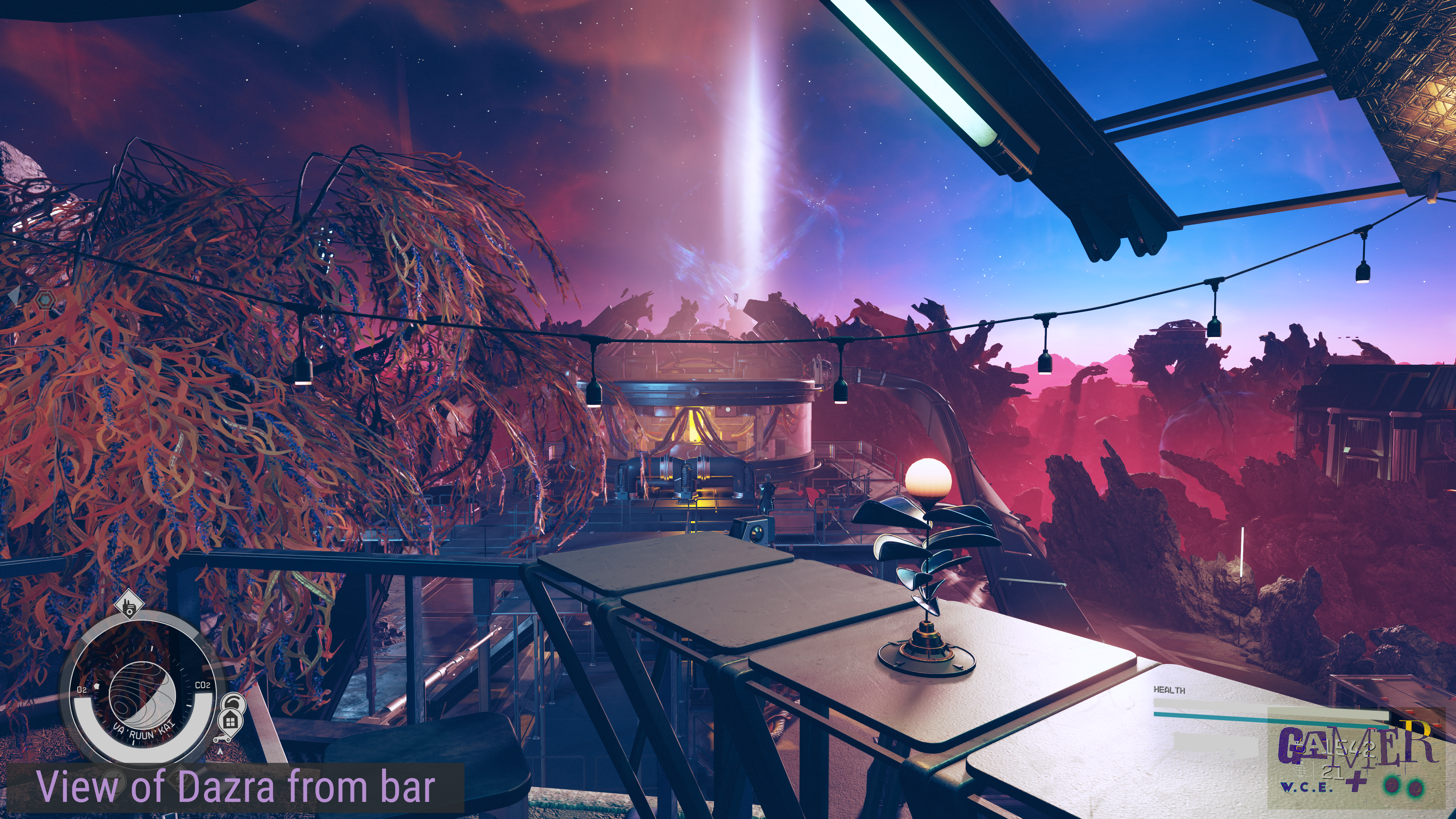
His experience of meeting what he calls the Great Serpent happened during one of the grav jumps the colony ship made. Because he lost consciousness during the jump and then acted pretty crazy afterwards, people were wary of him. As a note, there are tapes in the vortex-corrupted Scaled Citadel that you can find that seem to give you reason to doubt the authenticity of Jinan’s vision, but his later action of trying to find a physical way to reconnect with the Serpent serves to show his sincerity. Even so, the recordings also give you reason to not fully believe Jinan’s version of things to come.
After the ship landed and the colonists found themselves trying to set up their new lives, they began to listen to him. At least that’s what we find on the recording called “An Admission.” I think there’s good reason to believe that this tape is “made up,” or that at minimum it leaves much out. We also find that there was an original governing council, which would make sense since the ship was a colonizing one. But Jinan ended up taking over this council. He set up the theocracy called House Va’ruun, with four noble houses beneath his own, with these houses providing council members. The houses, by the way, were purposefully made up of diverse people and families, so it can be confusing to the player when encountering house members that look and sound quite different from one another.
So belief in The Great Serpent is required of all people on the planet now called Va’ruun’Kai, with “all must serve” being their maxim. They call themselves The Promised. The location of Va’ruun’Kai is kept secret, even though House Va’ruun signed a treaty with the other colonizing bodies in the past. Since not even their spies know the planets’ coordinates, the implication is that citizens are not permitted to leave. You can also guess that people are not allowed to have outside contact by looking at their literature. Old world books found frequently in the rest of the galaxy are rare here, having been replaced by rewritten versions of the classics. Examples are: A Tale of Two Systems, A Serpent’s Carol, and Nicolai Nicklesea. The vast majority of people live in or very close by to Dazra City, their only deal development. They also have a very large space station, though rendered unusable, which is the location of the start of Shattered Space.
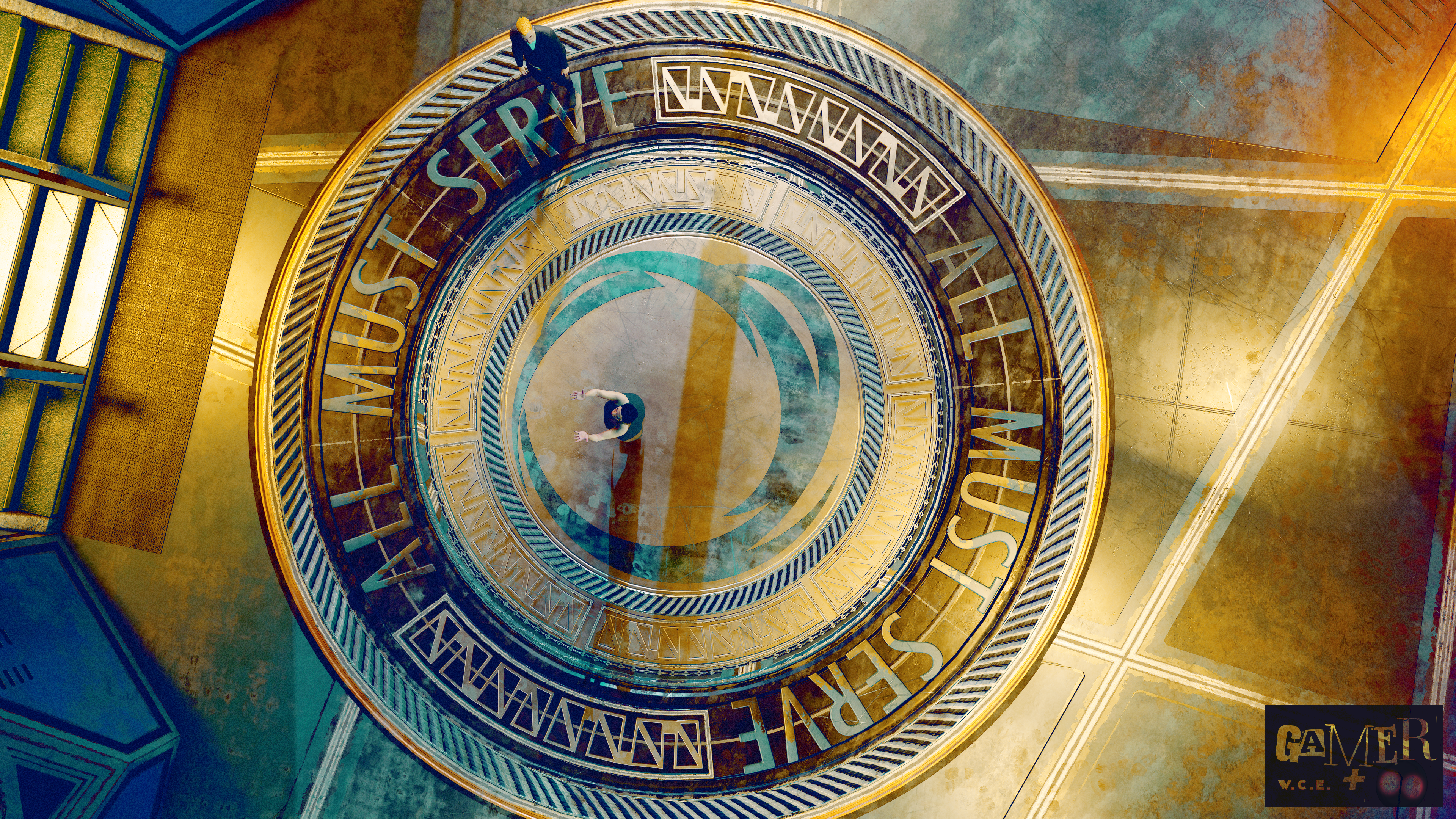
Their theocracy is a strict one. Anyone who is found disrespecting The Great Serpent is apparently not seen again, at least where there are guards. After you finish a certain mission, you can frequently hear citizens talking about how one of the top officials, Viktor Veth’aal, had his own son killed over non-belief. Once in a while you can hear someone warn the person they’re conversing with that they could get into trouble for what they’re saying, while others remark how someone they knew hasn’t been seen since saying something questionable in earshot of a guard. While this is certainly disturbing in itself it seems even more crazy at the present time, seeing as a huge percentage of their population was just wiped out along with half the city.
Being a theocracy, the city is imbued with religious symbols, statues, and shrines. Worship is a constant, although the main center of worship at the Scaled Citadel is destroyed as part of Shattered Space‘s main story line. Let’s talk about that for a minute since you can only see it during the last big battle of the added content. The place of worship inside is very large, as one may imagine, and it is very sleek and modern, very high class looking. It reminded me of a wealthy megachurch. I’m sorry I don’t have a screen shot of this. At the time I did the Citadel battle I wasn’t thinking I’d be doing a video, and experiencing the building is a one-shot event. At any rate, if you pay attention, you can see a smaller place of worship outside, dedicated to The Fang. This area is quite different from the worship hall, having pointy art panels and blood strewn on the altar and floor. Since there isn’t any talk of sacrifices—other than the one children are forced to do at a certain age—I don’t know what the source of blood is. Perhaps the children did the required ritual killing of their pet groats here. . . . my mental images of this are not wonderful. In any case, after the Citadel is destroyed, the bloody floor can still be seen, along with the fangs floating above.

Outside of the city there are very large shrines where people make pilgrimages. You can discover through a guide at one of these shrines that not all of The Promised look fondly at their violent past. They are definitely a divided people in regard to violent vs peaceful worshipfulness; there are even a few Vortex phantoms that are peaceful. At these shrines, you too can gain spiritual strength, which is an interesting take on religion and faith. After all, your character probably doesn’t actually have faith, though you can role play like you do. I didn’t claim to have any real serpent faith in the game, so just being you is enough to gain powers from the shrines. Interesting, too, is a surviving spiritual leader, Inaza Kaisir. She has seen visions which turn out to be accurate,iii proving to her non-believing scientist brother that there’s more to knowledge than what science can provide. So, there are things in the game to indicate spiritual or supernatural realities, even though there are also the opposite indicators of false beliefs, false hopes.
Ok. But who, or what, is the Great Serpent? The Great Serpent is the being that created everything, and it sits coiled around the heart of the universe. According to Jinan, it simultaneously is us and lives in us; it also supposedly loves everyone. (I’m sorry, but I find this really hard to swallow, as snakes just don’t seem to be the loving type. Do they give good hugs? Who cares if a snake loves them, honestly? And if it is us, then what, did it just find a complicated way to love itself?) According to Jinan, in the “From the Scriptures” and the “Serpent’s Crusade” recordings found in the Citadel, the Serpent told him to “prepare the way” for The Shrouding, the coming event where all but The Promised will be destroyed. However, who decided the method of preparation is not known, but Jinan clearly wanted to carry out the blood-letting method. It should be noted that Jinan says that the serpent’s form is “beyond grasp,” so why he says it’s a snake is not known. Beyond this, not much about their beliefs is provided to the player, as the multi-volumed “Va’ruun Scriptures” is not readable.

The Va’ruun’s history is brief, spanning less than three full generations (~140 years) from a single colony ship. In order to prepare the way as the Great Serpent commanded, some of them made contact and lived among others in the settled systems. Jinan claims they behaved as friendly missionaries, but the settled systems claim that they acted friendly only to spy on them, to get important information for their planned attacks. I tend to believe the settled systems’ version, since it would’ve been unnecessary to attack the people you were supposedly trying to convert and who would be destroyed by The Shrouding anyway. The Serpent’s Crusade lasted from 2240 to 2263, when Jinan’s son Jarek sued for peace after Jinan’s death. In any case, how they could fight for that long, with such a limited number of people, is a mystery, shall we say. The Va’ruun officially completely isolated themselves at this time.
The ending of the Serpent’s Crusade led to a split in the Va’ruun. Jarek’s twin brother, Jandar, and one of the noble houses, didn’t agree with ending the “crusade” and thus broke from House Va’ruun. Some say they were pushed out. This violent group of people are known as the Zealots, but they continue to call themselves The Promised. Their powerful and unconversational modified soldiers are called The Redeemed. Zealots are found on Va’ruun’kai and other planets and moons in that region of space and attack anyone on sight. They never try to convert people, just kill them. House Va’ruun does not attempt to convert people either, and when you convert as part of the story’s quest line, it’s a completely unheard of event that shocks people. In fact, the ritual you go through is virtually a forgotten process, with the location being unkept and considered by many council members to be not worth keeping.
Before I move on to the possible real world influences of this religion, I should describe a bit of what the Shattered Space story line is about. This is not a review of Shattered Space,—if it was, I’d have more to say for sure—but some aspects of the dlc’s catastrophe have bearing on both the Va’ruun belief system and real life experiences. Major spoilers here, if you couldn’t guess. The title of this added Starfield gameplay, Shattered Space, refers to the otherworldly vortex unleashed into Va’ruun space by the experiments of Jinan and his grandson and current heir, Anasko. Jinaan began trying to find a means to reach the Great Serpent to converse with him since he hadn’t heard from the Serpent after the fateful grav jump. His research went far but was not completed before his death.
His grandson, who frustradedly admits that neither his father nor himself has heard from the Great Serpent, decides to carry on his grandfather’s quest. He does so and discovers a way to connect with the vortex that exists between universes. The Serpent isn’t to be found in this vortex, though. Interestingly, the game hints at the purgatory-like aspect of the vortex through a character at the dilapidated Abbas Seaweed Farm. He can tell you that he’s had a dream where he’s a ghost, and along with others, he’s forever trapped to roam abandoned halls. In his dream, he also thinks he’ll be forever apart from the Great Serpent. He seems very much to be dreaming about the Vortex phantoms you encounter on Va’ruun’kai. The phantoms themselves will occasionally cry out to the Great Serpent, asking him to release them from their trapped space.
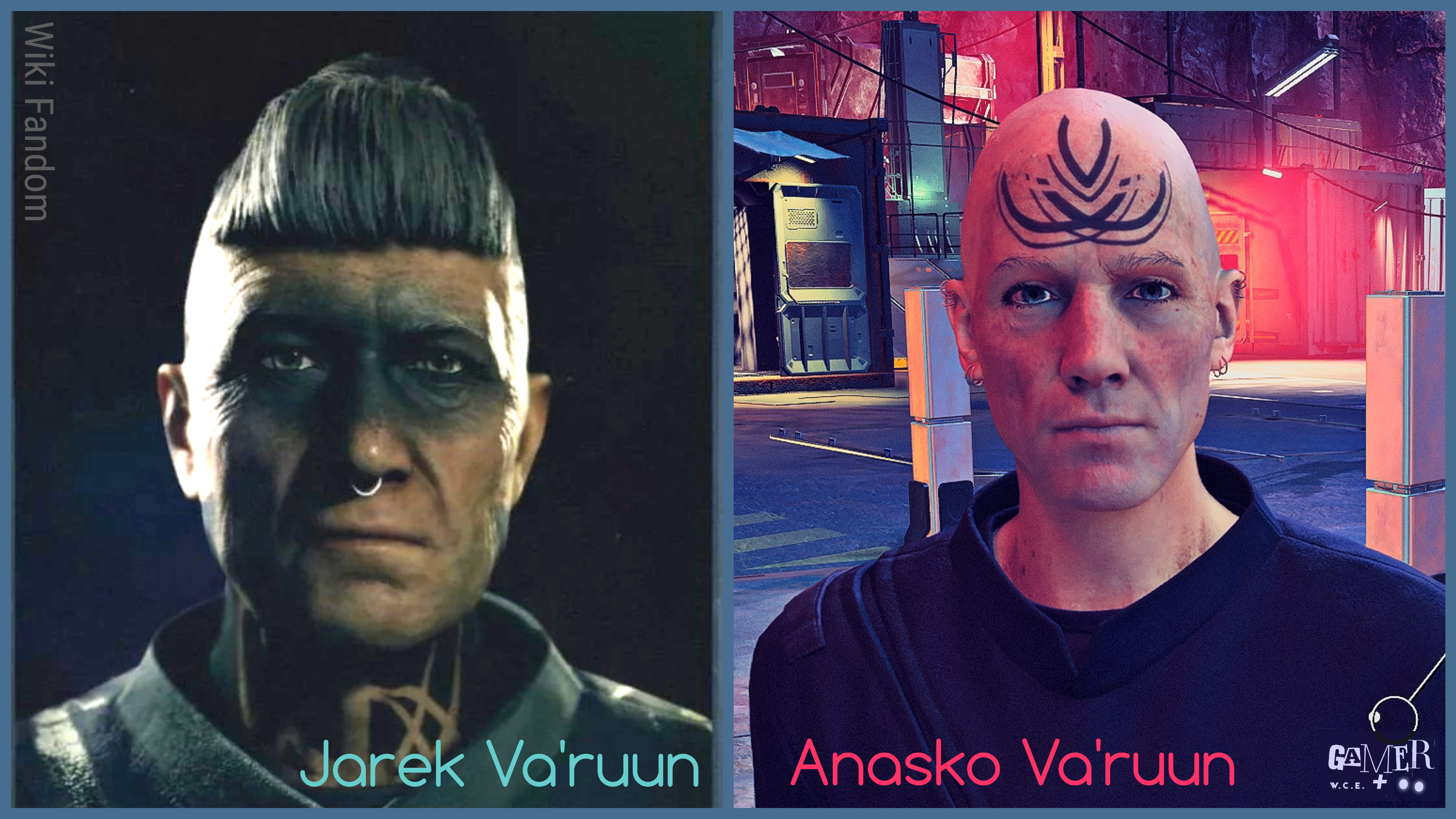
So Anasko, having discovered that people can be made seemingly immortal and empowered by the vortex, decides to begin a new Serpent’s Crusade. His genocidal goal of destroying the people of the settled systems ends up killing a huge number of his own people though, and leaving permanent enemies around Dazra, which itself is half destroyed. You learn this, of course, but you are unable to tell the people that their god wasn’t punishing them since it was not what caused the disaster. Jinan was very controlling and violent, and Anasko continued along those lines, causing massive self-inflicted destruction. Now, let’s move on to possible influences on this religion from the real world.
[Possible Real-World Influences for House Va’ruun]
Early in the game you find that one of your Lodge colleagues, Andreja, is a run-away Va’ruun, so you might naturally think other Va’ruun are like her, being Caucasian with a Eastern European accent [see note VI]. You end up meeting an incarcerated Zealot briefly, and she also seems quite Caucasian; the Va’ruun ambassador in Jemison has a similar accent and blackish hair like Andreja. So, when I landed in Dazra for the first time, I was shocked that the official who met me, Malibor Dul’kehf, looks like an Amazonian Yanomami native! That is, dark hair with bangs and black facial and neck tattoos. He seemed to have walked out of one of my old anthropology texts. It turns out his hair is reddish, but I couldn’t tell in the dark lighting of Dazra. Andreja and the ambassador don’t sport the tattoos (though I had forgotten that the jailed Zealot did), but it seems that all other Dazra citizens and Zealots have them. They may have a black bar across their face, encompassing the eyes, but more often they have elaborate geometric designs. As you meet more people in Dazra, you come to realize that House Va’ruun is the opposite of homogeneous. Even the vocal accents vary widely, which seems pretty absurd for a small isolated population.

Anyway, as you progress through the Va’ruun story, you discover that Jinan Va’ruun and his son Jarek, as well as other random citizens, also look like Yanomami. Is there a reason for this, other than gratuitous diversity? It could be that the game is hinting at two things. One is that the Va’ruun’s violent nature is cultural, since the Yanomami, or Yanomamo, are known to be a very violent people. They became widely known when Napoleon Chagnon, an anthropologist who lived among some of them, published a book about them titled Yanomamo: The Fierce People. This was in 1968 and the book, after a number of editions, is still assigned in anthropology classes. It’s garnered a great deal of controversy over the years, but whatever one may think of the criticisms of Chagnon’s work, it doesn’t change the fact that the Yanomami were, and still are, very violent people. As Encyclopaedia Britannica says, “Yanomami are constantly at war with one another, and much of Yanomami social life centres on forming alliances through trade and sharing food with friendly groups while waging war against hostile villages.” The Va’ruun are worse since they refuse to even form alliances. And, Jinan’s grandson attempts to continue the galaxy-wide slaughter that is the Serpent’s Crusade. (As a note, you can begin to alter their isolationism, or renew the Serpent’s Crusade, by the choice you make at the end of Shattered Space).

The second hint could be in regard to Yanomami cosmology, and how they came up with it. It doesn’t seem far-fetched to think that Jinan’s experience during the grav jump was like a DMT or ayahuasca psychedelic trip that Yanomami and other Amazonian tribes take part in. Seeing snakes while using ayahuasca is extremely common and a snake, or pair of snakes, is common to the cosmology stories of various Amazonian tribes. However, the similarity seems to end there. The cosmology beliefs I read about when researching this unexpected rabbit hole vary quite a bit. In a book entitled The Living Ancestors by Zeljko [Zelko] Jokic [Yo-keech], the Yanomami reported believing in a giant boa that holds the whole of existence—encompassing five cyclical layers—within its abdomen.iv In Jeremy Narby’s book on the Amazonian Ashaninca, The Cosmic Serpent, he shares both his own drug-induced experience of snakes, and another anthropologist’s ayahuasca experience of spirit beings helping him see the reaches of the galaxy. Sound familiar?
Narby also covers how a snake, or two snakes, were creators and/or knowledge keepers in various ancient or primitive cosmologies around the world. In some of these, the snake encircles creation, as Jinan basically conveys in the game. Narby references Joseph Campbell’s books a lot, and who wouldn’t, as Campbell published many in-depth books on mythology and cosmology found around the world. In fact, Campbell’s book entitled The Hero with a Thousand Faces (1949) has been utilized by numerous writers of books, scripts, and game stories. It wouldn’t surprise me if it influenced some of the writers of Starfield.
The most common symbol of the Va’ruun, the ouroborus, is presented in a variety of styles. The ouroborus is a depiction of a snake eating its own tail. That the Va’ruun use the ourborus so much is kind of strange, since in a cosmological sense, it signifies the cyclical nature of death and rebirth. The Va’ruun talk of the destructive Shrouding event and how they will be the only survivors of that, as opposed to a rebirth. They seem to want everything dead but themselves, so what would they even do with a new creation with new people in it? This is very different from the Christian perspective, which is linear, but which does have a one-time destruction and recreation of Earth, when life will be brought back to God’s original non-violent conception. For example, animals and humans do not attack and eat each other.

The Va’ruun have a large variety of snake-like statues, but since the ourborus symbol is used so much by them, let’s talk about it more. First off, when reading about it online you’d think the term itself is old, when it’s not, at least according to the etymologies in the dictionaries I checked. The symbol is ancient, but the word ourborus was first used in 1921, utilizing a combination of Greek words, and apparently wasn’t used much until the 1940s. Looking at the indexes of the four Joseph Campbell books I have, ranging in dates from 1959 to 1986, not one of them lists the word ourborus. I was surprised at this and that’s why I Iooked into its etymology. So apparently it was a word coined or borrowed for its usefulness in referring to a widespread ancient idea and/or symbol. It should be noted that much of what you might read about it online is conjecture, with very little known of its actual meaning from any given ancient culture. One explanation for the snake becoming a symbol of cyclical life has to do with it shedding its skin. It’s as if it regenerates itself, like it is reborn.
The ourborous symbol is found in ancient Egyptian tombs, but not much is known about its Egyptian meaning. It’s conjectured that early on it simply represented daily and seasonal cycles. It could’ve been related to their conceptions of the cosmos and life after death, and one ancient source claims it referred to the world. The Hindu have their own version of a snake involved with creation cycles, Sesha. This 1000-headed snake is coiled around the universe and represents a circular view of time. (If you have the Adoring Fan as a companion, he’ll mention how some religions believe time is circular.) The Norse people also believed in a giant cosmic serpent, called Jormungandr. He kept a hold of his tail while he encircled the world, until the time foretold when he’d release his tail in order to do battle with the gods. The world, most of the gods, and Jormungandr end up being destroyed, but a new world rises. So Jormungandr was an agent of change, as other cultures’s cosmic serpents were.

The Va’ruun ourborus symbol most often seen is very abstract, or stylized, being a circle with some pointed flares. This abstract symbol is actually a set of five linear shapes placed together. Because it was so abstract, I wasn’t at first willing to assume that it was an ourborus, but there are other versions of the symbol that aren’t as abstract. On all Va’ruun computer screens, the background contains a simplified ouroborus, and this same version can be seen on the Va’ruun Scriptures covers. A very interesting version can also be seen on black banners at and near the high elevation Tul’shahk monastery outside of Dazra. Here, the black banners depict an ourborus in a state of destruction. To me, it looks as though it has been shot, and at the opposite side of the circle parts of the snake are either disintegrating or wholly gone. I have no idea what this signifies. Since the serpent looks like it got blasted, it doesn’t seem to depict the disintegration of creation by the creature itself. Zealots are in control of the place and the teacher is preparing people to fight, but the banners may be from the dislocated monks. A statue in the Scaled Citadel may be depicting the destruction of the cosmos, as it shows the ourborous separating and crystal-like formations emerging. But that blast at the lower right side, shown on the banner, is not part of the statue. So who knows. By the way, there’s a travel poster that is oddly like that statue, from the mysterious Trident Luxury Lines.

The elephant in the room so far is that in Christianity (and Judaism, but I don’t want to speak for it here) “the serpent” is a representation of Satan, the being which caused the Fall of Humankind and who was said by God to be THE continual thorn in everyone’s side (I paraphrase). He is understood to be the primary adversary of God and his plans. So it’s interesting to ponder why the being that Jinan saw during a grav jump would appear as a serpent, when the Sanctum Universum—the subject Part II—does not bring up anything like a serpent at all. Your character never encounters anything like that either.
I played through the main part of the game several times and pondered it, and because of that whole experience I did not seriously think that the serpent in-game related to our real-world Christian beliefs. Even though Satan was the first thing that came to mind when encountering information about the Va’ruun faith, I came to believe that the Great Serpent in-game was unrelated to Satan. The reason? There is no Christianity and not much biblical in the Sanctum Universum. There is some stuff that characters have said about God, outside of the Bible, in the Sanctum Universum, which I’ll get to in the second video. So basically, the game is unbiblical, so why would the main adversary of the Judaeo-Christian God be in the game? And, the whole Yanomami angle through me off.
It could be that it’s only a representation of the old creator being of various cultures, represented by a snake, clashing with more modern and more western ideas of who the creator god actually is. As stated earlier, the snake has been viewed as a being who causes transformation. And really, all the old gods are transformers, not actual creators. The Judaeo-Christian God is believed to be the actual creator of everything, however, and all that from nothing. But, as I paid more attention to the words used by the Va’ruun for certain things, I came to believe the Great Serpent likely represents Satan, because the words are used in an opposite sense from their Christian usages; they are a mockery, or even used as a method of giving a false impression of Christianity. What words am I talking about? Crusade, monastery, and the phrases “prepare the way” and being “born anew.”
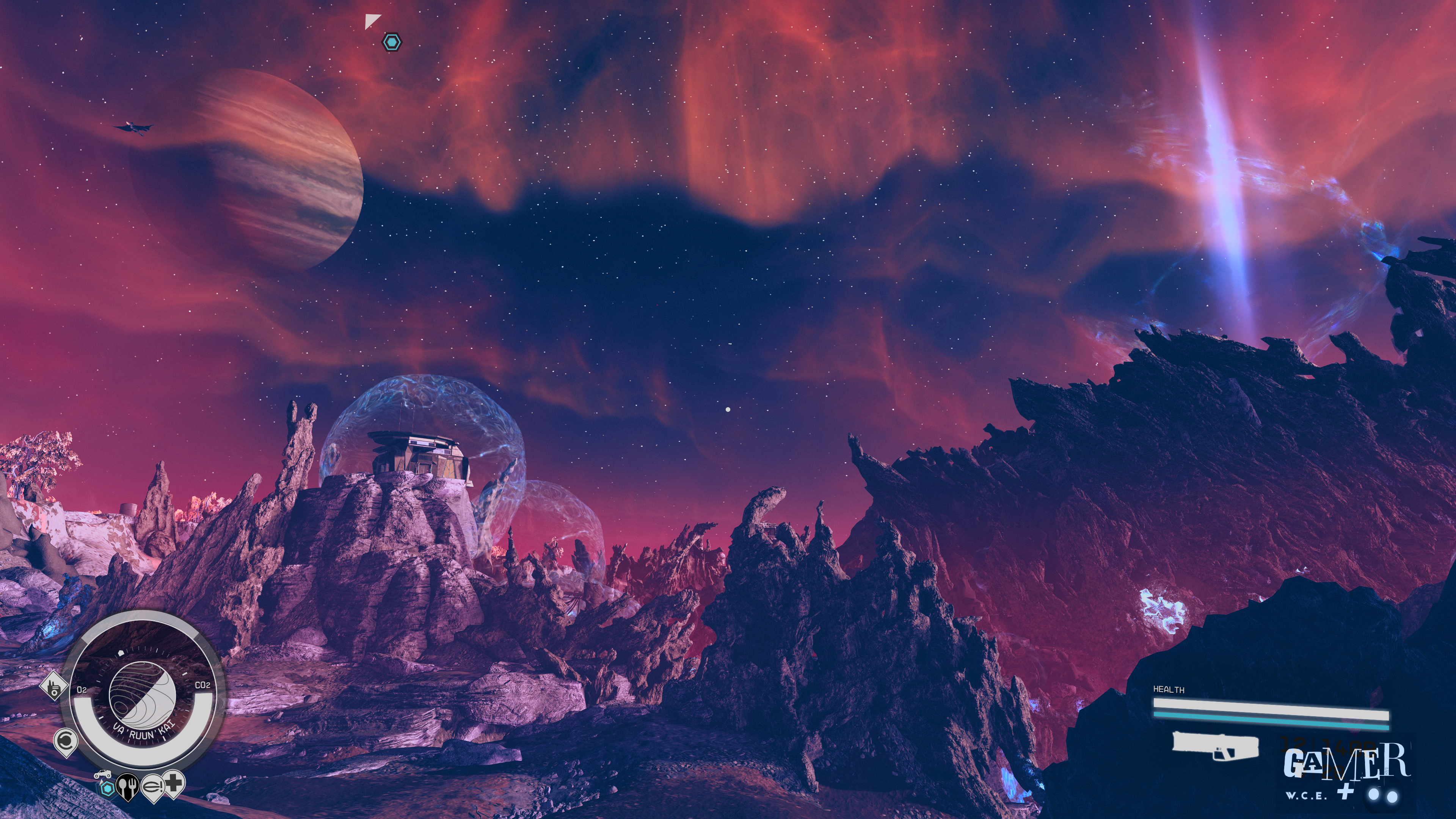
The word crusade is not religiously neutral as it immediately brings to mind the Catholic crusades of the late 1000s to latter 1200s. Very generally, the purpose of the crusades was to take control of Jerusalem after increasing attacks by Muslims on Christians going on pilgrimage there. While the crusades may be criticized for a number of reasons, the crusaders were never out to kill literally everyone the way the Va’ruun are described as doing. To use the word “crusade” in this context is demeaning. Calling it the Serpent’s Terror would’ve been more applicable since the Va’ruun have indiscriminately killed anyone that’s not a believer. And, the Va’ruun, but more specifically the Zealots, simply want to genocide the settled systems. By the way, the Zealots try to claim in their “Zealot Scriptures Vol. 3” that Jandar “dispensed the gospel of Jinan,” but even if that’s true, the player never experiences a Zealot who is willing to talk to them for the purposes of conversion. To sum up, the word crusade in this context is a mockery, meant to demean the original crusades by suggesting an equivalency.
The Va’ruun also borrow the Catholic word “monastery” to try and force that meaning onto a religious community that did not share the same values. Early orders of monks had different rules, but generally speaking monks were totally devoted to spiritual life and lived according to Jesus’ teachings. Therefore they would not be going around killing people for not believing everything they said, they wouldn’t be remotely thinking like that. So when it comes to the word monastery, the peaceful and perhaps wine-drinking monk is very likely what pops into the minds of most people. Since all Va’ruun know what they’re culture and beliefs are about, the word would not have fooled any of them, so it must be that it was used for mockery.
And who would be most interested in mocking the true creator God and his believers than Satan? Which brings us to the phrase “prepare the way” that Jinan claimed the Serpent told him to do, in order for The Shrouding to take place. I could write a whole article just on this subject, as the phrase relates to God’s plan of salvation, which is peacefully offered to all people. In the New Testament, see Matthew chapter 3, Mark chapter 1, Isaiah 40:3, Malachi 3:1, and John 3:16-17, for example. But here it’s used as an excuse to eliminate all who do not accept the Serpent. How more mocking can you get? The serpent, or at least his messenger, Jinan, tells his followers that they will be the ones saved if they kill all non-believers. Jinan can be viewed as the Anti-John the Baptist, since it was John who told of preparing the way. But by this he meant to repent and cleanse oneself spiritually, for the Messiah was coming. Again, the two meanings of the phrase are very much opposed to one another.

The fourth word or phrase is “reborn”, or to be “born anew.” In Christianity it is a necessity to be born anew by God’s spirit, the Holy Spirit: the person of flesh is birthed again as a person of spirit. In Shattered Space you are required to go through a ritual to become a member of The Promised. Inaza, mentioned earlier, is the person directing you in this. At the end she talks with you and asks, “Do you feel born anew?” And if you have gone through the Unity in the main part of the game, you have the option of replying “There’s more than one way to be born anew, trust me.” Strangely, she responds by saying that “your confidence is impressive.” As a Christian myself, I would never say that there’s more than one way to be born anew, so I found this disturbing. In the context of the game, it is not anything to be disturbed about, but by its own admission Bethesda made the game about religion and big questions, to think about faith in our real world, so I do not take this specific language during an important conversion to be game-related only. So, I was pretty shocked this topic was in the game and I was offended by the possible real-world implication. Since the Va’ruun are so strict about their religion, I found Inaza’s response out of place as well.
I’d like to bring up one more thing, just something interesting to reflect on. The leaders of the Va’ruun, Jinan, Jarek, and Anasko, all lamented not hearing from the Great Serpent after Jinan’s initial and powerful experience. It no doubt made Jarek and Anasko, if not Jinan, question their faith in the snake-like being. They couldn’t admit their concerns to anyone. But Jinan had the audacity to think of forcing his way to the Serpent’s location via science. He seemingly failed, but secretly discovered a Vortex and a way to make humans become a part of it. Anasko continued that endeavor, making a Vortex Va’ruun army, but never finding the Great Serpent. He became a Vortex Phantom himself, just wandering about and disturbed, perhaps destined to be in that state forever. Is it not folly to try and force your way into God’s kingdom? It seems so. It reminded me of a verse in the New Testament, one that many find puzzling; well, translators are puzzled by it too and translate it in different ways. In the New King James Version, Matthew 11:12 Jesus’s words are translated as, “And from the days of John the Baptist until now the kingdom of heaven suffers violence, and the violent take it by force.” Jinan, like the anti-John the Baptist he seems to be, and his descendants are violent and try and take eternity by force.
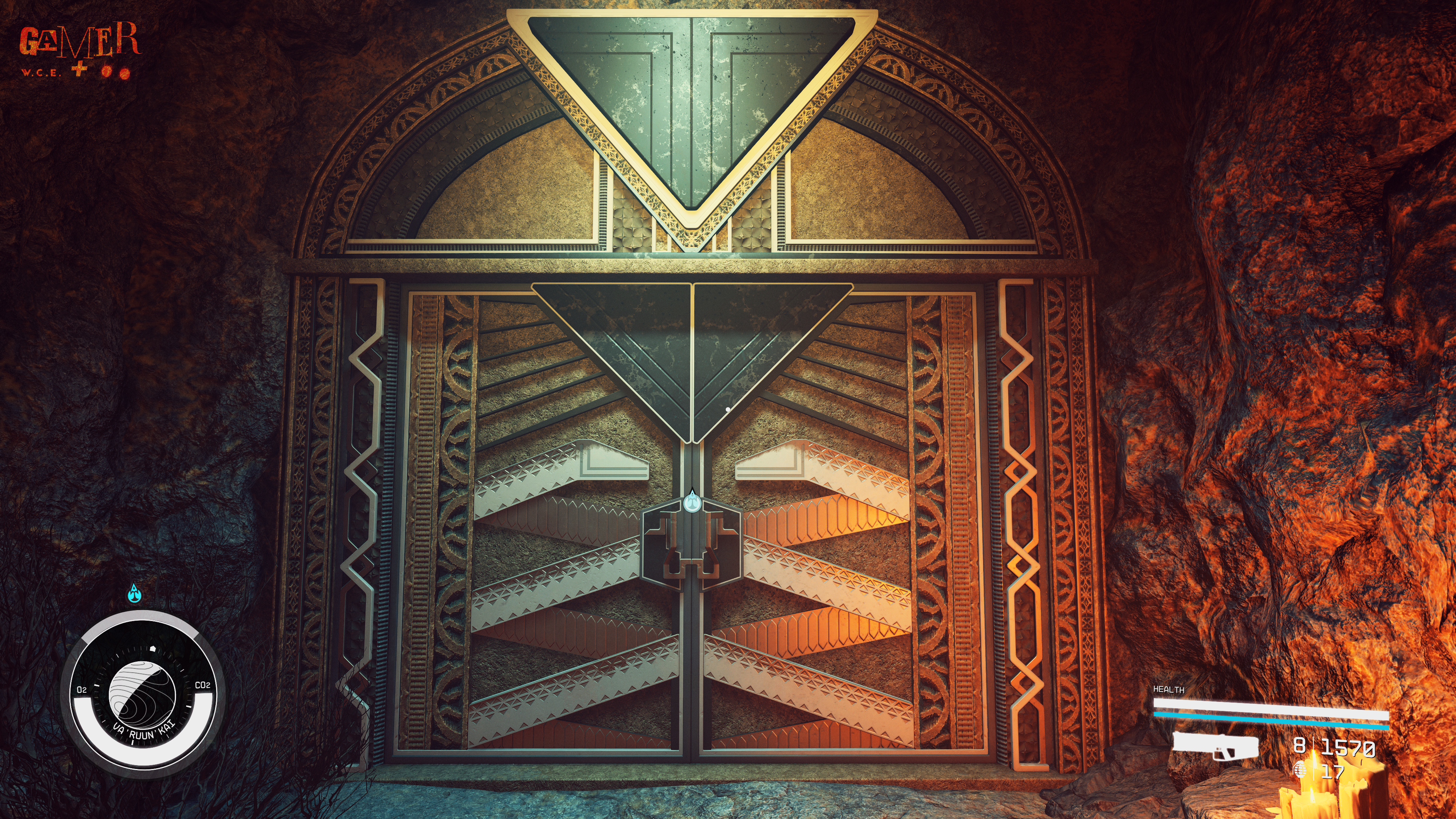
To sum up, The Promised religion: worships a celestial being they liken to a snake, is relatively new, is based on a single experience during a grav jump by a single person, is much more into violence than proselytizing, is forced onto the population, punishes apostasy with death, and is a mockery of Christianity. Who wouldn’t want to join?! If I were in an informal setting I might speculate on how perhaps the original intent was for the Va’ruun to indeed be a less diverse group, descendants of Eastern Europeans, practicing a religion that has similar characteristics to an infamous modern day religious subset, and that maybe, perhaps, the Yanomami were thrown in later to make the flash-point analogy weaker. But I’m not in an informal setting.
However, I will say more about what I realized late in my dive into this subject. Jinan sounds like the words “Jinn” and “Jann,” Arabic or Semitic words for the generally invisible beings we call Genies. When I was in university it was still taught that Muhammad was influenced by a Jinn during his creation of Islam, which is generally otherwise taken from the Bible. That is what was passed down through historical sources by the way, not made up by my public college professor. Jinn are a belief from pre-Islamic Arabians and supposedly their most common form of manifestation is that of a snake. There is also a story about how Muhammad was friends with a giant Jinn snake.v Make what you will of that.
Thanks so much for listening! Please Like and Subscribe. I’ll probably put out a review of Starfield next, less formally without a script, and then in Part 2 I’ll more fully go over what Bethesda’s people had said about the religious aspect of Starfield, survey the Sanctum Universum, and then compare the belief systems to one another. Take care.

i “Inside Starfield: how Bethesda's 'NASA punk' epic became the biggest Xbox game in a decade,” GQ Magazine, UK, Same White, August 24, 2023.
ii One source said it departed from Jemison, just FYI.
iii I'll discuss this more in Part II. Were her visions from The Serpent, and if so, who or what can give us visions?
iv In Chagnon's 1997 edition of his Yanomamo book, there are four layers, though I'm not sure about the snake.
v  “Jinn Snake Companion and Prophet Muhammad Story,” https://www.youtube.com/watch?v=BMHIkgA7OhI

vi  I'm not an expert, but others have said the same about her accent.  I want to note, however, that I heard an Israeli soldier speak recently and to me Andreja sounds a lot like him also.  So there's the possibility of Middle Eastern accent.  I did not add anything about their language, which has marks like a glottal stop.  This could simply be Lovecraftian, or could harken to either the Czechoslovakian or Arabic language.


 With Christian Eyes
