Prophecies fulfilled, others set in motion, at Jesus’ birth

Christmas gift box icon on old paper background and pattern
A slightly altered version of a saying floating around the internet.

Christmas is such a secular holiday anymore that a person is made to feel like they’re offending someone if they unselfishly wish someone a “merry Christmas.”  Instead, it’s all about having “happy holidays” or enjoying “the season” (my Christmas cards for this year say that . . . but what “season”?  Winter?  The season of blessing retailers with books in the black?).  It’s gotten so strange that some claim that you don’t need Christ in Christmas.  That makes sense . . . nowhere.  I’m surprised that calling it simply “the giving season” hasn’t caught on, akin to the calling of Thanksgiving “turkey day.”

I’m not complaining so much as noting the secular trend, in full swing now, to eliminate Christianity from public life.  Christmas, however, gives us the opportunity to enlighten people about God’s word, possibly more than any other holiday.  When it comes to Easter, people need to accept the New Testament witness regarding Christ’s resurrection.  With Christ’s birth, however, there are prophecies from the Old Testament (or Tanakh) that are pretty clear, and, there is no good reason to think the prophecies weren’t written centuries before Jesus was born.  These prophecies are from the books of Isaiah and Micah.

First, and no doubt very familiar, is Isaiah 7:14.  With verse 13 for context:  “Then Isaiah said, ‘Hear now, you house of David! Is it not enough to try the patience of humans? Will you try the patience of my God also?  Therefore the Lord himself will give you a sign: The virgin will conceive and give birth to a son, and will call him Immanuel.'”  This prophecy is announced as fulfilled in Matthew 1:22-23.  Here it is in context (Matthew 1:20b-23):

“an angel of the Lord appeared to him in a dream and said, ‘Joseph son of David, do not be afraid to take Mary home as your wife, because what is conceived in her is from the Holy Spirit.  She will give birth to a son, and you are to give him the name Jesus, because he will save his people from their sins.’ All this took place to fulfill what the Lord had said through the prophet: The virgin will conceive and give birth to a son, and they will call him Immanuel’ (which means ‘God with us’).”

Some critics like to point out that the word “virgin” is not specifically used in Isaiah, but, in the historical and cultural context, a young unmarried woman (a translation of the word used) meant the same thing as “virgin.”  It’s an odd criticism in any case, since, what else would God have meant?  Would an unchaste girl getting pregnant be any kind of sign from God?

Another criticism, and one without merit, is that the book of Isaiah may have been altered later.  There is no end to such criticisms of the Bible generally.  However, Isaiah is consistently viewed as ancient by scholars, even if some moderns like to imagine that it was written by two or three authors during three periods (the youngest being from about 400 BC).  More importantly, the birth prophecy is in the early part of the book, universally believed to be written in the 700s by Isaiah.  Regarding complete authenticity of the writings, a confirmation came via a Dead Sea Scroll of the entire book of Isaiah.  This scroll is from about 150-125 BC.  Having confidence in the authenticity and the ancientness of Isaiah, we can enjoy the related prophecies in Isaiah 9 (1b-2, 6-7):

“. . . in the future he will honor Galilee of the nations, by the Way of the Sea, beyond the Jordan—

The people walking in darkness
    have seen a great light;
on those living in the land of deep darkness
    a light has dawned.

For to us a child is born,
    to us a son is given,
    and the government will be on his shoulders.
And he will be called
    Wonderful[,] Counselor, Mighty God,
    Everlasting Father, Prince of Peace.
Of the greatness of his government and peace
    there will be no end.
He will reign on David’s throne
    and over his kingdom,
establishing and upholding it
    with justice and righteousness
    from that time on and forever.
The zeal of the Lord Almighty
    will accomplish this.”

There is another prophecy, from Micah 5 (2 & 4), that is quoted in Matthew and is therefore considered fulfilled.  As written in Matthew 2:6:

“‘But you, Bethlehem, in the land of Judah,
    are by no means least among the rulers of Judah;
for out of you will come a ruler
    who will shepherd my people Israel.”

The book of Micah was written about the same time as Isaiah was.  There are more prophecies regarding Jesus Christ, of course, some fulfilled and some yet to be.  You can view some of them in a linked list at Prophecies Jesus Fulfilled.

Wishing you a warm and love-filled Christmas, I also leave you with a couple of songs for you to enjoy:

It Came Upon a Midnight Clear  (simple and traditional; Bruce Crockburn)

Oh Holy Night (Josh Groban)

Sources:  (1)  NIV Archaeological Study Bible (Zondervan 2005), pp 1055, 1115, 1477.   (2) Rational Steps to Belief in Christ

The Parable of the 10 Virgins (Matthew 25:1-13): Confusion and Understanding

Light your lamp (http://www.sxc.hu/photo/848608).

Prior to my pastor’s recent sermon on having faith that you’re saved even when you feel inadequate and have doubts, I was wondering about the meaning of what Jesus said in the “Parable of the 10 Virgins” in Matthew (25:1-13).  Whenever this parable was brought to my attention, it bothered me, and it was on my mind prior to that sermon.  Maybe God was trying to tell me that my concerns about the parable were not applicable to me, and followers of Christ like me, and that there was another meaning to it that I simply wasn’t grasping.  In my 19 years of having been a Christian, I had not come to terms with this parable, which seems kind-of pathetic and embarrassing.  I want to dig deeper into this parable—car to come along?  Here is the parable (NIV):

“At that time the kingdom of heaven will be like ten virgins who took their lamps and went out to meet the bridegroom.  Five of them were foolish and five were wise.  The foolish ones took their lamps but did not take any oil with them.  The wise ones, however, took oil in jars along with their lamps. The bridegroom was a long time in coming, and they all became drowsy and fell asleep.  “At midnight the cry rang out: ‘Here’s the bridegroom! Come out to meet him!’  “Then all the virgins woke up and trimmed their lamps.  The foolish ones said to the wise, ‘Give us some of your oil; our lamps are going out.’  “‘No,’ they replied, ‘there may not be enough for both us and you. Instead, go to those who sell oil and buy some for yourselves.’  10 “But while they were on their way to buy the oil, the bridegroom arrived. The virgins who were ready went in with him to the wedding banquet.   And the door was shut.  11 “Later the others also came. ‘Lord, Lord,’ they said, ‘open the door for us!’  12 “But he replied, ‘Truly I tell you, I don’t know you.’  13 “Therefore keep watch, because you do not know the day or the hour.

The concluding verse exhorts us to keep watch always.  And that is good and necessary, and is repeated elsewhere:  “You also must be ready, because the Son of Man will come at an hour when you do not expect him” (Luke 12:40; see also Matt 24:42, 44; Mark 13:35).  The problem is, the young ladies weren’t keeping watch in an ordinary New Testament sense.  The five that got into heaven fell asleep just like the five that didn’t get into heaven.  The difference was in the oil–in their preparedness–not in their actual watchfulness (being awake, having one’s eyes open, looking toward Christ, etc.).

And the problem with this, the oil issue, is at least twofold.  One, oil is commonly known to be symbolic of the Holy Spirit, which we receive from God (we don’t take it or buy it).  Related to this is, (2) how much of our own work do we need to do to be saved?  First, one must read and understand the parable correctly.  Depending on the version I had read in the past, it wasn’t always clear to me that the five foolish virgins didn’t have any oil at all.  This needs to be clear:  five of the virgins brought lamps with them that were . . . empty!  Who does that!?  These were the foolish virgins, we’re told, but it still took a lot of time for my mind to register that someone would bother to bring lamps that didn’t have any oil.  (Truly, what is the point?  It’s like pushing your gasless car somewhere, expecting to drive it off later without filling it up.)   For a long time I thought that the virgins in question had oil in their lamps when they left their homes, and that they didn’t bother bringing extra and thus ran out (this is the take on it that Kaiser et al present, too).  But that’s not what the parable says.  In any case, let’s look at the oil issues I mentioned.

If oil represents the Holy Spirit in this parable, as it does elsewhere in the Bible, then the foolish virgins didn’t have the Holy Spirit.  They wanted into heaven, but they didn’t really accept God (God’s spirit); they weren’t true believers.  If you are sincere in wanting to be with God, God will give you His Holy Spirit; if you just want the goodies of heaven without acknowledging God’s will, your heart is in the wrong place.  So, the only work necessary is to actually believe in God and His son’s work:  “The work of God is this: to believe in the one he has sent (John 6:29).  And according to the parable, if you have God and His Holy Spirit you will be saved even if you get drowsy waiting.  This is quite comforting, and the opposite meaning of what I had originally thought regarding this parable.

One reason why I had a bit of a hard time with this parable is that it didn’t seem logically cohesive.  What I mean by that is, we believers are the church, which is referred to as Christ’s bride in the New Testament.  So, why would the ten virgins (and thus the message) refer to believers, who are already behind the door in the parable (as the bride)?  The virgins are attendants, not the bride; the Syriac and Vulgate versions of the New Testament make this clearer by adding in verse 10 that Christ came with his bride.

We know that the context of the parable is eschatological, that is, regarding the end times.  Only two of the commentaries I have here address the actual relevance of this issue, and they appear to disagree:  Enns 2008, which mentions the theological stance that the wedding takes place in heaven, while the banquet takes place on earth after Christ’s second coming, and MacDonald 1995, which seems to place the wedding and the banquet together (in heaven).  The time is during the tribulation, so the virgins represent true believers and those who aren’t true.  But, why use the term virgin, instead of just person?  Since Christ’s bride – the church – is already in heaven (behind the door), then why are the people in the parable referred to as virgins?  It makes me think Jesus is talking about the Jews during the tribulation period.  Certainly his audience at the time was made up of Jews, and MacDonald (1297) refers to them as those with messianic hope.

Israel is specifically called out in Revelation 7, where during the time of the opening of the Sixth Seal a certain number of Jews will be marked as saved; that is, sealed.  In the New Testament, God seals us with, and gives us, the Holy Spirit (2 Cor.s 1:22; Eph.s 1:13, 4:30).  But whether or not the “virgins” refer to Jews alone, or the wedding feast takes place in heaven or on earth (or even if that has any relevance), people will indeed be saved during the tribulation and the mark of this is the seal of the Holy Spirit, just as it is prior to the tribulation.  The admonition to always be ready and waiting for the Lord’s return is true at all times prior to the actual wedding banquet, announced in Revelation 19, which happens after all the seals are opened, all the bowls of judgment are emptied, and all the trumpets sounded, but before the final battle and binding of Satan (this order is according to the literal reading of Revelation).

The message to walk away with is, don’t be foolish but wise and receive the Holy Spirit, and after that keep vigilant in waiting for the king’s return.  However, we can take comfort that Jesus “knew” the five virgins who did in fact drift off to sleep, but who had held on to God’s seal.

_____

Sources

Dunn, James, and Rogerson, John. Eerdmans Commentary on the Bible. Grand Rapids: William B. Eerdmans Pub Co, 2003. Print.

Enns, Paul. The Moody Handbook of Theology. Chicago: Moody Publishers, 2008. Print.

Kaiser, Jr., Walter C., et al. Hard Sayings of the Bible. Downers Grove: InterVarsity Press, 1996. Print.

MacDonald, William. Believer’s Bible Commentary. Nashville: Thomas Nelson Pub.s, 1995. Print.

Plummer, Robert L. 40 Questions About Interpreting the Bible. Grand Rapids: Kregel Publications, 2010. Print.


Warning! Labels, menus, and other ESL hilarity

Maybe you don’t buy many products that are made overseas so you don’t know the delights of “English as a second language” labeling.  But for me, I love reading them to see what unintentional humor crops up.  It’s like watching Jay Leno’s “Headlines,” but without having to stay up so late.

For instance, I received a Hello Kitty travel mug recently for my birthday, and this was on the warning label:  “WARNING!  After filling hot liquid into the mug, please avoid to cover the lid immediately and avoid to shake the mug in order to prevent hot liquid spitting out via the drink hole.”  The other side of the label, providing tips for use, was written better, although it had the same silly warnings that so many products seem to need these days (“Do not microwave . . . do not carry mug into bag when its filled with liquid . . . Always check to make sure your lid is secured before drinking . . . “).

There’s a site where you can read all kinds of “English as a second language” labels, signs, menus, writing on clothing, etc., that people submit.  It is always fun, and I often find things that made me laugh harder than I had in a week or so.  It’s Engrish.com.  Here are some examples – enjoy!

german-type-sexual-harassment10054-Slip-And-Fall_largebeware-of-missing-footbacteria-pot-monstersvirtual-boringgod-jesus japan robot toyGod-Jesus robot toy sold in Japan in the 1980s.  The toy gave a yes or no answer to any of your questions!  So, while Jesus isn’t given a bad name, it seems like our God is viewed as some kind of psychic talisman . . .

Breaking Bad season 5: Did anyone else want to throw the TV out?

Update:  At the time that I wrote this I wasn’t aware that “Season 5” was broken up into two parts and that the next “season” wasn’t going to be “6.”  So the post below is about the first half of Season 5.  I did end up watching the second half, late again, on Netflix.  Those episodes were hard to watch, but I wanted to see if Walter would redeem himself in any way.  After much beyond believable behavior on his part, he finally did admit to himself – and to his wife before he died – that he didn’t do all the nasty stuff he did for the family (it really took him a long time to admit the obvious), but because he liked the power.  I may watch it again so that I can write a fuller post on sin and how people handle it, or don’t, in this popular show and how it reflects Christian belief on these subjects, but for now, enjoy the original essay (and thanks for dropping by!).

I wonder how many Christians watched “Breaking Bad,” the show about a high school chemistry teacher turned evil meth mastermind.  I hadn’t wanted to watch it until recently, but that was because I had a mistaken view of what the original story was; we also because don’t watch much TV.   My son wanted to see what it was all  about, however, since it’s so popular, and we ended up watching up to season 5 recently on Netflix.  (This is an adult show, so yeah, we fast forwarded over a few parts – something my son was very glad to do!)

If you’ve watched it, you know that the teacher, Walt, gets lung cancer and his family, even with insurance, can’t pay for all the treatments and surgery (that alone, if I recall correctly, was $120,000).  He originally thought of just letting himself die, but his family didn’t want that, of course.  So, since he knew chemistry, he decided to make money at making meth.  He wanted to make enough to pay for the family’s bills and put enough in savings for his kids to go to college – before he died.  He had good intentions, at least during the first season (and what he’s doing is not any different than what the tobacco industry gets away with legally, when it comes down to it).  However, the treatments went unusually well and Walt’s cancer went into remission.  Things went downhill from there.

I very much like the message of the first season.  It’s something like this comic:

522f5029aa919But after season 1, Walt gets more and more prideful until by the end of season 5, he murders a man easy as pie, where there is no reason to (and this man was a trusted associate).  At this point in the show Walt is 51 yeas old, and only about a year and a half has taken place since the beginning of season 1.  He is no longer the same person he was, by any stretch of the imagination.  People can and do become corrupt, but the only way that it can happen at that speed and level, is by becoming demon possessed.  So what I’m saying is that, *gasp*, the show is just bad.

The bad writing and weird decision-making by the characters started in season 2, so it makes me think the makers of this show didn’t have a good long-term vision for it.  To try and make us believe that all the violence and stupidity in the show is due to Walt not being able to get proper health care is just silly.  I do think they could’ve stayed on track with that original idea and come up with a more realistic, quirkier, and interesting show than what “Breaking Bad” became.

After season 1, it simply became a gangster soap opera.  There are tidbits in it about the possibility of God, and how people change and become bad, but that’s all they are – tidbits.  Besides that, Hank, Walt’s DEA brother-in-law (the good guys, right?), is an extremely obsessive legalist type who is about as equally disturbing as Walt!  In any case, I kept watching the show because I was invested in it and I simply wanted to see what happened next, but, after season 5, I truly don’t care what happens to Walt anymore.  I wish he hadn’t left a trail of bodies (or . . . barrels of acid) everywhere and made the lives of  those who happen to be still alive so miserable.

Pastor Chuck Smith, 86, has died

. . . and is joyously with the Lord (Thursday morning, Oct. 3rd).  Here are a couple of article links about the man who started the nondenominational Calvary Chapels.  He was sharp to the end, giving his last sermon just last month.

Christianity Today

The Christian Post

Update 10/13:  (1) A surfer’s memorial–a paddle out- will be held Saturday, Oct. 19, at the Huntington Beach pier, north side, starting at 10 am.  (2) The large public memorial service will be at the Honda Center in Anaheim on Oct. 27, starting at 5 pmUpdate:  You can watch the tribute at Chuck’s website.

Update:  There is a new web page up that is Chuck Smith’s biography, basically.

You may have heard already that Smith’s son-in-law, Brian Broderson, is the new senior pastor.  The Orange County Register published a pretty detailed article on Chuck and Calvary Chapel Costa Mesa here, and there are links to more related articles at the Register, too.

Update 10/20:  I didn’t go to the paddle out, but images of it were displayed at the service today.  Very awesome!  A DVD of it is planned.

A Study in Empathy . . . Poor Paul

I just wanted to share this comic image here, after it’s languished in my files for a while.  I hope you get a laugh out of it if you haven’t seen it before.  When I first saw it, I couldn’t stop laughing for some time.  =D

Paul's Thorn (Redjaw Cartoons version).
Paul’s Thorn (Redjaw Cartoons version).

Thoughts and Counter Thoughts on “30-Second Philosophies”

30-Second Philosophies

For a well-organized and concise presentation of 50 philosophical ideas, 30-Second Philosophies: The 50 most Though-provoking philosophies, each explained in half a minute is worth reading and having around for a quick review and a handy reference (for Christians too).  The title is more of a catchy, rather than an accurate, description of the book.  The “30-second explanations” can take more than that time to read, of course–if you’re thinking about what you read–and there are side notes to expand on the explanations.  In addition, for each section in the book there is both a glossary and a profile of the chosen exemplary philosopher.   There is some introductory material and a resources section in the back as well.

It is very nice indeed that the book is divided into subject sections, instead of the philosophies being presented in either a chronological or alphabetical list.  The sections are:  “Language & Logic,” “Science & Epistemology,” “Mind & Metaphysics,” “Ethics & Political Philosophy,” “Religion,” “Grand Moments,” and “Continental philosophy.”

Seeing as this blog is to view things from a Christian perspective, I will opine on the “Religion” section.  “30-Second Philosophies” may be a good book for a Christian to have as a basic learning tool and reference, but it is not friendly to Christian beliefs.  This is no surprise, since most philosophers today are materialistic* in their beliefs and thinking (Hasker 2006).  In this section Thomas Aquinas is profiled and the following philosophies are presented:  “Aquinas’ five ways,” “Anselm’s ontological argument,” “Epicurus’ riddle,” “Paley’s watchmaker,” “Pascal’s wager,” and “Hume against miracles.”

As might be assumed, ending the religion section with an (old) argument against a major theology isn’t a good sign toward a positive view of Christian philosophy and thought.  Each of the sections negatively criticizes Christian philosophers and theological ideas; for example, the author(s) makes a flat-out claim that the ontological argument is false, and elsewhere implies that God is false or silly since He didn’t make us all simply virtuous.  The “obvious solution” of making us only virtuous would have meant no problem of evil would have sprung up.  Here the author ignores the concept of actual free-willed beings, since in materialism there can be no true free will.

Regarding the Ontological Argument, please see the Sennett/Plantinga source below, which contains a chapter on the argument.  In that chapter (which is basically reproduced here), Plantinga goes through the history of the argument and provides a final and valid restatement of it (Plantinga is a professor of philosophy emeritus at The University of Notre Dame).  Secondly, regarding the problem of evil, the reader might like to view the William Lane Craig article provided in the Sources and Recommendations section.  There is no shortage of Christian writings on this subject, since, as Craig wrote,

“The problem of evil is certainly the greatest obstacle to belief in the existence of God. When I ponder both the extent and depth of suffering in the world, whether due to man’s inhumanity to man or to natural disasters, then I must confess that I find it hard to believe that God exists. No doubt many of you have felt the same way.”

I did not write of all the criticisms the authors had for Christian philosophy in “30-Second Philosophies,” but you are encouraged to check them out and seek the answers.  If you can imagine someone picking up this book and only reading the summary explanations and criticisms, then you will get an idea of what the average person or student thinks.  You can find this level of knowledge and thinking all over the internet (and no doubt in our more physical interactions), and it would behoove us to know more and have legitimate and current counter arguments and answers.

* This link will lead you to a subscriber view only article.  To see the whole article without being a subscriber, do a browser search and click on the link for “What is Materialism?” by Michael Philips.

Sources and Recommendations

Beilby, James K., editor, For Faith and Clarity: Philosophical Contributions to Christian Theology  (BakerAcademic 2006).

Craig, William Lane.  “The Problem of Evil,” at Reasonable Faith.

Evangelical Philosophical Society (and Philosophia Christi).

Evolution News & Views

Hasker, William.  “Philosophical Contributions to Theological Anthropology,” in For Faith and Clarity (Beilby 243-260).

Kreeft, Peter J.  “C.S. Lewis’s Argument from Desire,” in G.K. Chesterton and C.S. Lewis: The Riddle of Joy (William B. Eerdmans Pub. Co. 1989, 249-272).

Sennett, James F., editor, The Analytic Theist: an Alvin Plantinga reader (William B. Eerdmans Pub. Co. 1998).

Hope for Men in Survival Prostitution (Chicago): Emmaus Ministries

To order book in a way that supports Emmaus, go here:  http://streets.org/streetwalking-with-jesus/
To order book in a way that supports Emmaus, go here: http://streets.org/streetwalking-with-jesus/

I feel so blessed and am encouraged in my faith by Emmaus Ministries.  I found out about them only recently, which is not terribly surprising since they minster across the country from me, in Chicago.

Their mission is “to make Jesus known on the streets among men involved in survival prostitution.”  Male prostitution has been pretty foreign to me and I hadn’t thought about it much.  I had seen human trafficking statistics that show that a small number of males are tricked or forced into prostitution worldwide, but that’s basically as far as my knowledge went.  But, male prostitutes here in the U.S. may do it “voluntarily” for a number of reasons, much like female prostitutes.  Much of the information about female prostitution, below, appears to be applicable to male prostitutes too.

Summary of research and clinical findings regarding violence in all types of prostitution

  • 95% of those in prostitution experienced sexual harassment that would be legally actionable in another job setting.
  • 65% to 95% of those in prostitution were sexually assaulted as children.
  • 70% to 95% were physically assaulted in prostitution
  • 60% to 75% were raped in prostitution
  • 75% of those in prostitution have been homeless at some point in their lives.
  • 85% to 95% of those in prostitution want to escape it, but have no other options for survival.
  • 68% of 854 people in strip club, massage, and street prostitution in 9 countries met criteria for posttraumatic stress disorder or PTSD.
  • 80 % to 90% of those in prostitution experience verbal abuse and social contempt which adversely affect them.

(Melissa Farley, 2004, “Prostitution is sexual violence.” Psychiatric Times. http://www.psychiatrictimes.com/sexual-offenses/content/article/10168/48311).”

There are academic studies on male prostitution, which of course are not widely available on the internet.  Here is a quote from one that you can access:  “In February 2010, a middle-aged man was arrested on suspicion of running an illegal brothel in the city of Amersfoort. In this brothel, which was located in the house of the suspect, between 10 and 20 young men of Eastern European and South American origin were found. Their passports had been taken from them, and they had been told that they had huge debts for travelling costs which they would have to pay back by working in the brothel (Police Utrecht, 2011).”   This study found that most male prostitutes in the Netherlands go into it voluntarily, but the preceding quote gives a glimpse into the ways some are forced into it.

The men Emmaus Ministries helps have come from abusive and broken homes.  As they write at their site’s home page, “Who would you have become if, from age five to seven, you were sexually abused by a neighbor? What would your life look like if you never knew your parents? How would your life be different if your parents abused drugs and pimped you out as a child?  These are some of the stories of the men we serve.”

Volunteers and employees meet the men they serve by walking the streets of Chicago when these men work, late at night until 2:30 am.  For those men who decide they want to either check out Emmaus more, or obtain help, hospitality and companionship, they stop at the ministry center.  There the men can take a shower, clean their clothes, and get a meal and a prayer.  There are group prayer-and-share meetings, one-on-one counseling and discipleship sessions, and various recovery assistance activities.  They help up to about 300 men a year.

If you’re not sure about all this, Emmaus has posted some testimonies from some of the men they have served.  Here are two of them.

Shawne.  Shawne was one of two children born into a Christian family.  His father was an alcoholic who didn’t work consistently and who abused him.  At 16 Shawne ran away from home.  He was homeless and desperate, so he started selling himself on the streets of downtown Chicago.  Shawne met Emmaus Outreach staff on those streets, but he didn’t trust them. He was sure that, since they were Christians, they would judge him because of his lifestyle.

 “When I first came,” he remembers, “they were just like ‘Hey come on in. We know what you want. We know what you need. And we’re here for that.’”  He ate a family-style meal with staff, volunteers, and the other guys there. He took a shower. Then he left, and so did his preconceptions about the Christians at Emmaus.

He started coming down more often and got to know the staff and volunteers. That’s when he started hearing the message that, as he puts it today, “there’s a better way to live.”  But he didn’t mind it so much at that point. He knew they loved him.

“That’s the thing about Emmaus,” he says. “You don’t have to be homeless to get help. I’ve had a job and an apartment, and I’d still come around for their support, the spiritual support. And then when I’d fall, they weren’t like, ‘You’re going to Hell. You failed.’  No. They accept you and say ‘Hey, we’re going to do this all over again. What can we do for you?’”  (Abridged and quoted from here).

Timothy.  Timothy was seven when his parents divorced, and afterwards he, his mother, and his siblings moved around a lot, frequently staying with relatives.  Some of these family members secretly abused Timothy physically and sexually.

When he was 24, a friend introduced him to hustling downtown as a way to make money.  The first time he got into a car with a john (i.e., a customer), Timothy was terrified.  He started drinking and using cocaine to cope with his fear and shame.  After that, hustling got easier; he not only was addicted to drugs, but to delusions of personal attractiveness and conquest.

But after having experiences of sexual assault and rape, his delusions evaporated and he eventually realized that he wanted companionship.  Timothy often saw Emmaus Outreach ministers on the streets, but wanted nothing to do with them.  Finally, however, his curiosity got the better of him and he found himself at the Ministry Center.

“To Timothy’s surprise, at Emmaus he found not only a safe place where they served good food, but people who talked with him as a human being, not an object to be used. He quickly realized that, at the Ministry Center, he could be honest about everything in his life. After a week . . . he felt at home–the first time he had experienced that sensation since his parents’ divorce.  Timothy saw that he had a spiritual void that he hadn’t been able to fill, and began to hope that maybe he could find a way to become whole again.

In 2008, with Emmaus’s help, Timothy went into drug treatment for three months. He came out fully sober for the first time in almost 10 years. . . .  That summer, he went on a retreat with Emmaus to Plow Creek Farm in central Illinois, the first time he had ever been out of the city. That first night, he went outside and saw a sky full of stars for the first time. He was struck by God’s majesty and mercy at that moment, and by how amazing it was that a God who created the stars cared about him.  After the retreat, his faith and understanding of God continued to grow . . . and he realized that the spiritual void he’d felt almost all of his life had finally been filled.

Today, Timothy remains clean and sober. He works for a suicide prevention hotline, and takes classes at Chicago State University. He continues to come to the Ministry Center a few times a month, now as a volunteer and mentor.”  (Quoted and abridged from here).

________

Other Sources/Further Reading:

Prostitution Research & Education Quick Facts

Kenya: Male Prostitution Causes Rise in Sale of Pampers

Jihadists Kill at Least 68 Non-Muslims at Mall in Kenya

This isn’t a perfect article on the attack that happened yesterday, but it’s still very good.  The latest reports indicate that at least 100 more have been injured.

Attack on Nairobi Mall Shows Al-Shabaab’s Ominous Reach

Here is the start of the article, and more, but please click the link to read the rest.  This might be an eye-opener for many.

In a horrific mid-day attack on Saturday, September 21, 2013 in downtown Nairobi, Kenya, jihadist assailants invaded an upscale shopping mall, slaughtering and injuring dozens of terrified shoppers with grenades and automatic weapons.

As of early Sunday morning, even as the stand-off between the attackers and Kenyan security forces continued inside the mall, the death count stood at 59, a number sure to rise in coming hours.

According to reports, at least an additional 150 have been injured. People fleeing from the modern Westgate mall reported that the attackers had singled out non-Muslims to kill after telling Muslims to get out. . . .

Local mosques in U.S. areas with a heavy Somali immigrant population, such as Minnesota, play leading roles in recruiting young men, often born and raised in the U.S., to sign up for jihad in Somalia. . . .

[One of these is ] Al-Hammami, a 28-year-old from Alabama . . . The son of a Christian mother and a Syrian-born Muslim father, al-Hammami likely was recruited to jihad at the University of South Alabama, where he was president of the Muslim Student Association (MSA), the original and still one of the largest Muslim Brotherhood front groups in the U.S.

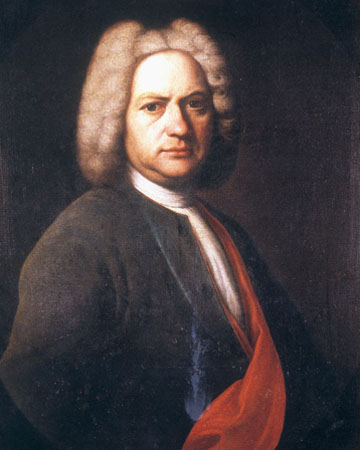
Time Stood Still for Bach

Princess Leia, older?  No, Bach in 1720.
Princess Leia, older? No, Johann Sebastian Bach in 1720.

God truly favored Bach.  How else can you explain that time stood still for him?  How do I know this?  I mean, everyone would know, right, if such a miracle happened (over and over again)?  No, no one would know.  He’d be sitting there writing one of his 1,000+ scores while changing one of his 20 kids’ diapers while the world around him was still and silent.

Yes, time stood still for him.  Richard Wagner said that Bach’s work was “the most stupendous miracle in all music” (Kavanaugh 26).  See?

At any rate, that’s my excuse for getting such a piddly amount of things done in my life; God has not favored me with time stoppages.  And I don’t have a photographic memory, as perhaps Bach did, and as C.S. Lewis did, who was also crazily prolific in his life.  A photographic memory helps . . . a lot.  And God making time stand still for you.

To make things a bit clearer about Bach and his miraculous output, here are some perspective builders.

  • Both his parents died when he was nine.  He did not inherit wealth and therefore did not have lots of extra time.  (In fact, during his lifetime only 8 – 10 of his works were published, so he didn’t acquire wealth–and the extra time it can afford– from his compositions.)
  • He played a variety of musical instruments (and sang) from childhood.  He worked at a number of churches as church musician, primarily, but also was employed as “Capellmeister” for Prince Leopold.  Eventually spurning the Prince’s secular position, he went to St. Thomas’ in Leipzig to become Cantor and Music Director.
  • His first wife died, then he married a second young wife.  As mentioned, he had 20 children altogether (not all reached adulthood).  This makes me hope that God made time stand still for his wives some, too.
  • Bach not only worked at churches, composed music (and in a large variety of styles), and helped make lots of babies, but he also taught.  He taught Latin AND music, to outside students as well as his own children.  I must be missing something here.  He taught Latin and music, while doing all the rest of his daily genius stuff . . . he must’ve taught a third subject or laid golden eggs or something, right?  Oh, that’s right, he . . .
  • . . . and his wife (or wives) were very social and hospitable and always had people over at their place!
  • His eyesight worsened as he aged.  By the time of his death at age 65 (1685-1750), he was blind.

Maybe I’m wrong about God stopping time for Bach.  But if so, the only other possibility is that he never slept.  God either made time stand still for Bach, or gave him the gift of sleeplessness.  This might better explain his 20 children, too.

___

SOURCES:

Kavanaugh, Patrick, Spiritual Lives of the Great Composers (Zondervan 1996).

Genius Ignored, Bach

Christian Things and Things Seen Through Christian Eyes

Architectural Styles of America and Europe

An educational resource for topics of architectural styles, and related historic trends.

Wrestling with Truth

Philosophy. Ethics. Theology. Culture.

wastestream

Unflinching Investigation of Sustainability Realities

O' Canada

Reflections on Canadian Culture From Below the Border

Curriculum of the Spiritual Life

Poems, Prayers, & Proverbs that speak to what it means to be a "living curriculum" of the Christian Life.

Havoc and Consequence

(collpase into now)

En*DANE*gered

It's a Rare Thing

Mr Oliver.

Gaming, Music & Movies

Steve Rose, PhD

Gain Long-term Freedom From Addiction

Susie Trexler

Secret Knowledge of Spaces

Time Tells

Vince Michael on history, preservation, planning and more

mhpn

we advocate for Michigan's historic places because they contribute to our economic vitality, sense of place and connection to the past.

Port Huron Area History & Preservation

Blue Water Area Local History