All posts by Vicki

Destiny, a New Kind of Online Multiplayer Video Game

A newer, post-DLC review, and a story analysis are available.  Please consider viewing:  Don’t Buy Destiny . . . Unless, and Destiny’s Story: the Nature of Evil and Its Corrupting Influence.

The article below is now in two parts (I and II).  The first part deals with the Beta and what I learned about the game at that time.  The second part shares notes about various good and maybe not-so-good aspects of the game pre-DLC (last updated 10-07-14).

A view of the crumbling but future earth in Destiny (beta).  Copyright Bungie, as provided at the Destiny page at Amazon.
A view of the crumbling but future earth in Destiny (beta). Image from Destiny game page at Amazon.com (copyright Bungie).

I.  What the Beta Spoke to Me

During the 4th weekend of July, 2014, I was fortunate to be able to play the public beta of Destiny. My son and I both played it quite a bit, getting a feel for the game. I’m glad I played as much as I did but had hoped to play more! I didn’t expect the beta to end so soon, especially not on Sunday afternoon instead of evening. That my son and I played so much, and wanted more, goes to show what a good game Destiny appears to be.

I say Destiny “appears” very good since the beta provided very little of the story and there was no indication as to the actual level of role-playing (can true choices be made or is the quest line only linear?). For me, the role-playing aspect of games is important and I buy them for that reason. I’m hoping for the best regarding the depth of the game’s story and the level of player immersion into it. The game is rated T for teen and has various game-play modes, including player vs player, making it both widely accessible and no doubt desirable to a large audience.

Leaving the formal talk aside for a moment, I can say that we loved the game so far (with some qualifications) and ended up preordering one of the special editions. Basically, it’s a new type of futuristic fantasy game that’s lots of fun!

Is it an RPG or Action-Adventure MMO, or . . . ?

Destiny is set to release on September 9, 2014, so I can’t say from experience all that this game truly encompasses, but the makers of the game describe it this way: “The next evolution of the first-person action genre that provides an unprecedented combination of storytelling, cooperative, competitive, and public gameplay, and personal activities that are all seamlessly woven into an expansive, persistent online world. Venture out alone or join up with friends. The choice is yours. Personalize and upgrade every aspect of how you look and fight with a nearly limitless combination of armor, weapons, and visual customizations. Take your upgraded character into every mode, including campaign, cooperative, social, public, and competitive multiplayer.”

Playing the beta revealed much of those elements, and from the quote above it can only be guessed that the game is not a true role playing game (RPG). It seems that it’s getting difficult these days to categorize games as true RPGs, where you develop your character via choices and action that is not simply linear (in other words, you don’t just choose your class, looks, and armor, but make choices within a branched story that have effects on your character and on other aspects of the game). This is a “first-person action” game with “storytelling.” So, it doesn’t sound like your choices change you or the story. But, we will all know after the game comes out and is played through. It’s a lot of fun in any case – I’m just not getting my hopes up that it’s a true RPG.

The MMO aspect of this game is not at all like one might think. There isn’t a horde of 100s or 1000s on one map, or area of a map. Destiny appears to allow only so many people on a map area at a time. When you are on a quest you will be doing it by yourself, essentially, unless you specifically ask someone to join you; and when playing the COD type of shooter modes, there are of course a maximum number of players on each team. There is a central area where very many (all?) players can be on at one time and interact, and this is the area where the shops and guilds are. You can interact with other players here, ask them to play with you, dance and play ball with them, and just hang out and be silly (if desired).

Gameplay: Quests, Exploration, Multiplayer, Social Tower

Note: According to the official game site, there is a game mode that has not yet been revealed. Stay tuned!

Story Quests and Exploration. For the beta, part of earth (and for a very short time, the moon) was available for quests in the main campaign and for exploration. Venus and Mars are in the Destiny environment as well. The quests were short but had increasingly long end battles. I, for one, hope that future quests have more to them besides simply running around (“busy work”) and fighting hordes at the end. Exploration mode is fun. Apparently, the whole world can be accessed through explore mode (parts were blocked during beta), where enemies respawn quickly, loot chests are hidden here and there, and “community events” randomly appear. These events involve fighting enemies, of course, and confer a daily reward when finished. I experienced many of these community events and while many were duplicates, there was one unique event that was totally insane.

Social Tower. The Tower is a large place holding the shops and guilds, where people can socialize. It overlooks The Traveler (the large orb hovering over the Earth) and the last inhabited, free city. Not all areas of the Tower were open during beta.

Multiplayer. There are two modes of multiplayer, at least so far. “Strike” involves three players fighting a boss type of situation, and the other is a team of players vs another team, called “Crucible.” The Crucible maps are very nice, but my son thought there was something missing (or the mode was lower-quality somehow) in this capture-the-point mode that he couldn’t put his finger on.

Characters Played During Beta Weekend

There are three classes of characters and three “species,” but all are “Guardians” to what remains of earth’s civilization. As mentioned earlier, both my son and I played the beta and between both of us we played all three classes of characters (but not every species) and leveled two up to the beta high of eight. All characters jump, heal fast, have their own special type of grenade, use floating (but ground-hugging) vehicles for fast travel, and have a little flying mechanical fellow that helps them out, gives them hints, etc. For an as-yet unknown reason, these little guys are called “ghosts.” Regarding physical weapons, all characters have access to the same multitude of weapons. I very much enjoyed many of the firearms, particularly the sniper rifle and the machine gun. These weapons come in different varieties, of course, which have different upgrades. All characters have a very satisfying punch attack; I’ll let you experience that yourself to understand what I mean.

Warlock Class. My son started with a Warlock class female, choosing the “Awoken” species. Warlocks are described as “mystic warriors.” Since the Awoken have swirly light lines on their faces and are the opposite of the Fallen (an enemy type) by name, it seems very appropriate that they be Warlocks. She used powerful purple swirling energy in her attacks while wearing a fairly hideous helmet.

Titan Class. I started out with a Titan Class human female. I love this character, as does my son. Titans use electric-looking attacks, and their special power area attack is awesome. This attack can kill just about anything in the radius of the Titan’s ground slam.

The special ability of the Hunter class: a short-lived but extremely powerful
The special ability of the Hunter class: a short-lived but extremely powerful “fire gun.” Image from Destiny game page at Amazon.com (copyright Bungie).

Hunter Class. I was able to get through level 6 of a male Awoken Hunter Class character before the beta closed down. The hunter seems to be basically an assassin. His first found weapon was a sniper rifle and his special power is a fire gun that seems to have the power of a rocket launcher. He has no area attack. However, the hunter has a nifty throwing knife trick.

II. Like, Love, or Meh?

What I like about Destiny so far

1) Game play with item acquisition.  Since I’m playing Destiny all the time, I must like something about it, right?  Well, yes.  But, a good part of my time playing isn’t due to how much I like the action, but how much I want to acquire or improve certain items.  Since the limited-time Queen’s Wrath activities had begun I’ve been doing a number of her bounties, and some missions, in order to gain her favor and her rewards.  I’m a bit tired now of doing the same bounties every day, but since I put this much effort into it already, I’m going to continue on to her 2nd reputation level in order to buy a special weapon from her emissary.  In order to reach the 3rd level of reputation in the time she’ll be around, a player would have to be very good at all aspects of the game and have the time to do all the types of bounties and missions.

Another temporary event, the Vault of Glass, hasn’t even been on my radar.  Well, it blipped once.  In order to do that limited-time event, you need to have 6 players, but the game doesn’t match people up for this event.  You have to build your own team and spend many hours doing the event.  I’ve seen a few rewards from it, and they’re awesome, but I’m just not into spending time getting people together to do that.  So, this temporary event should be in the “don’t like” section, but obviously temporary events will keep interest in the game up.  The game isn’t a draw in the way of role-playing, puzzle solving, or mystery, so it has to have a way to keep people coming back for more.

For me, it’s been pretty fun so far, but with the whole thing being about acquiring new and interesting clothes and weapons . . . it gets a bit old.  However, it does feel good to work for something and get it, even though it’s all virtual.  I think if anyone could work like that in real life and get those kinds of rewards, they’d want to.

2)  The look and feel of gameplay.  The game is stunning.  Really.  The detail in the environments is fantastic, and no doubt much is missed by the average player, but the weather, and lighting especially, are really great.  I love being in the game, basically, especially being on Venus.   There is much feeling in the control, too, with this game.  Punching, zooming along on your hovercraft, flying through the air – these are all just fun things to do.

3)  It’s first person, not third.  This is a part of the gameplay “feel,” but it’s significant enough to be a separate like.  Being in first person makes for a more personal game.

4)  There’s no gore, sex, or swearing.  I personally don’t mind some of those things (depending on how much and the context), but I know Christian players and parents might want to know about these things.  The characters you shoot do not “bleed,” but some of them do have something come out when you get a head-shot.  The Fallen have what looks like a purple vapor come out, and the Cabal have what appears to be black oil!  The Hive are undead and the Vex are mostly mechanical, so nothing special comes out of them.  If you’re going to become offended in the game, it will most likely be from selfish players you might run across.

What I don’t like about Destiny so far

1)  The ridiculous limit of characters you can set up to play.   You are limited to three, so right now, if you want to have more characters you have to have a second online account (through XBOX or Playstation).  Only three people in your family can have a character, and of course you can’t experiment with other characters unless you’re willing to delete the one you already started.  According to my son, this is a bogus limitation without any technical merit.  If you know differently, please leave a comment.

2)  Bungie’s “customer service” is simply atrocious, as in virtually non-existent.  They even have put down their XBOX customers down online (on Twitter, an XBOX help person even came onto a Bungie thread and helped XBOX players while their own staff continued to ignore them).  They would prefer to have only PS4 customers.  When an error message comes up while you’re playing, it says to go to Bungie help and search for a certain word.  I went there and there was NO explanation by Bungie of that error code, only people asking and complaining about it, since there’s no help.  This company can’t even do basic customer service things . . . at least that was true at the time I’m writing this.

Today, 10-7-2014, Bungie is doing a multi-hour fix so hopefully connectivity issues will improve, and at least they Tweeted about it to let people know.  EA has been a whole universe better about customer service and letting people know about downtimes (they put messages up IN-GAME), and even having information and help at their website.  Given EA’s past reputation, this should really be a kick in Bungie’s pants– but as can be surmised, they very much don’t seem to care.

3) The incredibly bare-bones story.  As in, virtually no story.  The story that does exist in game is of course used to explain why you’re on a bounty or mission, but it’s really just a shoot and loot type of game, at least so far.  Still, I look forward to writing more about the story in the future.

Right now it looks as though a basic good vs evil scenario was concocted–one that will have little chance of offending anyone.  If you’re a Christian you could lament the main mysterious but benevolent power, “The Traveler,” since it helped man progress materially.  The force it commands, “light,” seems like simply a force.  It uses its power to bring your character back to life, with no mention of where your soul was while you were dead (or how it “refleshed” you).  Destiny will have added content and is set to be a trilogy, so who knows what details will emerge about The Traveler and its power, and how they relate to the spiritual realm.

I need to mention something here that cracked me up when I found out and it has to do with Christianity–but the message seems quite mixed.  There is a very hard to get exotic machine gun called “Super Good Advice.”  It is obtained through the bounty called “A Voice in the Wilderness.”  Yes, John the Baptist’s message was “super good advice,” but, he didn’t shoot you dead with a machine gun in order to get his message across.  At first, I thought the developers were just having fun with saying something positive about Christianity, but now I’m not so sure.

Upon seeing the weapon’s color–red, white, and blue–and the description, “This weapon is full of it,” I think they could be using Christianity to put down America.  It could be just my inclination, but it seems to be saying that America, which seems like a Christian nation, really just likes to solve problems with violence.  I wouldn’t agree with that; I’d say that America manipulates through money, and that obviously, money is power.  There are times that morally, we should intervene on the behalf of innocent victims, and we don’t–the opposite of this gun’s possible message.

4) The lack of match-making by the game in order to play certain part of the game.  The need for self-made teams in order to win the best stuff, as mentioned concerning the Vault of Glass above, is obviously biased toward a certain range of players.

5)  Team members that act like they’re not part of a team.  Again, this is a shooting game, and good shooter players tend to be fast and in it for themselves (one person on my team yesterday was a completely selfish . . . ).  If you’re more like me, someone who likes to scout and snipe before jumping into things, the teams are not great and the multiplayer shooter is . . . nonexistent for me right now (my son and I play on one account so if you ever find us, you’ll see he does just fine in the Crucible multiplayer).  It would be a nice change of pace to be on a more none-autobahn-minded minded team (although, certain Destiny missions favor fast playing).  For that to happen, you need to put your own like-minded team together.

6)  As a shooter game, a significant amount of playtime is simply spent on shooting/attacking sub-bosses and bosses  . . . for a long, long time.  My son is faster at boss killing than I am so for him it’s not as bad.  I’m still trying to learn the difference in our play styles so that I can go through boss battles faster, but no matter how good you are, it’s still “busy work.”

Nice view of the Earth from the Moon, Destiny.

____________ Recommended:  Bungie’s Destiny Unveiled [Updated]

Christian Books for Reference and Reading (of course!)

Reading with the kitty scholar

This bibliographic article was first at Squidoo and called My Christian Bookshelf: Apologetics (I).  I removed it to my blog here and I hope you are informed by it!

_____________

Christian Apologetics Covers an Array of Topics

Apologetics is a term many more Christians know today since there’s been a publishing boom on the subject in recent years, and universities have added classes and degrees in it. I have a certificate in Christian Apologetics from Biola University, where, if a student is interested, credits from the low-cost certificate can be applied to a master’s degree. But what is apologetics? It’s not apologizing for one’s faith, as it might sound. Our modern word “apologetics” comes from the Greek “apologia,” which means “defense,” “answer,” or “vindication.” Of course, apologetics covers many topics and responds to whatever new fad of popular criticism crops up. There are a variety of topics that some people specialize in, like apologetics relating to science-based criticisms, or philosophical criticisms, or even textual criticisms.

Regarding textual criticism, there is so much evidence to show that the Old and New Testaments are reliable and unaltered, that it’s a bit odd that this area of criticism continues. Yet, this may be because this subject seems to have the least amount of publications readily available, or perhaps many people just don’t care to understand it as much as other Bible-related issues. It is certainly necessary to understand, since various cults, and even Islam, baldly and falsely claim that the Bible is unreliable. This is to justify their own later writings and to gain followers.

Presented below are some of my general apologetics favorites or those I find very useful. I’ll write about more resources in another post. Be aware that there are many more good apologetics books that I not only don’t have time to read, but don’t have the money to buy them with, or have room in my home to keep them all! If you have any favorites, you’re welcome to talk about them in the comment section near the bottom of this post.

Christian books

The Apologetics Study Bible.  This Holman Christian Standard Bible version is the entire Bible interlaced with 142 short articles (most are 2/3 to 1 1/2 pages long), many “twisted scripture” notes, bullet notes (dictionary/glossary), and more. With its numerous easily read articles that cover a very wide variety of apologetics topics, the Apologetics Study Bible is a great resource for beginners. It’s not a bad way to compare views and nuances on the various topics, either, since some articles overlap, add to a subject, or provide different views by different authors. Unlike some resources, the articles in this Bible come from many different authors, and their bylines are given so that you can look them up further if something intrigues you. In addition, since this translation is a newer one, it wouldn’t hurt to have a copy of it to compare it with other translations.

Holman Quick Source Guide to Apologetics.  This colorful book by Doug Powell is one of my favorites, thus its place at the top here. In fact, I need to get the newer edition since mine is actually falling apart! Powell is a creative, art-oriented person (besides being an apologist, he’s a graphic designer, recording artist, and more, and has appeared on Conan O’Brien’s Late Night show), and this book is overflowing with photos, graphics, charts, and color text. This isn’t to say that the material is overly light. It’s not, but it does provide a great deal of good information in a fairly concise way. The topics run from the various arguments regarding the existence of God, to which God exists, to the reliability of either testament, and so forth, and it includes a valuable discussion on how God could allow evil.

Hard Sayings of the Bible.  This is the most used book in my apologetics library. It is a compilation of four previously published books by different authors. As with just about any large resource with multiple authors, you’ll probably find some things that you disagree with in here. I disagree with some things. For anyone who has read the Bible and talked with a variety of believers, they will know that there are some subjects that are controversial; indeed, there are some things that are simply mysteries–things we can’t comprehend in our present form. And a lot of people like to argue about them, as if they have solved the mystery. In any case, as the title suggests, Hard Sayings of the Bible tries to help readers understand passages or topics that many people find confusing, and it mostly succeeds. Having this book along with a variety of commentaries will really help you understand the context of God’s word.

The Popular Encyclopedia of Apologetics.  Published by Harvest House, this book is pretty much described in its title. It’s an encyclopedia of apologetics that is “popular” due, I think, to the brevity of the entries and, perhaps, as an excuse to leave certain topics out. I’m not trying to criticize the book too much here, as it is included for its usefulness, but it is not all-inclusive as far as topics are concerned. For instance, many religions are covered, yet Scientology is left out (“socinianism” is there, however – any guess as to what that is?). As for the length of the entries, they really aren’t all that short; it’s not a dictionary. In addition to covering many religions and philosophical ideas, there are many entries in this book about apologetics itself, Jesus, and God. Topics are easy to look up quickly in the accessible format.

True Reason: Confronting the Irrationality of the New Atheism.  This book is now available in hard copy form instead of only Kindle, as I have it. This is a good thing for those who find that print documents not only help with retention, but are easier to mark with notes and are definitely easier to cite (since there are page numbers). Multiple contributors wrote about multiple subjects in True Reason, so the topics can be looked up and read about when interested or needed. I love the last chapters the most, 13 – 16, since those chapters interest me personally and they are topics not understood well by many people. One of these topics, from chapter 15, is about slavery in the Bible. There is a very big gap between biblical slavery and the worst examples of slavery found in the historic Southern U.S., or in many parts of the world today. However, from reading high sounding critics, you would completely think that biblical slavery was equivalent to the worst forms of slavery. Perhaps bible translators should sometimes choose different words for “slave” since it seems to have only one meaning anymore.

In any case, some “slaves” among the Jews were persons who today would be those who became too poor to pay their debtors. Someone would agree to pay their debt for six years (or fewer) of labor. After the time was over, the owner-employer sent them on their way, with funds and goods. This is more like indentured servitude and it was unique to Israel. This is due to God’s word; everywhere else, slaves were simply property, no matter the reason they had became slaves. Slaves in Israel were more like servants and were considered to be people, not property, and as such had the same protections against injury and murder as anyone else.

Slavery in the New Testament was not condoned, only made the best of in a time when the new, small Christian church had no power to change the entrenched Roman system. Author Glenn Sunshine gives us some context:

“. . . although a number of Pauline epistles and 1 Peter instruct slaves to be obedient to their masters, they also tell masters to treat their slaves with dignity and respect, in essence recognizing their humanity. This was a radical idea in the Roman world, more than we in the 21st century Western world can easily appreciate. Even more radical was Paul’s insistence on the spiritual and moral equality of all people when he says that in Christ, there is neither Jew nor Greek, slave nor free, male nor female (Gal. 3:28). Paul tells people to remain in whatever condition they were in when they became Christians, with the exception that should an opportunity to become free arise, slaves should take advantage of it (1 Cor. 7:21).”


A Tiny Bit of CS Lewis on Will

“There are two kinds of people: Those who say to God ‘thy will be done,’ and those to whom God says ‘All right then, have it your way.'”


Mere Christianity.  On the back cover of the HarperCollins edition shown of Mere Christianity (which is an edited version of radio talks the author did for the troops during WWII), there’s a simply fantastic evaluation of this book and its context in history. I point you to it. C.S. Lewis, the author of Mere Christianity, is considered to be the greatest apologist of the 20th century. He basically started it all for us who are now in the 21st century. Lewis himself had been an atheist who eventually accepted Christ in his life, through both intellectual reasoning and personal experience. If you’d like to read a thoughtful piece by someone who had been an atheist and then accepted Christ through Lewis’ works, you can check out Philip Vander Elst’s engagingly informative article at bethinking.org: “From Atheism to Christianity: a Personal Journey.”

Zak, pretending to read.The Reason for God: Belief in the Age of Skepticism.  Written by Timothy Keller of the well-liked Redeemer Presbyterian Church in New York City, this book continues much of Lewis’ earlier work. It is a very readable and friendly look at the Christian understanding of such topics as suffering, forgiveness, sin, science, and God’s interaction with us.

The Rage Against God: How Atheism Led Me to Faith.  This book is of more interest than it perhaps generally would be because it is by the journalist brother of the late and popular anti-theist Christopher Hitchens. Peter Hitchens provides personal experiences and much history in explaining not only how he became a believer, but also how the new atheists ignore and/or twist history in their attempts to discredit belief in God and Christ. Besides being informative, it’s an interesting read, particularly if you want to know more about the relatively recent history of the United Kingdom.

Did Jesus Christ and his followers drink wine or grape juice?

Ripening grapes on old, beautifully set grape vines (danjaeger at Freeimages.com).

If bible translations are to be believed, then yes, Christ and his followers drank wine and not grape juice. Yet some Christians want to believe otherwise and insist that all Christians should never drink any amount of alcohol. Is there any merit to their reasoning?

Not according to Walter C. Kaiser Jr.: “All who have read the Bible carefully are quite aware that it makes the case for [drinking in] moderation, not total abstinence. . . . for those who are able to be moderate in their alcoholic intake: wine can make the heart happy (Psalm 104:15) . . .” (p 291). Indeed, biblically speaking, wine is not only often associated with joy, but also with salvation.

Practically speaking, ancient Israel did not have refrigeration and thus could not store grape juice unfermented. And in context, there are numerous passages that speak of wine and/or drunkenness that cannot be rationally thought of as referring to a nonalcoholic juice. Let’s look at some.

Passages that Advocate Wine or relate it to Israel

Deuteronomy 14:22-26 – In instructing the Israelites about tithing, God told them that when they needed to travel far with a tithe and it was overly large or heavy, they could sell it. Then, “use the silver to buy whatever you like: cattle, sheep, wine or other fermented drink, or . . . . Then you . . . shall eat there in the presence of the Lord your God and rejoice.”

Isaiah 5:1-7 – “The vineyard of the Lord Almighty is the nation of Israel, and the people of Judah are the vines he delighted in. And he looked for justice, but saw bloodshed; for righteousness, but heard cries of distress” (verse 7). In Mark 12:1-11, Jesus speaks of the history and the future of God’s vineyard.

Isaiah 55:1 – “Come, all you who are thirsty, come to the waters; and you who have no money, come, buy and eat! Come, buy wine and milk without money and without cost.”

Luke 5:39 – “And no one after drinking old wine wants the new, for they say, ‘The old is better’.”

Timothy 5:23 – “Stop drinking only water, and use a little wine because of your stomach and your frequent illnesses.”

Passages referring to drunkenness

Genesis 9:20-21 – “Noah, a man of the soil, proceeded to plant a vineyard.  When he drank some of its wine, he became drunk and lay uncovered inside his tent.” Unfortunately, this is the first recorded incident after the ark landed and God gave humanity a new covenant, and it led to the cursing of Canaan. See also the sad and distressing incidents between Lot and his daughters in Genesis 19:30-38. Grape juice was not the cause of Noah’s and Lot’s troubles.

Proverbs 20:1 – “Wine is a mocker and beer a brawler; whoever is led astray by them is not wise.”

Isaiah 5:22 – “Woe to those who are heroes at drinking wine and champions at mixing drinks . . .”

Passages relating wine with Melchizedek, Jesus

In Abraham’s time, he–then called Abram–met a High Priest of God called Melchizedek; he was also King of Salem (meaning “Peace”). Melchizedek in fact wasn’t human, having no mother, father, or beginning or ending of days (Hebrews 7:1-3), and this Melchizedek gave Abram bread, wine, and a blessing. Abram, significantly, then gave Melchizedek a tenth of all he had just gained in a large-scale rescue mission (Genesis 14:18-20).

John 2:9-10 – ” . . . the master of the banquet tasted the water that had been turned into wine. He did not realize where it had come from, though the servants who had drawn the water knew. Then he called the bridegroom aside and said, ‘Everyone brings out the choice wine first and then the cheaper wine after the guests have had too much to drink; but you have saved the best till now’.” Here, Jesus turned water into wine, and He made it the best wine at the wedding. Knowing that Jesus is the church’s bridegroom, we look forward to the best that is still to come.

The wedding passage in John also refers to people getting tipsy or even drunk (“too much to drink”), indicating that grape juice was not what people were drinking. It might be worth considering that, despite the guests’ state, Jesus still made more wine for them.

Lastly, Jesus and his disciples drank wine at the Last Supper, which was a Passover meal (Mark 14:23-25 and others). Wine, and quite a bit of it, was an important part of the Passover meal. In Palestine grapes were harvested in late summer to early fall. At this springtime meal, then, Jesus and his disciples would have been drinking fermented grape juice–wine–from a previous year’s harvest. At this Passover, just before His crucifixion, Jesus prophesied: “Truly I tell you, I will not drink again from the fruit of the vine until that day when I drink it new in the kingdom of God.” Since Jesus had been drinking wine, he was referring to the same in that unique biblical passage.  Author Michael Card (pp 103-104) happily surmises:

Parties are almost as important as prayer for a Christian because, if you think about it, the climax of the history of this world takes place at a party. It’s called the “Marriage Supper of the Lamb” and . . . it will quite literally be the party of all time. As far back as Isaiah (25:6) the prophets were catching glimpses of it.”

Isaiah (25:6) tells us:

On this mountain the Lord Almighty will prepare a feast of rich food for all peoples, a banquet of aged wine–the best of meats and the finest of wines.

___

Sources:

Did Jesus Drink Wine?

Hard Sayings of the Bible – Walter C. Kaiser Jr., et al. (1996)

Holy Bible, New International Version (2011)

Immanuel: Reflections on the Life of Christ – Michael Card (1990)

What Does the Bible Say About Drinking Wine/Alcohol?

Recommended:

What Does the Bible Really Say about Alcohol?

“God’s Battalions”: A Corrective to Revisionist Crusades History

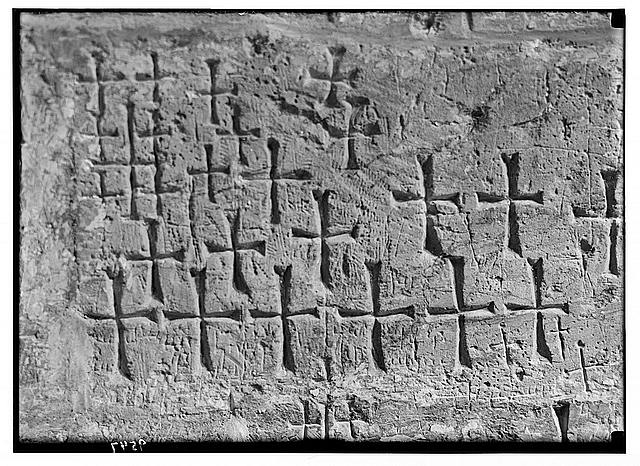
Crosses carved by pilgrims into a wall of the Holy Sepulchre, Jerusalem.  (Yair Talmor, Wikimedia Commons).
Crosses carved by pilgrims into a wall of the Holy Sepulchre, Jerusalem. (Yair Talmor, Wikimedia Commons).

“God’s Battalions: The Case for the Crusades” by Rodney Stark

“Muslims were [not] more brutal or less tolerant than were Christians or Jews, for it was a brutal and intolerant age. It is to say that efforts to portray Muslims as enlightened supporters of multiculturalism are at best ignorant.” (p 29)

In this reader-accessible but academic book, Professor Stark provides a very much needed corrective to the still accepted myths about the crusades into the Holy Land. Besides addressing the fallacies repeated as fact today (a few are given below), Stark presents a centuries-long history leading up to the crusades. Despite the reputation the Catholic Church earned over its handling of its Inquisition, at this earlier time violence was considered sinful. Even the killing of a criminal by a knight was deemed a bad thing. This may explain why Catholics didn’t respond sooner to centuries of mass murders and church destruction by Muslims in Palestine (see Moshe Gil, History of Palestine, 634-1099).

Fallacy 1: Crusaders were motivated by greed.

Fidelity 1: Piety and freeing the Holy Land, Jerusalem, were the crusaders’ motives. It must be understood that for some time Catholics believed that atonement for sins was gained through a pilgrimage to Jerusalem, for this is what their confessors told them. Obviously, this was spiritually very important to them and had nothing to do with wealth (in fact, pilgrimage was incredibly time-consuming, expensive, and dangerous). So when Pope Urban II announced that regaining Jerusalem would cleanse the liberators, it wasn’t an entirely new concept (becoming sin-free through violence was, however).

Fallacy 2: Muslims were tolerant and allowed conquered people to maintain their faith.

Fidelity 2: Depending on the time and area, conquered peoples were either (1) given the choice to convert to Islam or face death or enslavement, or (2) forced to pay heavy taxes, cease church or synagogue building, and never read scripture or pray aloud (even in their own homes).

More specifically relevant to the impetus for the crusades, and a definite show of Muslim intolerance, are the actions of the Turkish commander Atsiz. Sieging Jerusalem in 1071 or 1073, he promised the inhabitants safety if they relented. But when the city gates opened, “the Turkish troops were released to slaughter and pillage, and thousands died. Next, Atsiz’s troops murdered the populations of Ramla and Gaza, then Tyre and Jaffa” (p 97).

Fallacy 3: The crude European crusaders ruined the higher level culture of the Arab Muslims.

Fidelity 3: There are two related components of this fallacy that have been disproven but still remain in our culture. The first is that the Europeans were brutish children of the “Dark Ages.” As early as 1981 Encyclopedia Britannica refuted the long-held academic view that Europe even experienced a “Dark Ages.” On the contrary, this time period saw both the rise of agricultural

innovations that led to the biggest and strongest population ever, and many technological innovations that made the crusades possible.

Secondly, if you consider legitimate the claiming of conquered peoples’ knowledge as one’s own, then Islam “attained” high levels of it. Consider these very few examples: (1) “Arabic numerals” are Hindu; (2) Avicenna, considered the greatest of the Muslim philosopher-scientists, was Persian (this is true of many others, too); (3) Medical knowledge was from the Nestorian Christians. As conquerors, the Arabs made Arab names necessary and the Arab language mandatory for the intelligentsia.

Everyday sayings from the Bible – There may be more than you think!

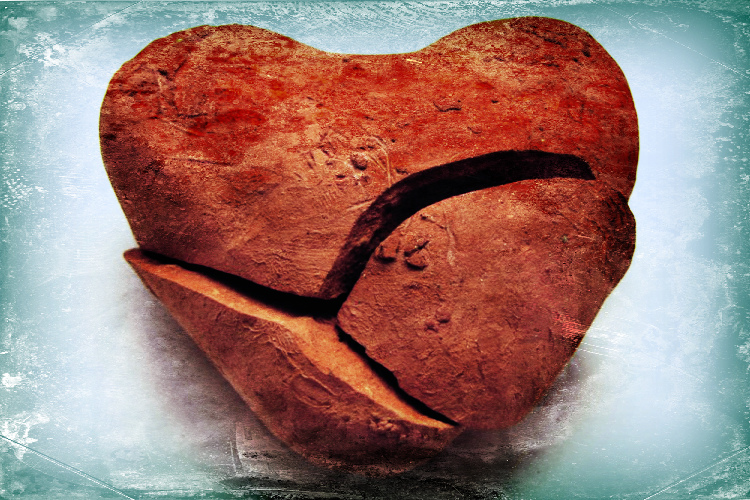
Broken heart (base photo by Alex Bruda, Freeimages.com; filtered by author).

Did you know that the everyday expression “broken heart” (or “brokenhearted)” is considered to be derived from the Bible?  Yes, even by secular sources.  If you read your Bible you may already know that expressions such as going to the “land of Nod,” or having “feet of clay,” are not from fairytales or other old works of fiction.

In fact, very many idioms, phrases, and expressions in the English language originated from the Bible.  This post holds a good number of them (but not all)–27–chosen specifically for their commonness.  Some are so common that I not only made the list and checked it twice (see what I did there?  That phrase is from the 1934 song “Santa Claus is Coming to Town“), but thrice.

The blind leading the blind. The biblical meaning may imply willful ignorance, but the saying today refers more generally to the uninformed blindly following the uninformed. “But [Jesus] answered and said, ‘Every plant which My heavenly Father has not planted will be uprooted. Let them alone. They are blind leaders of the blind. And if the blind leads the blind, both will fall into a ditch'” (Matthew 15:13-14).

A broken heart; brokenhearted. This ancient term for the depressed is from Psalms 34:18,”The Lord is near to those who have a broken heart, and saves such as have a contrite spirit.” “Brokenhearted” is first used in Luke 4:18: “. . . He has anointed Me to preach the gospel to the poor; He has sent Me to heal the brokenhearted . . . ”

By the skin of your teeth. Some explain this to be referring to the film you can feel on your teeth when they’re not clean, and thus, being saved in whatever situation by the ultra-slimmest of margins. “My bone clings to my skin and to my flesh, and I have escaped by the skin of my teeth” (Job 19:20).

Drop in the bucket. If something is like one drop in a bucket of water, it’s very insignificant. As Isaiah 40:15 says, “Behold, the nations are as a drop in a bucket, and are counted as the small dust on the scales . . .”

Feet of clay. Today this refers to someone having a secret character flaw that may cause their ruin, and is take from Daniel 2:32-33: “This image’s head was of fine gold, its chest and arms of silver, its belly and thighs of bronze, its legs of iron, its feet partly of iron and partly of clay.”

Fight the good fight. This has come to mean making a purposeful effort to work on behalf of a morally right cause. Originally it referred to the struggle to maintain one’s faith: “Fight the good fight of faith, lay hold on eternal life, to which you were also called . . .” (1 Timothy 6:12).

Fly in the ointment. This saying alludes to plans that are spoiled by a small thing, but as can be seen by the original verse below, it was meant to convey that bad behavior by an otherwise honorable person can raise questions about their true character. “Dead flies putrefy the perfumer’s ointment, and cause it to give off a foul odor; so does a little folly to one respected for wisdom and honor” (Ecclesiastes 10:1).

Labor of love. When you feel a strong purpose toward non-paid work you’re doing, then it’s a “labor of love.” “God is not unjust to forget your work and labor of love which you have shown toward His name . . .” (Hebrews 6:10, and 1Thessalonians 1:3).

Land of Nod. The Land of Nod is the place where Cain was exiled to for having murdered his brother; it has nothing to do with sleep, which it means in speech today. We can only guess, but perhaps it comes from the idea of being spiritually asleep after being cast from God.  “Then Cain went out from the presence of the Lord and dwelt in the land of Nod on the east of Eden” (Genesis 4:16).

Out of the mouth of babes. The idea of this saying is that innocent people will speak in truth, without pretense, worry, or jadedness. There are two places where this comes from in the Bible, Psalms 8:2 and Matthew 21:16: “. . . And Jesus said to them, ‘Yes. Have you never read, “Out of the mouth of babes and nursing infants You have perfected praise”‘?”

Rise and shine. No, “rise and shine” is not from some teen encouragement flick, but from Isaiah 60:1:  “Arise, shine; for your light has come! And the glory of the Lord is risen upon you.”

See eye to eye. Seeing eye to eye isn’t referring to a staring contest, but that people see something in the same way–that they agree. “Your watchmen shall lift up their voices, with their voices they shall sing together; for they shall see eye to eye when the Lord brings back Zion” (Isaiah 52:8).

A thorn in the flesh. Today, this simply refers to something that is continually annoying. The apostle Paul had a specific irritation, however, when he wrote:   “And lest I should be exalted above measure by the abundance of the revelations, a thorn in the flesh was given to me, a messenger of Satan to buffet me . . .” (2 Corinthians 12:7). My favorite modern take on this can be found at Redjaw Cartoons.

Wits’ end. When someone is at their wits’ end, they are beyond being able to think about something (and usually quite frustrated about it). The expression comes from Psalm 107:27: “They reel to and fro, and stagger like a drunken man, and are at their wits’ end.”

Writing on the wall. This expression means that something bad is about to happen.   It is from the spooky story in Daniel chapter 5, but here is an excerpt. “This is the inscription that was written [by a supernatural hand]: MENE, MENE, TEKEL, UPHARSIN. This is the interpretation of each word. MENE: God has numbered your kingdom, and finished it; TEKEL: You have been weighed in the balances, and found wanting; [UPHARSIN and] PERES: Your kingdom has been divided, and given to the Medes and Persians (verses 25-28).

A bird in the hand is worth two in the bush.  This exact expression in its current form is not in the Bible, actually, but a similar biblical phrase is considered to be the first in English that means the same thing.  This may seem a bit wanky, but I’m conveying what at least some etymologists say.  The meaning of this phrase – to have something you know is good is not worth throwing away for things that may or may not be better – has equivalents in many languages.  The phrase from the Old Testament is found in Ecclesiastes 9:4b:  “A living dog is better than a dead lion.”  The oldest written phrase close to its current form is found in an ancient source, but not nearly as ancient as the OT:  “He is a fool who lets slip a bird in the hand for a bird in the bush” (Plutarch, c. AD 100, in Of Garrulity).

As old as the hills.  Meaning “very old indeed,” this expression is a shortened version of Job 15:7:  “Are you the first man who was born?  Or were you made before the hills?”  A similar but more specific expression is “As old as Methuselah.”  This is referring to the oldest recorded person in the Bible, Methuselah, grandfather of Noah, who was said to have lived 969 years (Genesis 5:27).

Apple of my [or his] eye.  This means that the “apple” referred to is the favorite of the beholder’s “eye.”  There are many instances of the expression in the old testament, but notably Deuteronomy 32:10 and Zechariah 2:8

Cast your bread upon the waters.  This is a less common saying nowadays (and is even absent from references), perhaps because it seems too nonsensical and doesn’t convey any meaning by itself.  I love the sound of it, though, so included it here.  It’s from Eccl.s 11:1:  “Cast your bread upon the waters, for you will find it after many days.”  Though the saying doesn’t seem to make any sense, it is an expression that hopes to invoke patience or diligence.

Set your teeth on edge.  When something is upsetting or making you uptight, you might say that it’s setting your teeth on edge.  This comes from a few verses in the Bible, like Jeremiah 31:29, “In those days they shall say no more: ‘The fathers have eaten sour grapes, and the children’s teeth are set on edge'” (see also Jeremiah 31:30 and Ezekiel 18:2).

Wolf in sheep’s clothing.  This saying is so common, that the meaning seems rather obvious.  In case this is new to you, it refers to a person who has bad intentions who is fooling people by acting innocent of any malice; they have an insincere public face, coupled with ill-will.  The expression comes from Matthew 7:15:  “Beware of false prophets, who come to you in sheep’s clothing, but inwardly they are ravenous wolves.

Charity begins at home.  Interestingly, this expression doesn’t come from an obvious notion or ideal, but from a criticism of men (providers of the family) having problems with being a good provider.  1 Timothy 5:8 states:  “But if anyone does not provide for his own, and especially for those of his household, he has denied the faith and is worse than an unbeliever.”  Jesus talks of hypocrisy in a number of places in the New Testament, especially in Matthew 23, but what he says in Matthew 15:1-9 is particularly applicable here:  “But you [scribes and Pharisees] say, ‘Whoever says to his father or mother, “Whatever profit you might have received from me is a gift to God”— then he need not honor his father or mother.’  Thus you have made the commandment of God of no effect by your tradition. Hypocrites!” (15:5-7a).

Let Us Swords into Plowshares
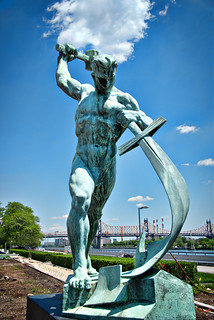
Let Us Swords into Plowshares (Photo credit: Singing With Light) At U.N. Headquarters, N.Y.

Beat swords into plowshares. I time of peace when even defensive weapons will not be necessary.   From the yet to be fulfilled prophecy of Isaiah 2:4, “He shall judge between the nations, and rebuke many people; they shall beat their swords into plowshares, and their spears into pruning hooks; nation shall not lift up sword against nation, neither shall they learn war anymore.”

Salt of the earth. From Matthew 5:13:  “You are the salt of the earth; but if the salt loses its flavor, how shall it be seasoned? It is then good for nothing but to be thrown out and trampled underfoot by men.”

Don’t cast your pearls before swine. This saying warns of not sharing things that are important to you with those who just don’t care, and who might even belittle you about it. The original meaning is specifically spiritual.  Pigs (swine) will trample what’s thrown in front of them if it’s not ordinary food, so don’t toss spiritual food their way since they’ll only disdainfully muck it up.  From Matthew 7:6, “Do not give what is holy to the dogs; nor cast your pearls before swine, lest they trample them under their feet, and turn and tear you in pieces.”

Sign of the times. From Matthew 16:3.  Speaking with the Jewish leaders, Jesus said “. . . in the morning [you say], ‘It will be foul weather today, for the sky is red and threatening.’ Hypocrites! You know how to discern the face of the sky, but you cannot discern the signs of the times.”

Twinkling of an eye, In the.  Neither Shakespeare nor Robert Manning were the first to write this expression, but the Apostle Paul in 1 Corinthians 15:52: “in a moment, in the twinkling of an eye, at the last trumpet. For the trumpet will sound, and the dead will be raised incorruptible, and we shall be changed.”

Note:  Updated August 4, 2014.  A larger part of this article was first published at Yahoo! Voices.  It was integrated with a similar article here after Voices closed shop in 2014 and reverted all rights back to the original authors.  Edited slightly on 10-8-2014.

______

Sources:

Expressions & Sayings Index

The Facts on File Encyclopedia of Word and Phrase Origins – Robert Hendrickson (2008)

The Phrase Finder

Scholastic Dictionary of Idioms, Phrases, Sayings & Expressions – Marvin Terban (1996)

Christian Poems XIII: Keller and Eliot

Matilija Poppy (by Vicki Priest)

In the Garden of the Lord

by Helen Keller

The word of God came unto me,
Sitting alone among the multitudes;
And my blind eyes were touched with light.
And there was laid upon my lips a flame of fire.

I laugh and shout for life is good,
Though my feet are set in silent ways.
In merry mood I leave the crowd
To walk in my garden. Ever as I walk
I gather fruits and flowers in my hands.
And with joyful heart I bless the sun
That kindles all the place with radiant life.
I run with playful winds that blow the scent
Of rose and jasmine in eddying whirls.

At last I come where tall lilies grow,
Lifting their faces like white saints to God.
While the lilies pray, I kneel upon the ground;
I have strayed into the holy temple of the Lord.

In A Sacrifice of Praise, James H. Trott, editor (Cumberland House 2006; stanzas slightly modified)

_________________

The Rock (excerpt from Section X of Choruses)

by TS Eliot

О Greater Light, we praise Thee for the less;

The eastern light our spires touch at morning,

The light that slants upon our western doors at evening.

The twilight over stagnant pools at batflight,

Moon light and star light, owl and moth light,

Glow-worm glowlight on a grassblade.

О Light Invisible, we worship Thee!


We thank Thee for the lights that we have kindled,

The light of altar and of sanctuary;

Small lights of those who meditate at midnight

And lights directed through the coloured panes of windows

And light reflected from the polished stone,

The gilded carven wood, the coloured fresco.

Our gaze is submarine, our eyes look upward

And see the light that fractures through unquiet water.

We see the light but see not whence it comes.

О Light Invisible, we glorify Thee!

___

In T.S Eliot: Collected Poems 1909-1962 (HBJ 1963)

Bisexual Raised by Lesbians: Thoughtfully Against Gay Adoptions

For a detailed and thoughtful view on being raised by gay parents, please see Robert Oscar Lopez’s Same Sex Parenting: What do Children Say?  Here are some excerpts to give you an idea of his views and experience.

During the oral arguments about Proposition 8, Justice Anthony Kennedy referred to children being raised by same-sex couples. Since I was one of those children—from ages 2-19, I was raised by a lesbian mother with the help of her partner—I was curious to see what he would say.

I also eagerly anticipated what he would say because I had taken great professional and social risk to file an amicus brief with Doug Mainwaring (who is gay and opposes gay marriage), in which we explained that children deeply feel the loss of a father or mother, no matter how much we love our gay parents or how much they love us. Children feel the loss keenly because they are powerless to stop the decision to deprive them of a father or mother, and the absence of a male or female parent will likely be irreversible for them.

Over the last year I’ve been in frequent contact with adults who were raised by parents in same-sex partnerships. They are terrified of speaking publicly about their feelings, so several have asked me (since I am already out of the closet, so to speak) to give voice to their concerns.

I cannot speak for all children of same-sex couples, but I speak for quite a few of them, especially those who have been brushed aside in the so-called “social science research” on same-sex parenting. . . .  I have heard of the supposed “consensus” on the soundness of same-sex parenting from pediatricians and psychologists, but that consensus is frankly bogus. . . .

I support same-sex civil unions and foster care, but I have always resisted the idea that government should encourage same-sex couples to imagine that their partnerships are indistinguishable from actual marriages.  Such a self-definition for gays would be based on a lie, and anything based on a lie will backfire.

The richest and most successful same-sex couple still cannot provide a child something that the poorest and most struggling spouses can provide: a mom and a dad.  Having spent forty years immersed in the gay community, I have seen how that reality triggers anger and vicious recrimination from same-sex couples, who are often tempted to bad-mouth so-called “dysfunctional” or “trashy” straight couples in order to say, “We deserve to have kids more than they do!”

But I am here to say no, having a mom and a dad is a precious value in its own right and not something that can be overridden, even if a gay couple has lots of money, can send a kid to the best schools, and raises the kid to be an Eagle Scout.

It’s disturbingly classist and elitist for gay men to think they can love their children unreservedly after treating their surrogate mother like an incubator, or for lesbians to think they can love their children unconditionally after treating their sperm-donor father like a tube of toothpaste.

It’s also racist and condescending for same-sex couples to think they can strong-arm adoption centers into giving them orphans by wielding financial or political clout. An orphan in Asia or in an American inner city has been entrusted to adoption authorities to make the best decision for the child’s life, not to meet a market demand for same-sex couples wanting children. Whatever trauma caused them to be orphans shouldn’t be compounded with the stress of being adopted into a same-sex partnership. . . .

The children thrown into the middle . . . are well aware of their parents’ role in creating a stressful and emotionally complicated life for kids, which alienates them from cultural traditions like Father’s Day and Mother’s Day, and places them in the unenviable position of being called “homophobes” if they simply suffer the natural stress that their parents foisted on them—and admit to it. . . .

That’s why I am for civil unions but not for redefining marriage. But I suppose I don’t count—I am no doctor, judge, or television commentator, just a kid who had to clean up the mess left behind by the sexual revolution.

two-kinds-of-people-by-cs-lewis_zpsbcb8ec60


Enhanced by Zemanta

Varied and Odd Happenings; brains, kidneys, and the kitchen sink

Hi wonderful readers.  I’ve been neglecting my Christian posts of late but I’ll tell you of the odd happenings and other reasons why (besides my previous post regarding CafePress).

First, let me mention what has been unfortunately happening with my husband.  My hubby has been ill all his life, and was finally diagnosed a while back with moderately-severe ulcerative colitis, an auto-immune disease.  They try to keep it under control with a drug that is for milder cases, and it doesn’t really make him disease-free.  So he has had those issues, but, something new came up.  He passed out just before work one day – prior to that he was very fatigued and had other symptoms for some time, too, but he kept working (it’s hard to tell if some symptoms are from UC or from something else).

That was about four weeks ago and the doctors still don’t know what is wrong with him.

Though not too clear, this was the view of Catalina Island from my husbands first hospital room. Amazing.
Though not too clear, this was the view of Catalina Island from my husband’s first hospital room. Amazing.

They had done an MRI of his head and found that he has a large group of brain cysts that are very odd.  They said at Kaiser that they had never seen anything like it (perhaps that’s because they don’t do as many tests on people as they should – seriously), but that those cysts would not be causing his symptoms.  So they apparently will be testing him more to try and figure out what is going on (this had been a slow and agonizing process with Kaiser – another healthcare provider is recommended).

In the meantime, if you can believe this, he developed extreme pain where a kidney is and he went to the ER.  They assumed the basic and normal thing – first time kidney stone victim.  But, as he needed more pain medication than normal and his heart rate was elevated for a very long time, he was admitted to the hospital.  I could write a whole long essay about his incident relative to our insurance, but right now I’ll ignore that.  In the end, what they found was that he had a large “kidney stone” that isn’t a “stone” blocking the tube from kidney to bladder.  He has stabilized but we’re waiting for the thing to come out to determine what it is, since it’s not made of calcium.

English: A kidney stone with associated hydron...
A kidney stone with associated hydronephrosis mid ureter (Photo credit: Wikipedia).

Otherwise, as we simply need more income, I’ve been trying to garner more freelance work and have been checking out the possibility of  another part-time job (haven’t looked into temp agencies yet, but if you have opinions of any agencies I’d be interested to hear of your experiences).  I’ve had two* assignments published at Yahoo! and am waiting–for what seems like an eternity, they are so slow–for other submissions to be accepted or rejected.  So, the time I used to spend writing posts here, I’ve been investigating where I might publish, obtaining writing gigs, and writing articles/essays.  One of my poems, one that is posted at this blog, is to be included in a Korean anthology of Christian poems.

I haven’t forgotten about this blog, however–no way.  I had studied much for writing a nice post on the book of Jonah and how it relates to Christ and God’s plan for mankind, but got distracted and overly annoyed about an explanation I saw by Calvin regarding why/why not God “changed his mind” about destroying Nineveh.  I thought it so absurd that I was preparing to write an essay about that only, but, I stopped myself (rage posts aren’t a good idea).  I then lost interest in writing up the Jonah piece, but I do plan on getting that done sometime soon.  It is one of my favorite prophetic sections in the Bible.

* I posted about my first one involving appendicitis, and if anyone is interested in my second one on preventing strokes, well, I’d be happy to know that you enjoyed it!

Update (May 18, 2014):  My husband became extremely pained again and we went to urgent care.  While kidney stones indeed cause a level of pain that is compared the child-birth, we just weren’t sure what to do.  What is “normal” when dealing with kidney stones?  Should you have to miss one to six weeks of work because of constant excruciating pain and/or nausea?  We now know that a big part of my husbands health problems are related to becoming dehydrated, which is being caused by his ulcerative colitis.  This was causing more problems with his kidney/kidney stones.

But to get to the point, he had surgery to remove the stone, which was found to be lodged in his ureter somehow.  I wish I knew more – I was at the pharmacy when my husband woke up and the nurses told him about the unwelcome lodger.  Regarding the weird non-calcification issue, the surgeon did speak to me briefly and said that the stone WAS calcified, so it is currently a mystery to us why were told differently earlier.  Thanks for reading and any prayers; if you have questions, feel free to ask!  We don’t mind, and maybe we’ll learn more from the question and in the effort to answer.


Enhanced by Zemanta

Appendicitis Symptoms are not always “Typical”

Appendicitis isn’t a big killer in the US, but knowing more about it could save your life.  Having an unusual case of appendicitis myself, I wrote about it at Yahoo! Voices:  Appendicitis Symptoms Are Not Always “Typical.”  Since Yahoo! Voice shut down, I’m posting the full (but short) piece below.  Under it is a bit of additional appendicitis-related information that I find interesting and helpful.  I  hope this post helps with whatever you came here for.  Since my word-count for Yahoo!’s post short by requirement, not everything that I would have liked to have written is included; feel free to comment with questions if you have any.

_________________

Appendicitis Symptoms are not always “Typical”

I have irritable bowel syndrome (IBS) so when I noticed a small but different feeling in my abdomen, I wasn’t sure if it was anything to worry about. The next day it was still there, but I didn’t know what “it” was. On the third day, I knew that what I was feeling couldn’t be OK; appendicitis came to mind, but I wasn’t experiencing the typical symptoms.

My symptoms were not average

I did not experience the pain—which is often severe–near the belly-button that then travels down to the lower right abdomen.   I didn’t have nausea, nor did I ever vomit. One common symptom is a change in digestive behavior, having either diarrhea or constipation, but these are normal with IBS. I did have a low fever, however.

Having symptoms of something, I went to an urgent care center. The blood tests ordered by the doctor revealed that my white blood cell count was elevated, but not as much as is “normal” with appendicitis. My fever was also lower than it should’ve been. Nevertheless, thinking I might have appendicitis, the doctor told me to get to the emergency room (ER) while he called ahead so I’d be examined quickly. His call seemed to be ignored by the ER intake nurse, however, and I stressfully waited minute by ticking minute to be seen. Because I wasn’t writhing in pain, vomiting, or running a high fever, I felt a bit invisible to the staff–but significantly, my abdomen became more and more tender.

The long awaited diagnosis and surgery

Hours later, after being granted entrance to the bowels of the ER, my symptoms confused the staff. (This is not necessarily surprising since every year up to a third of child-bearing age women are misdiagnosed; AHRQ 2013.) The area affected was not the right place, they told me. Then there were delays: a gunshot victim was admitted and drew the doctors away, and, though a CT scan was ordered the scanner needed repair (!). So I waited, again.

Once the CT scanner became available appendicitis was solidly confirmed, and not something like an ectopic pregnancy. The lead doctor was very kind and acknowledged to me that a high degree of tenderness in that area can be just as indicative of appendicitis as much pain. I never did have much pain.

I was immediately attached to an IV with antibiotics and admitted to the hospital. Though my appendix had already perforated and I had a very long wait for the typical laparoscopic surgery, it went well. Due to modern medicine, I feel very fortunate to be alive. By sharing my experience, I hope that readers won’t ignore this potentially life-threatening condition simply because they don’t have typical symptoms. To learn more, go to the NDDIC’s Appendicitis page or the pediatric Appendicitis/Appendectomy page of CHOPS.

____________________

Age-standardised disability-adjusted life year...
Age-standardised disability-adjusted life year (DALY) rates from Appendicitis by country (per 100,000 inhabitants). (Photo credit: Wikipedia)

Deaths from appendicitis in the USA are at about 400 per year.  This hard-to-get figure is from the latest WHO statistics, which aren’t all that recent (2008 data published in 2011).  I assume that this statistic includes deaths from people who didn’t go to the doctor in time, as well as deaths from post-operation complications.  There are over 250,000 appendectomies done in the US each year (about 8% – 10% of all people will develop appendicitis in their life times).

Besides my story of not being sure when and if I should see a doctor about the abdominal pain I was having, here is another story about a father-to-be who wasn’t so fortunate.  I am glad to be able to share this article about (partially) Paul Hannum, who lost his life due to appendicitis and lack of insurance.  He deserves to be remembered, and I wish his daughter had been able to know him.  In case you’re interested, here is a wiki list that might lead you to more anecdotal information:  Deaths from Appendicitis (list).


Easter message from Pastor Abedini, imprisoned in Iran

Saeed Abedini with one of his children.  From http://beheardproject.com/saeed#sign
Saeed Abedini with one of his children. From http://beheardproject.com/saeed#sign

The following is posted at the ACLJ website, where you can read many different articles about Pastor Saeed Abedini’s imprisonment–his current unhealthy condition, President Obama’s response, how his family is doing, etc.–and sign a petition for his release (this link takes you to a separate site where you can learn about Abedini’s case as well).  You may think that these petitions don’t do any good when directed at a country like Iran, but, recently Abedini wasn’t being treated for his illnesses and international outcry did cause the Iranian government to at least move the pastor to a hospital bed.  Abedini wrote this message from the hospital.

Happy Resurrection Day.

On the Eve of Good Friday and Easter I was praying from my hospital room for my fellow Christians in the world.  What the Holy Spirit revealed to me in prayer was that there are many dead faiths in the midst of Christians today. That Christians all over the world are not able to fully reach their spiritual potential that has been given to them as a gift by God so that in reaching that potential, the curtain can be removed and the Glory of God would be revealed.

Some times we want to experience the Glory and resurrection with Jesus without experiencing death with Him.  We do not realize that unless we pass through the path of death with Christ, we are not able to experience resurrection with Christ.

We want to have a good and successful marriage, career, education and family life (which is also God’s desire and plan for our life). But we forget that in order to experience the Resurrection and Glory of Christ we first have to experience death with Christ and to die to ourselves and selfish desires.

Jesus said to His Disciples:  “Whoever wants to be my disciple must deny themselves and take up their cross and follow me. (Matthew 16:24)

This means that we should not do things that we like to do (that God does not want us to do) and to do things that we do not like to do (but God wants us to do) so that He may be glorified.

So in addition to spending our days and night in doing the works of faith as described above, we should also transform our dead faiths into living and active faiths through the resurrection of Christ which is an active and constructive love that is effective.

In conclusion, let us resurrect our Dead faiths to living faiths by first dying to our selfish “resurrected” self and experiencing the cross of Jesus. Then we are able to experience the Glorious resurrection with Christ.

A Glorious life with Christ starts only after a painful death (to self) with Christ.

We will start with Christ.

Pastor Saeed Abedini
Prisoner in the Darkness in Iran, but free for the Kingdom and Light

Enhanced by Zemanta