“All shall be well, and all shall be well, and all manner of thing shall be well,” so quotes Lewis (p 65) near the end of his published journal entries that relate to the loss of his wife, Helen. (Lewis doesn’t give the author of the quote, but it’s from Julian of Norwich’s Revelation of [Divine] Love.) When I finally got to reading this little book, I found it to be a gem of thought, writing, and emotion. In it Lewis confronts God, then affirms His love for us—even if it’s like the tough love of a dentist or surgeon. One of his stepsons (Douglas Gresham) wrote so aptly in the introduction: “It is true to say that very few men could have written this book, and even truer to say that even fewer men would have written this book even if they could, fewer still would have published it even if they had written it (p xix).
Yes, indeed. My response after reading entries in which Lewis describes his wife’s character was: “What a guy!” Lewis eulogizes, “H. [Helen] was a splendid thing; a soul straight, bright, and tempered like a sword” (p 42). He adds later: “I see I’ve described H. as being like a sword. That’s true as far as it goes. But utterly inadequate by itself, and misleading. I ought to have balanced it. I ought to have said, ‘but also like a garden. Like a nest of gardens, wall within wall, hedge within hedge, more secret, more full of fragrant and fertile life, the further you entered.’ And then, of her, and every created thing I praise, I should say, ‘In some way, in its unique way, like Him who made it” (p 63).
These laudatory quotes belie the overall tone of A Grief Observed, however. While the end is a happy one, the heart of this book includes the racking grief over the loss of a lover, the struggle with faith when God seems absent but is most needed, and the questioning of God’s goodness. Lewis put it this way: “Talk to me about the truth of religion and I’ll listen gladly. Talk to me about the duty of religion and I’ll listen submissively. But don’t come talking to me about the consolations of religion or I shall suspect that you don’t understand” (p 25).
At the beginning, in the first of only four chapters, Lewis asks, “Where is god?” He likened God’s perceived absence during his desperation as a silence behind a door, which had been slammed in his face, and then bolted. He struggled with this lack of comfort from God, writing that “the conclusion I dread is not ‘so there’s no God after all,’ but ‘so this is what God’s really like. Deceive yourself no longer” (p 7).
Lewis is angry with God and tries to understand “goodness” in His terms. He concludes that the real problem is his own shallowness of faith. His faith is like a rope that didn’t bear him when needed, he claims, being just a “house of cards.” He connects true faith with outwardness: “If I had really cared, as I thought I did, about the sorrows of the world, I should not have been so overwhelmed when my own sorrow came. It has been an imaginary faith . . .” (p 37). Amazingly, this response to grief is coming from a man that many consider the greatest Christian apologist of the 20th century.
Being a great Christian thinker, Lewis couldn’t help but comment on consolations he received from various people. He derides the feeble platitude, “She will live forever in [your] memory” (p 20, and negatively considers the ideas we hold of the dead being both joyous and brought immediately into God’s presence. His commentaries relate to his desperate perplexity over Helen’s continued existence. His prayers to God meet only silence; his questions to Him about Helen are unanswered. Lewis felt that there was a “sort of invisible blanket between the world and me” (p 3), but this blanket appears to have enveloped his spiritual life as well.
A little over half-way through his journal, Lewis experienced not only a lifting of the blanket, but a strong sense that Helen was indeed “still a fact” (p 51). When he stopped worrying about how much he remembered of her, she seemed to be, in a certain sense, everywhere. His relationship with God began to reopen and he surmised that God had needed to show him what a flimsy house his faith really was.
He realized that he should have been praising God more, knowing that the act of praise brings joy. He realized more fully that we need to love God, not our own ideas of Him, and to duplicate this in all our relationships. He accepted that there are mysteries that will be solved only in heaven, and that “our apparently contradictory notions . . . will all be knocked from under our feet. We shall see that there never was any problem” (p 71).
But Lewis leaves us with something that some people may find hard to accept: an experience of Helen, her mind meeting his. He says of it, “I had never in any mood imagined the dead as being so—well, so business-like. Yet there was an extreme and cheerful intimacy. An intimacy that had not passed through the senses or the emotions at all” (p 73). He reports more of the encounter than this quote, of course, and analyzes it in relation to intellect, love, emotions, and the resurrection of the body. As he himself concludes, “We cannot understand. The best is perhaps what we understand the least” (p 75).
The word of God came unto me,
Sitting alone among the multitudes;
And my blind eyes were touched with light.
And there was laid upon my lips a flame of fire.
I laugh and shout for life is good,
Though my feet are set in silent ways.
In merry mood I leave the crowd
To walk in my garden. Ever as I walk
I gather fruits and flowers in my hands.
And with joyful heart I bless the sun
That kindles all the place with radiant life.
I run with playful winds that blow the scent
Of rose and jasmine in eddying whirls.
At last I come where tall lilies grow,
Lifting their faces like white saints to God.
While the lilies pray, I kneel upon the ground;
I have strayed into the holy temple of the Lord.
In A Sacrifice of Praise, James H. Trott, editor (Cumberland House 2006; stanzas slightly modified)
_________________
The Rock (excerpt from Section X of Choruses)
by TS Eliot
О Greater Light, we praise Thee for the less;
The eastern light our spires touch at morning,
The light that slants upon our western doors at evening.
The twilight over stagnant pools at batflight,
Moon light and star light, owl and moth light,
Glow-worm glowlight on a grassblade.
О Light Invisible, we worship Thee!
We thank Thee for the lights that we have kindled,
The light of altar and of sanctuary;
Small lights of those who meditate at midnight
And lights directed through the coloured panes of windows
And light reflected from the polished stone,
The gilded carven wood, the coloured fresco.
Our gaze is submarine, our eyes look upward
And see the light that fractures through unquiet water.
We see the light but see not whence it comes.
О Light Invisible, we glorify Thee!
___
In T.S Eliot: Collected Poems 1909-1962 (HBJ 1963)
The following is posted at the ACLJ website, where you can read many different articles about Pastor Saeed Abedini’s imprisonment–his current unhealthy condition, President Obama’s response, how his family is doing, etc.–and sign a petition for his release (this link takes you to a separate site where you can learn about Abedini’s case as well). You may think that these petitions don’t do any good when directed at a country like Iran, but, recently Abedini wasn’t being treated for his illnesses and international outcry did cause the Iranian government to at least move the pastor to a hospital bed. Abedini wrote this message from the hospital.
Happy Resurrection Day.
On the Eve of Good Friday and Easter I was praying from my hospital room for my fellow Christians in the world. What the Holy Spirit revealed to me in prayer was that there are many dead faiths in the midst of Christians today. That Christians all over the world are not able to fully reach their spiritual potential that has been given to them as a gift by God so that in reaching that potential, the curtain can be removed and the Glory of God would be revealed.
Some times we want to experience the Glory and resurrection with Jesus without experiencing death with Him. We do not realize that unless we pass through the path of death with Christ, we are not able to experience resurrection with Christ.
We want to have a good and successful marriage, career, education and family life (which is also God’s desire and plan for our life). But we forget that in order to experience the Resurrection and Glory of Christ we first have to experience death with Christ and to die to ourselves and selfish desires.
Jesus said to His Disciples: “Whoever wants to be my disciple must deny themselves and take up their cross and follow me. (Matthew 16:24)
This means that we should not do things that we like to do (that God does not want us to do) and to do things that we do not like to do (but God wants us to do) so that He may be glorified.
So in addition to spending our days and night in doing the works of faith as described above, we should also transform our dead faiths into living and active faiths through the resurrection of Christ which is an active and constructive love that is effective.
In conclusion, let us resurrect our Dead faiths to living faiths by first dying to our selfish “resurrected” self and experiencing the cross of Jesus. Then we are able to experience the Glorious resurrection with Christ.
A Glorious life with Christ starts only after a painful death (to self) with Christ.
We will start with Christ.
Pastor Saeed Abedini Prisoner in the Darkness in Iran, but free for the Kingdom and Light
Christ’s Entry into Jerusalem, by Hippolyte Flandrin
Biola Lent Project has a Lent devotional calendar posted. The daily entries are multi-sensory, with a written devotional, an image, and music. Here is the link to the Palm Sunday entry: April 13, 2014. In it, the author speaks of the attitudes shown by the faces in the crowd in Flandrin’s painting, and how they reflect us today, too, even though we know something that those people did not yet know about–Jesus’ resurrection. It ends with this simple prayer (of St. Benedict):
O gracious and holy Father,
give us wisdom to perceive you,
diligence to seek you,
patience to wait for you,
eyes to behold you,
a heart to meditate on you,
and a life to proclaim you;
through the power of the Spirit
of Jesus Christ our Lord.
Amen.
Lent is a period of 40 days prior to Easter (excluding Sundays). For many people it commemorates Jesus’ fasting in the wilderness. They “give up something” for Lent every year, like sweets or TV. This can yield spiritual benefits, but denying yourself things and denying yourself aren’t the same. In Luke 9:23, Jesus taught the latter.
This verse can be broken down into three parts. In the statement “If anyone desires to come after Me,” the word desires indicates that this is for sincere disciples only. In the phrase “let him deny himself,” the words let and denyhimself imply a willingness to renounce one’s selfish will and ways. And in the statement “take up his cross daily,” the word daily emphasizes a continual dying to self-will.
It’s easier to give things than to give ourselves. Yet Jesus gave Himself, and so must we. To those who deny themselves in obedient service, He has promised, “Whoever loses his life for My sake will save it” (v.24). And to His question, “What profit is it to a man if he gains the whole world, and is himself destroyed?” we are called to answer, “There is no profit!” We show that we believe this when we deny ourselves and follow Christ.
To follow Christ we must let go
Of all that we hold dear;
And as we do deny ourselves,
Our gains become more clear. —Sper
By living for ourselves we die; by dying to ourselves we live.
Judah and Tamar, of the Rembrandt School (mid-1600s; Public domain).
A sermon of a well-known evangelist was being broadcast one day, and I just can’t forget him talking about how we should never lie. A little white lie? No, we should never go there. Well, Ok, but what about lying to save someone’s life? There are Christians who think it is wrong to lie in order to save someone’s life. But is this stance biblical? Is it always wrong to tell “a” lie, or is it only wrong to be a liar?
Exodus 20:16 (the 9th commandment) states, “You shall not give false testimony against your neighbor.” Does this command somehow imply that if your neighbor is evil and is about to rape your wife or daughter, that you can’t deceive the neighbor somehow in order to save your loved ones? When faced with evil and/or murderous intent, we cannot defend ourselves with words? A person in this situation could defend themselves or others physically and not be questioned, yet there are Christians who will deny the use of words in self-defense. The motive of one’s heart is what God sees and knows.
There are many verses in the bible indicating that God hates a deceitful heart, a person who deceives for fraudulent or exorbitant gain. Proverbs 11:1, Proverbs 20:23, Hosea 12:7, and Amos 8:5 all show that God hates “dishonest scales” and “false weights,” used by those who boost prices and cheat; Micah 6:11 states, “Shall I acquit a man with dishonest scales, with a bag of false weights?” Merchants like this are stealing (commandment 8, “You shall not steal”) through deception. There are other verses about usury and excessive interest as well: “He lends at usury and takes excessive interest. Will such a man live? He will not! Because he has done all these detestable things, he will surely be put to death and his blood will be on his own head” (Ezekiel 18:13). Other relevant verses are: Exodus 22:25; Leviticus 25:35-37; Deuteronomy 23:19; Nehemiah 5:7, 10, 11; Psalm 15:5; Proverbs 28:8; Ezekiel 18:8, 17, 22:12.
People who bear false witness, and people who deceive innocents as a way of life in order to take their money and resources, are liars. God is against those who hurt innocent people. There are a number of instances in the bible where persons have lied in order to save innocent life, especially in time of war, or to right an injustice that no one else had stepped in to right. For instance, in Exodus 1:15-21, Pharaoh orders the Hebrew midwives to kill newborn boys, but not girls. The midwives did not comply and when called before Pharaoh, they lied to him, because “they feared God.” God was then kind to the midwives and gave them families of their own. In this situation, the midwives did what they had to do in order to save their own lives and the lives of others; the situation was evil and not the midwives, who, “fearing God,” would not think of lying generally in life. We live in a corrupt world, not in heaven, where there will be no necessity to defend life in this way.
Before continuing our look at whether or not it is OK to ever lie, let’s look at what “sin” and “repentance” mean. Sin means “to miss the mark,” to miss the target of God’s law. Sin can be committed against God’s law, or sin can come from not doing what God commanded, like not loving your neighbor. Also, there are greater sins and lesser sins; thus a gradation of sins (see Matthew 11:20-24) is acknowledged by God. Repentance means to undergo a change of mind. When a person comes to faith in God, they undergo a change of direction in their lives, away from sin and toward Christ. Also, the will and power to repent for individual sins by the believer is assisted by the Holy Spirit.
A problem (for some) with situations like the midwives in Egypt and with the following stories, is that persons lied or deceived, yet did not repent. However, the situations required deception in order for a greater good to result, or a wrong to be righted. Some theologians view the lies in these cases as common sense morality that any child would know to be “right,” while some say that the persons must have repented of the deception in order to have been blessed or saved by God (and they were, as recorded in the Bible), and that the repentance simply was not recorded. It should be noted that in other stories of the bible where deception was committed for selfish ends, but by a person declared righteous or blessed, repentance is recorded (as with David’s adultery and murder, for example).
Tamar and Judah (Genesis, Chapter 38)
This event is placed within the story of Joseph, which may seem incongruous. However, it was this event created by Tamar that exposed Judah’s “callous hypocrisy” and is the beginning of Judah’s personal transformation that leads to his thoughtfulness shown in the rest of the story (Dunn p. 65). Tamar was Judah’s daughter-in-law. She was married to Judah’s eldest son, who died, and then to the next son, as was the custom, but he also died. Judah promised his youngest son to Tamar, following the custom again; she was to live with her own family until the son was old enough to marry. However, Judah did not keep his word. At a time when Tamar knew that Judah was coming to her area, she dressed as a prostitute. Judah voluntarily came to this “prostitute” and Tamar became pregnant. Later, when it became obvious that Tamar was pregnant but did not have a husband, Judah declared that she should be burned to death. Being brought before Judah, Tamar presented items that Judah had left with the prostitute. At that the shamed Judah declared, “She is more righteous than I, since I wouldn’t give her to my son Shelah.” Judah did not sleep with Tamar again. Jesus’ genealogy includes Tamar.
Rahab and the spies (Joshua, Chapter 2)
In following the command and gift of God, the Israelites were entering the promised land after their long trek from Egypt. Joshua, Moses’ successor, sent two spies to Jericho to obtain information about the city. The spies, perhaps questionably, went to the house of a prostitute, Rahab. Amazingly, they found a confession of faith and loyalty to the God of Israel there, in the person of Rahab. Somehow the king of Jericho knew there were spies in the city, and that they had gone to see her. Because of Rahab’s faith, she hid the spies and deceived the city guards into thinking that the spies had already left. She assisted the spies in escaping and asked that they give protection to her and her family when Israel attacked Jericho. This they did, and Rahab and her family became a part of Israel. Jesus’ genealogy includes Rahab, and her faith is commended in Hebrews 11:31. As something to consider, it seems that there was no other way for Rahab to respond in this situation. Without her deceit, it seems certain that the spies would have been goners; also, it can be seen that it was because of her faith and loyalty to God that she lied to the guards. If she did not want to protect God’s people, she would not have had any reason to lie.
Jael and Sisera (Judges, Chapters 4 and 5)
The story of Jael and Sisera is as astonishing as it is gruesome. A short description does not do the tale or context justice and it is recommended to the reader to study a few commentaries on Judges 4 and 5 (such as the Eerdman’s reference given below). The event takes place while Israel was under the jurisdiction of Canaan, and a woman prophet, Deborah, was leading her people in this state. Through God’s word, Deborah told Barak to ready men so that Sisera, the commander of the Canaanite army, could be given to him. Barak showed a lack of confidence, so Deborah prophesied that Sisera would be delivered into the hands of a woman instead. Barak, along with Deborah, attacked Sisera and his men. After intense battle, Sisera fled, but Barak followed the rest of the troops and defeated them. In the meantime, Sisera entered the tent of Jael, a member of a clan friendly to the Canaanite king. Jael, however, was loyal to Israel (and maybe she was angry since from the wording in Judges 5, she may have been raped by Sisera). She pretended to be friendly with Sisera and encouraged him to rest, but after he fell to sleep she hammered a tent peg through his temple, killing him. Jael is called “most blessed of women” in the Song of Deborah (Judges 5).
Other instances of deception in the Bible
We covered the stories of some interesting ladies of the bible, like Tamar who deceived in order to obtain what was rightfully hers (after it was clear that the other party was not honoring an agreement), and Rahab, a foreign prostitute who turned to God and lied in order to save Israelites, and Jael, a female who, through deception, defeated the powerful commander of Canaan who had attacked Israel. The reader should not get the impression that the Bible shows only females deceiving when necessary, however.
King David, before he was king and running from murderous King Saul, went to live in Philistine territory, though the Philistines were Israel’s enemy. Since David wasn’t alone but had 600 of his men with him, and their families, they needed a large area to stay in. King Achish of Gath agreed that David and his men could live there. While David lived there he went and raided towns outside of Israel, toward Egypt, and killed all who lived there so that there would be no witnesses. This was necessary for David’s deception, since he told King Achish that he was raiding Israelite towns. The king was led to believe that David was loyal to him and that Israel surely despised David. The king eventually called on David and his men to join in attacking Israel, and he had to agree. However, when the King’s commanders insisted that David and his men might turn on them and so shouldn’t fight, David went out of his way to show loyalty to the Philistine king (1 Samuel 27; 29:1-11).
Lest anyone should think that David was rewarded by God for his violent deeds here and elsewhere, he was not. David loved God, but committed sins; his later life was full of the consequences of these, and in addition, God forbade David from building His temple because of his bloodshed (1 Chronicles 22:8). Another example of a man lying in the Bible, though not anywhere near as fully and heinously as David, is in Jeremiah the prophet. In Jeremiah 38:24-27, Jeremiah is consulted by King Zedekiah, who was appointed to that position by the King of Babylon, Nebuchadnezzar. Zedekiah was surrounded by scheming men and simply asked Jeremiah to not tell these men of a private conversation they had regarding Nebuchadnezzar’s impending invasion. Jeremiah obeyed and was not truthful about the conversation when asked. This simple act of deception appears to be in line with God’s wish to spare Zedekiah’s life (Jeremiah 38:20-23).
So, was it OK or even desirable that the midwives in Egypt, Tamar, Rahab, Jael, and Jeremiah, were deceptive? What does your moral common sense say? Is it alright to lie in order to save someone else’s life (or right a wrong that no one else can, or will, do)? Is it still “evil” when one does so? If Rahab saved lives by lying, was it something she needed to repent of?
Theological and New Testament considerations
Peter Kreeft, a Christian and a philosophy professor, wrote an easily accessible essay on this issue in response to criticisms over an abortion-related “sting” operation (Kreeft 2011). His stance is that it was good that the persons conducted this sting operation, despite the deceptions involved. When faced with a great evil in this corrupt world, deception – while in other types of situations is wrong – can be right. Were those who hid Jews and lied to the Nazis about it, wrong? No, what they did was right. Was it wrong to use spies to help stop the Nazis from using nuclear weapons? Is it wrong for the police to conduct undercover work and sting operations? No, these activities that involve deception are not wrong, but right, Kreeft argues.
Why do so many people these days take an absolutist stance and argue for the wrongness of these works by people who are only trying to save life? Kreeft says, “I think they are so (rightly) afraid of moral relativism that they have (wrongly) fallen into moral legalism.” He says that there is moral truth and moral reality, but that people in this age have become like computers, not listening to their moral intuition. They deal with abstractions and not with people. For those who cannot or will not acknowledge that saving Jews from the Nazis using deception was right and good, Kreeft says, “If you don’t know that, you’re morally stupid, and moral stupidity comes in two opposite forms: relativism and legalism. Relativism sees no principles, only people; legalism sees no people, only principles.” He concludes that perhaps, as Jesus called us to become like children, He meant “for us to remember our more simple and innocent moral wisdom.”
We have looked into some Old Testament people who lied in order that good may result, and how God commands against bearing false witness and using deceptive means for personal gain. Does the New Testament convey anything different? No, but it does perhaps convey more. In Acts 5:1-11, a married couple who had tried to deceive fellow Christians found that they were in fact lying to God. Ananias and Sapphira had sold some property in order to donate it to fellow believers, but for some unknown reason, they secretly decided to hold some back for themselves. God had not demanded that the couple, or anyone, give at all. All donations were voluntary and Ananias and Sapphira simply needed to be honest about what they wanted to do. Instead, they collapsed in death in front of Peter and other witnesses. The message seems pretty clear: God was with the new church and God knows people’s hearts.
Revelation 22:15 states, “Outside are the dogs, those who practice magic arts, the sexually immoral, the murderers, the idolaters and everyone who loves and practices falsehood.” Who will go to hell? Everyone who loves and practices falsehood. Those who practice being deceptive, who walk in that way of life, will end up separated from God. Ultimately, why is this the case? Because liars will never accept the truth. This dovetails with how John defines “liar:” “Who is the liar? It is the man who denies that Jesus is the Christ. Such a man is the antichrist—he denies the Father and the Son” (1 John 2:22). “Anyone who believes in the Son of God has this testimony [God’s, not man’s] in his heart. Anyone who does not believe God has made him out to be a liar, because he has not believed the testimony God has given about his Son. And this is the testimony: God has given us eternal life, and this life is in his Son” (1 John 5:10-11).
Further, the author of Romans talks of those who suppress the truth: “The wrath of God is being revealed from heaven against all the godlessness and wickedness of men who suppress the truth by their wickedness, since what may be known about God is plain to them, because God has made it plain to them. For since the creation of the world God’s invisible qualities—his eternal power and divine nature—have been clearly seen, being understood from what has been made, so that men are without excuse” (3:18-20). God’s qualities are clearly seen and all men know it, according to these verses; men are without excuse . . . period. This is why in the next group of verses (3:21-22) it states: “For although they knew God, they neither glorified him as God nor gave thanks to him, but their thinking became futile and their foolish hearts were darkened. Although they claimed to be wise, they became fools . . . .” Men know God but some choose to deny Him, and then fall deeper into darkness.
So we can see that there are those people who walk in a way of life that is against God, and those who walk in the way of God. Those who walk away from God can still show kindness in life (Luke 11:11-13), and those who walk with God can still sin at times in various ways. What matters is the way (which path) in which one is walking. “If we claim to have fellowship with him [God] yet walk in the darkness, we lie and do not live by the truth. But if we walk in the light, as he is in the light, we have fellowship with one another, and the blood of Jesus, his Son, purifies us from all sin” (1 John 5:6-7). Through Jesus we become righteous and are purified, even if we stumble here and there (1 John 1:8-10).
Based on these things, and what has been presented earlier, can we tell if it always wrong to deceive? Can anyone really claim that lying to murderers, like the Nazis, in order to keep innocents from death, is wrong? Could Jesus have had something similar in mind when he said, “I am sending you out like sheep among wolves. Therefore be as shrewd [or sly] as snakes and as innocent as doves” (Matthew 10:16)? After all, we know “that the whole world is under the control of the evil one” (1 John 5:19b). Will not all of our choices in some situations, then, be evil (if you consider any deception at all evil)? Do we not have free will in order to choose what seems best, while lacking the power to create other choices (change reality)? Should we not choose “the lesser of two evils” instead of doing nothing? In the case of persons lying to the Nazis in order to save lives, wouldn’t greater evil have resulted from doing nothing? This seems very much like common sense, common moral sense as Kreeft is shown to have pointed out. What we are not to do is “be” liars who: (1) bear false testimony against someone, (2) deceive for personal profit and gain, and (3) deny and suppress the truth about God.
MacDonald, William. “Prophecies of the Messiah Fulfilled in Jesus Christ.” In Believer’s Bible Commentary, by William MacDonald, xviii-xxiii. Nashville: Thomas Nelson Publishers, 1995 (1989).
Sproul, R.C. Essential Truths of the Christian Faith. Wheaton: Tyndale House Publishers, 1992.
_____
A very slightly different version of this article was posted (by me) at Examiner.com in 2011, and then edited and posted at my website in 2012. Thanks so much for reading!
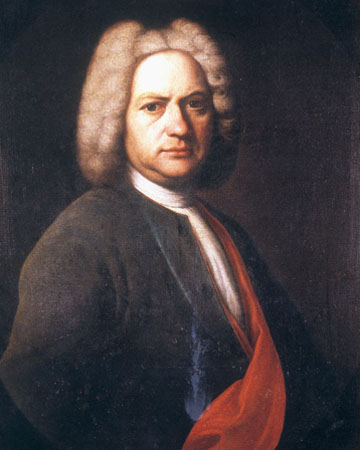
Princess Leia, older? No, Johann Sebastian Bach in 1720.
God truly favored Bach. How else can you explain that time stood still for him? How do I know this? I mean, everyone would know, right, if such a miracle happened (over and over again)? No, no one would know. He’d be sitting there writing one of his 1,000+ scores while changing one of his 20 kids’ diapers while the world around him was still and silent.
Yes, time stood still for him. Richard Wagner said that Bach’s work was “the most stupendous miracle in all music” (Kavanaugh 26). See?
At any rate, that’s my excuse for getting such a piddly amount of things done in my life; God has not favored me with time stoppages. And I don’t have a photographic memory, as perhaps Bach did, and as C.S. Lewis did, who was also crazily prolific in his life. A photographic memory helps . . . a lot. And God making time stand still for you.
To make things a bit clearer about Bach and his miraculous output, here are some perspective builders.
Both his parents died when he was nine. He did not inherit wealth and therefore did not have lots of extra time. (In fact, during his lifetime only 8 – 10 of his works were published, so he didn’t acquire wealth–and the extra time it can afford– from his compositions.)
He played a variety of musical instruments (and sang) from childhood. He worked at a number of churches as church musician, primarily, but also was employed as “Capellmeister” for Prince Leopold. Eventually spurning the Prince’s secular position, he went to St. Thomas’ in Leipzig to become Cantor and Music Director.
His first wife died, then he married a second young wife. As mentioned, he had 20 children altogether (not all reached adulthood). This makes me hope that God made time stand still for his wives some, too.
Bach not only worked at churches, composed music (and in a large variety of styles), and helped make lots of babies, but he also taught. He taught Latin AND music, to outside students as well as his own children. I must be missing something here. He taught Latin and music, while doing all the rest of his daily genius stuff . . . he must’ve taught a third subject or laid golden eggs or something, right? Oh, that’s right, he . . .
. . . and his wife (or wives) were very social and hospitable and always had people over at their place!
His eyesight worsened as he aged. By the time of his death at age 65 (1685-1750), he was blind.
Maybe I’m wrong about God stopping time for Bach. But if so, the only other possibility is that he never slept. God either made time stand still for Bach, or gave him the gift of sleeplessness. This might better explain his 20 children, too.
___
SOURCES:
Kavanaugh, Patrick, Spiritual Lives of the Great Composers (Zondervan 1996).
Because I do not hope to turn again
Because I do not hope
Because I do not hope to turn
Desiring this man’s gift and that man’s scope
I no longer strive to strive toward such things
(Why should the aged eagle stretch its wings?)
Why should I mourn
The vanished power of the usual reign?
Because I do not hope to know again The infirm glory of the positive hour Because I do not think Because I know I shall not know The one veritable transitory power Because I cannot drink There, where trees flower, and springs flow, for there is nothing again
Because I know that time is always time And place is always and only place And what is actual is actual only for one time And only for one place I rejoice that things are as they are and I renounce the blessed face And renounce the voice Because I cannot hope to turn again Consequently I rejoice, having to construct something Upon which to rejoice
And pray to God to have mercy upon us And I pray that I may forget These matters that with myself I too much discuss Too much explain Because I do not hope to turn again Let these words answer For what is done, not to be done again May the judgement not be too heavy upon us
Because these wings are no longer wings to fly But merely vans to beat the air The air which is now thoroughly small and dry Teach us to care and not to care Teach us to sit still.
Pray for us sinners now and at the hour of our death Pray for us now and at the hour of our death.
In A Sacrifice of Praise (2nd ed), James H. Trott, editor (Cumberland House 2006), 714-715.
___________
AT THE LORD’S TABLE
(One of seven entries in the source cited)
By Soren Kierkegaard
O Lord Jesus Christ, who didst first love us, who until the end didst love them whom Thou didst love from the beginning, who unto the end of days dost continue to love him who would belong to Thee; Thy faithfulness cannot deny itself–oh, only when a man denies Thee can he compel Thee as it were to deny him also, Thou loving One. So be this our comfort when we must accuse ourselves of the offences we have committed and of the things we have left undone, of our weakness in temptation, unfaithfulness to Thee, to whom once in early youth and ofttimes again we promised faithfulness–this be our comfort, that even if we are unfaithful, Thou dost remain faithful, Thou canst not deny Thyself.
In The Prayers of Kierkegaard, P.D. LeFevre, editor and author (Univ of Chicago Press 1956), 120.
“We must learn to regard people less in the light of what they do or omit to do, and more in the light of what they suffer.”
― Dietrich Bonhoeffer
[edited slightly on Jan. 12, 2013]
My son is sleeping now, after having not slept last night and feeling ill for a couple of days. He’s a teen and visits his dad, and they had a roommate that was an older man and who was often difficult to deal with – though my son and him talked all the time. My son last saw him yesterday before 1 pm. It was to be this roommates last day at the house and he was packing boxes (the dad told him he couldn’t live there anymore – part of my son’s stress-related illness, I believe). When my son and his dad came back, the roommate was gone but his stuff was all there. The dad got a call from the Sheriff’s department saying that the roommate was at the hospital, but upon contacting the hospital, and going there, nothing could be found out about the roommate. He couldn’t be visited and the hospital staff said they couldn’t relay any information until the next of kin were contacted.
Doesn’t sound good.
Some background about this older man. He’s a veteran with epilepsy, and while he had health care through the veterans program, he had to drive far away to get care. He had married a few years ago, but after he and his wife both lost their jobs and their house, his wife filed for divorce. He didn’t have a place to live and ended up staying in a room at my son’s dad’s house.
He called his ex-wife everyday but it seems that she didn’t really care for him (she lived very far away, too). While he seemed happy enough, he argued a lot. He snored loudly. He had an old dog that kept peeing everywhere because it just couldn’t hold it in. The dog was in bad shape but the roommate hadn’t had the nerve to take the dog to the vet yet . . . who knows how much he could afford, as his work was off-and-on. He had taken to sleeping with the dog. I imagine he was saying good-bye to it, and making his last days as good as they could be. His dad had died a few days before Christmas and the funeral was on Christmas day; after this he became ill.
His dad just died; he lost his job, house, wife (I’m so sickened that this has happened to a lot of older people in our country); he was older, with epilepsy; he was sad that his dog was dying and he had to deal with that; he was kicked out of his residence. Is there some reason why you would think that this person was actually dealing with life OK, even though he didn’t want to talk about stuff much? As Christians, are we to just keep going our own way and not actively asking and helping people who are having a difficult time in their lives? As Bonhoeffer said, we need to look beyond the superficial stuff in people’s lives, what they do, what they hide, and reach out and help the suffering. Does a curmudgeonly guy deserve help any less than a sweet woman? No.
I’m not trying to say in this essay that I wouldn’t have wanted the roommate to move, I wouldn’t be able to say. But I am saying it seems that more could have been done to ease this person’s burden, emotionally at least, so that he could deal with life’s circumstances better. I think I and others need to try and live what the NT writer said more proactively: “Do nothing out of selfish ambition or vain conceit, but in humility consider others better than yourselves. Each of you should look not only to your own interests, but also to the interests of others.Your attitude should be the same as that of Christ Jesus . . .” (Phil 2:3-5).
I don’t know for sure that the roommate is dead. I just don’t know why my son’s dad wasn’t allowed to see him or find out anything about him if he was alive. But I will update later. Thanks for any prayers.
Update (Jan. 12, 2013): The roommate died in surgery. He had suffered a severe epileptic event while driving, which resulted in a very very bad accident. We are not allowed to know the details of the accident, other than his car rolled over many times. Apparently the roommate forgot to take his epilepsy medicine that day. Both stress and age can contribute to forgetting things like taking one’s medicine, though my son thinks he may not have taken it on purpose (he had never forgotten before). Anyway, his wife (or ex-wife) had come to see him before he went into surgery, so I’m glad of that; he used to call her everyday.
Update (Jan. 29, 2013): I keep looking to see if a death notice or obituary is published, but there has been nothing. I don’t understand this. Can’t anyone who knew him or is related to him file something, out of respect? This world is fallen, indeed. It is easy to find two notices of when his dad died, but nothing about Dennis, but it’s as though he never existed.
This is just flat-out persecution, Iran thumbing their nose at Christians and any country that is associated with Christianity. Iran also went against it’s own agreement and arrested Saeed Abedini, an American Iranian, earlier this year (https://withchristianeyes.wordpress.com/2012/12/26/dragonborn-dlc-playability-and-the-skaal-religion/). Come on, everyone, write to your representatives and ask them to do something about iran.
Statue of Talos in Whiterun, with Shrine in front, Dragonsreach to left, giant Eagle in middle, and old Companion’s home to right.
I wrote about this dlc already (at dragonborn dlc wordpress) but wanted to convey some more information about the Skaal’s religious views, and generally about the playability of the new dlc content. So basically this is an addendum to the linked article; please see it if you would like more coverage of the Dragonborn dlc.
Dragonborn DLC playability. First. when we got the DLC I was playing a game where I had a high level character, over 60, and I was getting close to wrapping all the quests up. Playing at this level in Solstheim is relatively easy. Only Karstaag was a difficult opponent (surprising battle, that was!). But, beginning a new game and going through it so far – I’m now level 11 and had gone back to Solstheim after first going there at level 6 – I can say Solstheim is not a place you’ll get through easily for a while. Of course, the game level setting can be adjusted to its lowest level, but I’m going to bet that fighting off random lurkers will prove pretty impossible for a low level character. I wanted very much to make it to Neloth and so I swam there. The only real problem I had was when my companion, Lydia, wouldn’t just swim along and ignore a Lurker. *People ask when “the quest” starts with the DLC. There are various quests, but the main quest with Miraak will activate after you go and see the Greybeards for the first time. A couple of his cultists will meet you somewhere and attack you.
The Skaal and their religions views. The Skaal are most interesting, as their visiting researcher (like an anthropologist amongst a far away and dying tribe) frequently points out. Unlike the majority of Nords, they believe in an All-Maker god and not in the pantheon of deities. If you never read the book, Children of the All-Maker, or don’t talk to Frea after the main quest is over, you would very much think that the Skaal believe in a Judaic type of God. They talk or write of going to be with the All-Maker after they die, and seeing others that have passed on there too. They also allude to spirtual consequences that are Western, not Eastern (there is the call of the All-Maker, and ignoring it has consequences).
YET, oddly, the two sources I mentioned say they believe in reincarnation, even for humans. So, it doesn’t make much sense (you can’t be with the All-Maker visiting relatives while also being another person on earth). Interestingly, there are real-world people groups in Asia that, when found by missionaries in the past, have shown that they believe in God and even had premonitions of Christ. But this is not what is happening with the Skaal. I would give Bethesda some credit for actually taking apparent early Norse belief in reincarnation and adding it into the game (as evidenced in the real-world Norse Poetic Edda). However, having the religious leader (“shaman”) pray in an Eastern religious fashion takes away from this seeming historical reference.

 “All shall be well, and all shall be well, and all manner of thing shall be well,” so quotes Lewis (p 65) near the end of his published journal entries that relate to the loss of his wife, Helen. (Lewis doesn’t give the author of the quote, but it’s from Julian of Norwich’s Revelation of [Divine] Love.) When I finally got to reading this little book, I found it to be a gem of thought, writing, and emotion. In it Lewis confronts God, then affirms His love for us—even if it’s like the tough love of a dentist or surgeon. One of his stepsons (Douglas Gresham) wrote so aptly in the introduction: “It is true to say that very few men could have written this book, and even truer to say that even fewer men would have written this book even if they could, fewer still would have published it even if they had written it (p xix).








 With Christian Eyes