Tag Archives: Jesus

Starfield “Religions”, Part 1: The Enlightened and The Promised, and Possible Real-World Influences

[transcript of video] [updated on August 11, 2025]

If you clicked on this video you probably already know something about the video game Starfield, but just in case you don’t, Starfield is a huge open-world (or galaxy) single-player game made by Bethesda Game Studios. It came out in 2023, had various updates, and in 2024 an expansion called Shattered Space was released. This video covers all that material, and if there’s something new to add based on an expected 2025 expansion, then I’m sure to have an update out.

There are three “religions,” of sorts, emphasized in Starfield. One is the atheist group called The Enlightened. Another is the followers of the Great Serpent, The Promised. And lastly is one that the main story is most connected to, the Sanctum Universum. The last one will be the topic of a Part 2 video, so be on the lookout for that. I’ll also get into more of what Bethesda said their intentions were concerning the inclusion of faith questions in this game in that second video.

Now, you need to know at least a tad bit of Starfield’s historical lore to put these belief systems in perspective. Starfield’s story is one of a possible future of Earth and humanity, with your character starting out in the year 2330. At that time only a few of the galaxy’s star systems had been settled to any degree, out of the 120 that currently exist in-game. As a note, even though characters often use the word universe when they seem to mean galaxy, our Milky Way Galaxy contains over 3,900 solar systems, and humanity only explored a very small fraction of these by the time the game takes place.

But traveling back to the past, humans started living on Mars in 2100; the settlement is a company town called Cydonia. An interstellar “grav drive” was developed after this, being successfully used for the first time in 2141. This turned out to not be wonderful, however, as its original design led to the destruction of the Earth’s atmosphere, with Earth becoming uninhabitable by 2203. Besides Cydonia, the larger settlements are New Atlantis from the 2150s, Akila City from the 2160s, Gagarin Landing (from maybe the 2160s, Neon from the 2180s, and Dazra from the 2190s. Important to the religious content of the game is the fact that as the Earth’s demise was approaching, no messiah of any type either came or returned, so it can be guessed that most people gave up on the “old Earth” monotheistic religions. Reference to them in-game is either nonexistent (depending on the religion) or rare; there are no old world scripture books to be found, though other books that people evacuating from Earth brought with them are common. So religion in Starfield starts with a fairly clean slate.

[Now, The Enlightened]

Not surprisingly, though, the basis of the Enlightened is age-old. They are an atheist group, being charitable secular humanists. Personally (and there are philosophers who concur), I think that it takes some faith to believe that something doesn’t exist when no one has proven that to be true. Anyway, there actually isn’t much to the Enlightened in the game. They seem to exist in-game only to have their aspect of the faith arguments represented. There are two sets of texts related to them, Charity in a Godless Universe (parts 1 – 4) and Jake and the Enu (parts 1 and 2). As an aside, don’t you just love these names? They are good, poetic names. Ok. The texts are very simple and do not make any real case for the universe being godless. The Charity books are one young person’s experience with an isolationist sect that she presents as mean-spirited and hypocritical. She may be right, or she may not be telling us the whole story. Either way, a single group of mean people doesn’t warrant a belief in the nonexistence of God.

The Enu books tell us something like a “just-so” story involving early farming people that are strangely too ignorant to know where water comes from (except when it rains, I presume). The two groups are in conflict over a shared water source until they realize it doesn’t come from idols, but from a spring. This realization causes them to reject the idols and resume their neighborliness. So, somehow it’s the idols’ fault that they couldn’t get along. Take away the “gods” (that is, religion) and humans will no longer have conflict. Viola! This idea is commonly promoted by atheists. Interestingly, Bethesda has included conflicting information in regards to these religions or philosophies, either to let you know that things are not all that they seem or as a way out of the game not committing to any belief system. When it comes to the Enlightened, their representative in Akila City is one of those wrenches. When talking with him, he says that people can help each other grow spiritually.

When it comes to real world influences on The Enlightened it seems hardly worth mentioning them, as their claims for not believing in God seem to be common knowledge. But I suppose it could be argued that they represent the New Atheism—or at least modern philosophical thought on the subject, as opposed to post-modern. The New Atheists were activists for the non-belief in God, being openly antagonistic towards Christians. So too, the Enlightened’s book sets are anti-religion. New Atheism is said to be dead now, being a thing for about 20 years, say about 2002 to 2022.

It should be noted that most characters in the game seem to believe in an afterlife, but are unclear on the specifics.

[Now to the believers of The Great Serpent: The Promised of House Va’ruun]

The second group, the people who believe in The Great Serpent, represents an actual in-game religion. And it’s a doozy. Todd Howard, the head Director of Starfield, said that the game was originally inspired by both the Bible and Star Trek II: The Wrath of Khan, the one from 1982.i Well, faith in The Great Serpent is more Khanesque, though really, the stories are very different from one another. Probably the only thing remotely biblical about this religion is that the followers express remorse, like Christians do for sins, and many blame themselves for the calamity that befell them in the added content, Shattered Space.

So what are the basics of this religion, and how did it start? Faith in The Great Serpent did not begin on old Earth or Mars, where the colony ship Archimedes took off from in 2190ii, but is based on the experience of one flight member, Jinan Va’ruun. It seems remarkable that all those on board the colony ship, later renamed The Mourning—as in grieving, not a bright new day—would come to believe Jinan’s story. I surmise, though, that you either drank his Kool Aid or found yourself disappeared, as that is how their theocratic society operates in the game’s present time. This is not to say that his experience didn’t happen. It becomes obvious that he believed it to be real as you navigate your way through the story of Shattered Space.

His experience of meeting what he calls the Great Serpent happened during one of the grav jumps the colony ship made. Because he lost consciousness during the jump and then acted pretty crazy afterwards, people were wary of him. As a note, there are tapes in the vortex-corrupted Scaled Citadel that you can find that seem to give you reason to doubt the authenticity of Jinan’s vision, but his later action of trying to find a physical way to reconnect with the Serpent serves to show his sincerity. Even so, the recordings also give you reason to not fully believe Jinan’s version of things to come.

After the ship landed and the colonists found themselves trying to set up their new lives, they began to listen to him. At least that’s what we find on the recording called “An Admission.” I think there’s good reason to believe that this tape is “made up,” or that at minimum it leaves much out. We also find that there was an original governing council, which would make sense since the ship was a colonizing one. But Jinan ended up taking over this council. He set up the theocracy called House Va’ruun, with four noble houses beneath his own, with these houses providing council members. The houses, by the way, were purposefully made up of diverse people and families, so it can be confusing to the player when encountering house members that look and sound quite different from one another.

So belief in The Great Serpent is required of all people on the planet now called Va’ruun’Kai, with “all must serve” being their maxim. They call themselves The Promised. The location of Va’ruun’Kai is kept secret, even though House Va’ruun signed a treaty with the other colonizing bodies in the past. Since not even their spies know the planets’ coordinates, the implication is that citizens are not permitted to leave. You can also guess that people are not allowed to have outside contact by looking at their literature. Old world books found frequently in the rest of the galaxy are rare here, having been replaced by rewritten versions of the classics. Examples are: A Tale of Two Systems, A Serpent’s Carol, and Nicolai Nicklesea. The vast majority of people live in or very close by to Dazra City, their only deal development. They also have a very large space station, though rendered unusable, which is the location of the start of Shattered Space.
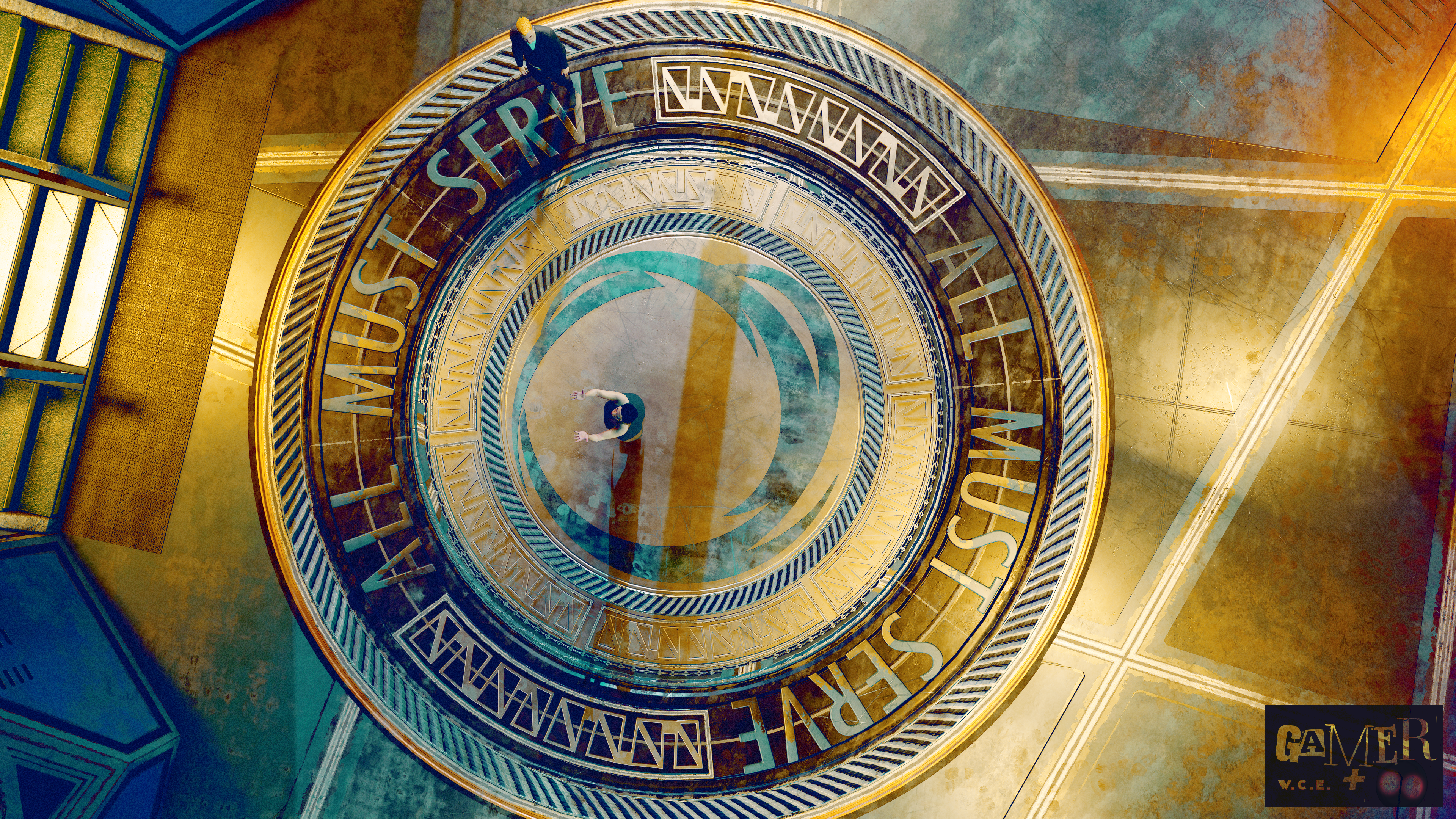
Their theocracy is a strict one. Anyone who is found disrespecting The Great Serpent is apparently not seen again, at least where there are guards. After you finish a certain mission, you can frequently hear citizens talking about how one of the top officials, Viktor Veth’aal, had his own son killed over non-belief. Once in a while you can hear someone warn the person they’re conversing with that they could get into trouble for what they’re saying, while others remark how someone they knew hasn’t been seen since saying something questionable in earshot of a guard. While this is certainly disturbing in itself it seems even more crazy at the present time, seeing as a huge percentage of their population was just wiped out along with half the city.

Being a theocracy, the city is imbued with religious symbols, statues, and shrines. Worship is a constant, although the main center of worship at the Scaled Citadel is destroyed as part of Shattered Space‘s main story line. Let’s talk about that for a minute since you can only see it during the last big battle of the added content. The place of worship inside is very large, as one may imagine, and it is very sleek and modern, very high class looking. It reminded me of a wealthy megachurch. I’m sorry I don’t have a screen shot of this. At the time I did the Citadel battle I wasn’t thinking I’d be doing a video, and experiencing the building is a one-shot event. At any rate, if you pay attention, you can see a smaller place of worship outside, dedicated to The Fang. This area is quite different from the worship hall, having pointy art panels and blood strewn on the altar and floor. Since there isn’t any talk of sacrifices—other than the one children are forced to do at a certain age—I don’t know what the source of blood is. Perhaps the children did the required ritual killing of their pet groats here. . . . my mental images of this are not wonderful. In any case, after the Citadel is destroyed, the bloody floor can still be seen, along with the fangs floating above.

Outside of the city there are very large shrines where people make pilgrimages. You can discover through a guide at one of these shrines that not all of The Promised look fondly at their violent past. They are definitely a divided people in regard to violent vs peaceful worshipfulness; there are even a few Vortex phantoms that are peaceful. At these shrines, you too can gain spiritual strength, which is an interesting take on religion and faith. After all, your character probably doesn’t actually have faith, though you can role play like you do. I didn’t claim to have any real serpent faith in the game, so just being you is enough to gain powers from the shrines. Interesting, too, is a surviving spiritual leader, Inaza Kaisir. She has seen visions which turn out to be accurate,iii proving to her non-believing scientist brother that there’s more to knowledge than what science can provide. So, there are things in the game to indicate spiritual or supernatural realities, even though there are also the opposite indicators of false beliefs, false hopes.

Ok. But who, or what, is the Great Serpent? The Great Serpent is the being that created everything, and it sits coiled around the heart of the universe. According to Jinan, it simultaneously is us and lives in us; it also supposedly loves everyone. (I’m sorry, but I find this really hard to swallow, as snakes just don’t seem to be the loving type. Do they give good hugs? Who cares if a snake loves them, honestly? And if it is us, then what, did it just find a complicated way to love itself?) According to Jinan, in the “From the Scriptures” and the “Serpent’s Crusade” recordings found in the Citadel, the Serpent told him to “prepare the way” for The Shrouding, the coming event where all but The Promised will be destroyed. However, who decided the method of preparation is not known, but Jinan clearly wanted to carry out the blood-letting method. It should be noted that Jinan says that the serpent’s form is “beyond grasp,” so why he says it’s a snake is not known. Beyond this, not much about their beliefs is provided to the player, as the multi-volumed “Va’ruun Scriptures” is not readable.

The Va’ruun’s history is brief, spanning less than three full generations (~140 years) from a single colony ship. In order to prepare the way as the Great Serpent commanded, some of them made contact and lived among others in the settled systems. Jinan claims they behaved as friendly missionaries, but the settled systems claim that they acted friendly only to spy on them, to get important information for their planned attacks. I tend to believe the settled systems’ version, since it would’ve been unnecessary to attack the people you were supposedly trying to convert and who would be destroyed by The Shrouding anyway. The Serpent’s Crusade lasted from 2240 to 2263, when Jinan’s son Jarek sued for peace after Jinan’s death. In any case, how they could fight for that long, with such a limited number of people, is a mystery, shall we say. The Va’ruun officially completely isolated themselves at this time.

The ending of the Serpent’s Crusade led to a split in the Va’ruun. Jarek’s twin brother, Jandar, and one of the noble houses, didn’t agree with ending the “crusade” and thus broke from House Va’ruun. Some say they were pushed out. This violent group of people are known as the Zealots, but they continue to call themselves The Promised. Their powerful and unconversational modified soldiers are called The Redeemed. Zealots are found on Va’ruun’kai and other planets and moons in that region of space and attack anyone on sight. They never try to convert people, just kill them. House Va’ruun does not attempt to convert people either, and when you convert as part of the story’s quest line, it’s a completely unheard of event that shocks people. In fact, the ritual you go through is virtually a forgotten process, with the location being unkept and considered by many council members to be not worth keeping.

Before I move on to the possible real world influences of this religion, I should describe a bit of what the Shattered Space story line is about. This is not a review of Shattered Space,—if it was, I’d have more to say for sure—but some aspects of the dlc’s catastrophe have bearing on both the Va’ruun belief system and real life experiences. Major spoilers here, if you couldn’t guess. The title of this added Starfield gameplay, Shattered Space, refers to the otherworldly vortex unleashed into Va’ruun space by the experiments of Jinan and his grandson and current heir, Anasko. Jinaan began trying to find a means to reach the Great Serpent to converse with him since he hadn’t heard from the Serpent after the fateful grav jump. His research went far but was not completed before his death.

His grandson, who frustradedly admits that neither his father nor himself has heard from the Great Serpent, decides to carry on his grandfather’s quest. He does so and discovers a way to connect with the vortex that exists between universes. The Serpent isn’t to be found in this vortex, though. Interestingly, the game hints at the purgatory-like aspect of the vortex through a character at the dilapidated Abbas Seaweed Farm. He can tell you that he’s had a dream where he’s a ghost, and along with others, he’s forever trapped to roam abandoned halls. In his dream, he also thinks he’ll be forever apart from the Great Serpent. He seems very much to be dreaming about the Vortex phantoms you encounter on Va’ruun’kai. The phantoms themselves will occasionally cry out to the Great Serpent, asking him to release them from their trapped space.
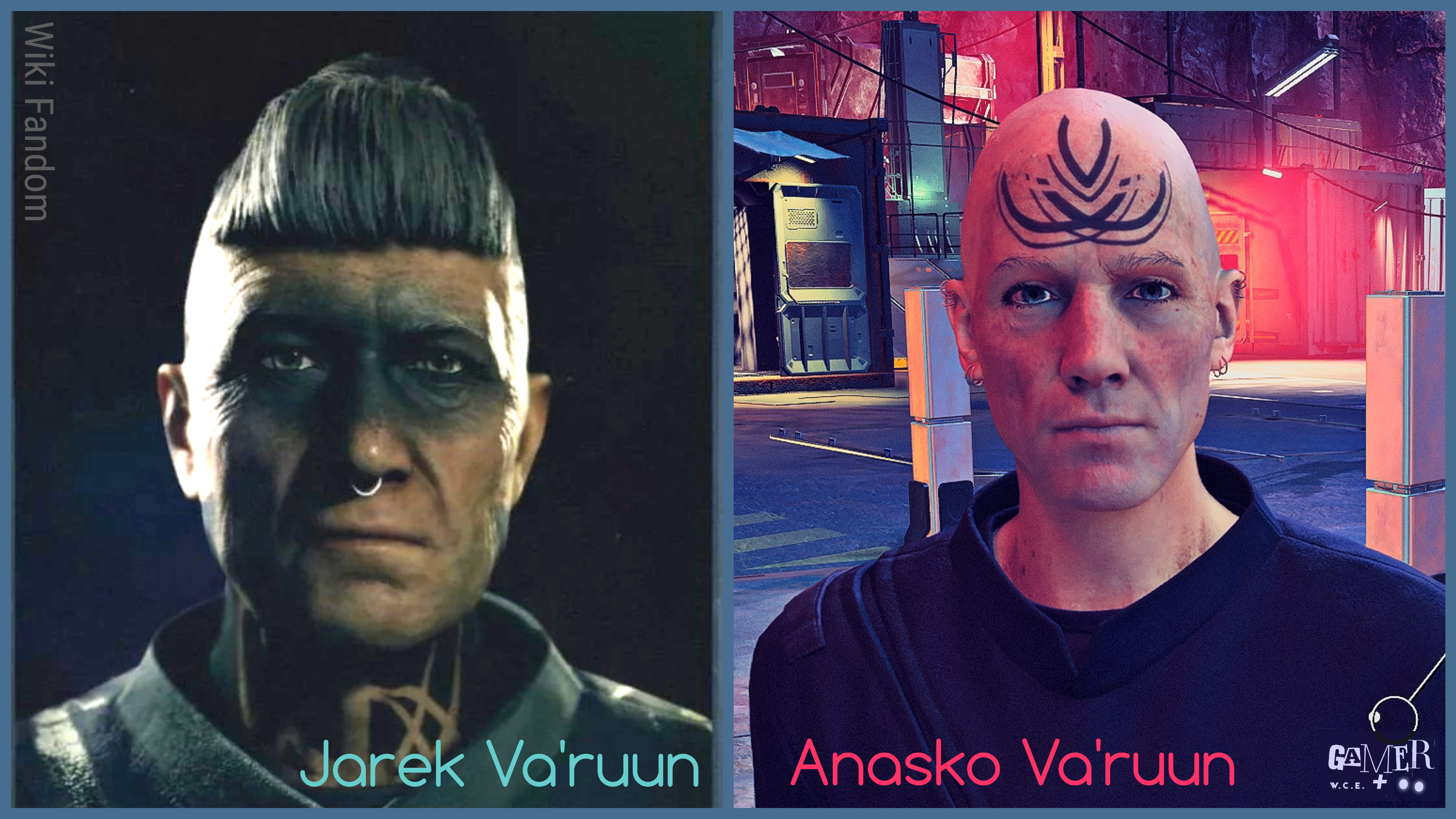
So Anasko, having discovered that people can be made seemingly immortal and empowered by the vortex, decides to begin a new Serpent’s Crusade. His genocidal goal of destroying the people of the settled systems ends up killing a huge number of his own people though, and leaving permanent enemies around Dazra, which itself is half destroyed. You learn this, of course, but you are unable to tell the people that their god wasn’t punishing them since it was not what caused the disaster. Jinan was very controlling and violent, and Anasko continued along those lines, causing massive self-inflicted destruction. Now, let’s move on to possible influences on this religion from the real world.

[Possible Real-World Influences for House Va’ruun]

Early in the game you find that one of your Lodge colleagues, Andreja, is a run-away Va’ruun, so you might naturally think other Va’ruun are like her, being Caucasian with a Eastern European accent [see note VI]. You end up meeting an incarcerated Zealot briefly, and she also seems quite Caucasian; the Va’ruun ambassador in Jemison has a similar accent and blackish hair like Andreja. So, when I landed in Dazra for the first time, I was shocked that the official who met me, Malibor Dul’kehf, looks like an Amazonian Yanomami native! That is, dark hair with bangs and black facial and neck tattoos. He seemed to have walked out of one of my old anthropology texts. It turns out his hair is reddish, but I couldn’t tell in the dark lighting of Dazra. Andreja and the ambassador don’t sport the tattoos (though I had forgotten that the jailed Zealot did), but it seems that all other Dazra citizens and Zealots have them. They may have a black bar across their face, encompassing the eyes, but more often they have elaborate geometric designs. As you meet more people in Dazra, you come to realize that House Va’ruun is the opposite of homogeneous. Even the vocal accents vary widely, which seems pretty absurd for a small isolated population.

Anyway, as you progress through the Va’ruun story, you discover that Jinan Va’ruun and his son Jarek, as well as other random citizens, also look like Yanomami. Is there a reason for this, other than gratuitous diversity? It could be that the game is hinting at two things. One is that the Va’ruun’s violent nature is cultural, since the Yanomami, or Yanomamo, are known to be a very violent people. They became widely known when Napoleon Chagnon, an anthropologist who lived among some of them, published a book about them titled Yanomamo: The Fierce People. This was in 1968 and the book, after a number of editions, is still assigned in anthropology classes. It’s garnered a great deal of controversy over the years, but whatever one may think of the criticisms of Chagnon’s work, it doesn’t change the fact that the Yanomami were, and still are, very violent people. As Encyclopaedia Britannica says, “Yanomami are constantly at war with one another, and much of Yanomami social life centres on forming alliances through trade and sharing food with friendly groups while waging war against hostile villages.” The Va’ruun are worse since they refuse to even form alliances. And, Jinan’s grandson attempts to continue the galaxy-wide slaughter that is the Serpent’s Crusade. (As a note, you can begin to alter their isolationism, or renew the Serpent’s Crusade, by the choice you make at the end of Shattered Space).

The second hint could be in regard to Yanomami cosmology, and how they came up with it. It doesn’t seem far-fetched to think that Jinan’s experience during the grav jump was like a DMT or ayahuasca psychedelic trip that Yanomami and other Amazonian tribes take part in. Seeing snakes while using ayahuasca is extremely common and a snake, or pair of snakes, is common to the cosmology stories of various Amazonian tribes. However, the similarity seems to end there. The cosmology beliefs I read about when researching this unexpected rabbit hole vary quite a bit. In a book entitled The Living Ancestors by Zeljko [Zelko] Jokic [Yo-keech], the Yanomami reported believing in a giant boa that holds the whole of existence—encompassing five cyclical layers—within its abdomen.iv In Jeremy Narby’s book on the Amazonian Ashaninca, The Cosmic Serpent, he shares both his own drug-induced experience of snakes, and another anthropologist’s ayahuasca experience of spirit beings helping him see the reaches of the galaxy. Sound familiar?

Narby also covers how a snake, or two snakes, were creators and/or knowledge keepers in various ancient or primitive cosmologies around the world. In some of these, the snake encircles creation, as Jinan basically conveys in the game. Narby references Joseph Campbell’s books a lot, and who wouldn’t, as Campbell published many in-depth books on mythology and cosmology found around the world. In fact, Campbell’s book entitled The Hero with a Thousand Faces (1949) has been utilized by numerous writers of books, scripts, and game stories. It wouldn’t surprise me if it influenced some of the writers of Starfield.

The most common symbol of the Va’ruun, the ouroborus, is presented in a variety of styles. The ouroborus is a depiction of a snake eating its own tail. That the Va’ruun use the ourborus so much is kind of strange, since in a cosmological sense, it signifies the cyclical nature of death and rebirth. The Va’ruun talk of the destructive Shrouding event and how they will be the only survivors of that, as opposed to a rebirth. They seem to want everything dead but themselves, so what would they even do with a new creation with new people in it? This is very different from the Christian perspective, which is linear, but which does have a one-time destruction and recreation of Earth, when life will be brought back to God’s original non-violent conception. For example, animals and humans do not attack and eat each other.

The Va’ruun have a large variety of snake-like statues, but since the ourborus symbol is used so much by them, let’s talk about it more. First off, when reading about it online you’d think the term itself is old, when it’s not, at least according to the etymologies in the dictionaries I checked. The symbol is ancient, but the word ourborus was first used in 1921, utilizing a combination of Greek words, and apparently wasn’t used much until the 1940s. Looking at the indexes of the four Joseph Campbell books I have, ranging in dates from 1959 to 1986, not one of them lists the word ourborus. I was surprised at this and that’s why I Iooked into its etymology. So apparently it was a word coined or borrowed for its usefulness in referring to a widespread ancient idea and/or symbol. It should be noted that much of what you might read about it online is conjecture, with very little known of its actual meaning from any given ancient culture. One explanation for the snake becoming a symbol of cyclical life has to do with it shedding its skin. It’s as if it regenerates itself, like it is reborn.

The ourborous symbol is found in ancient Egyptian tombs, but not much is known about its Egyptian meaning. It’s conjectured that early on it simply represented daily and seasonal cycles. It could’ve been related to their conceptions of the cosmos and life after death, and one ancient source claims it referred to the world. The Hindu have their own version of a snake involved with creation cycles, Sesha. This 1000-headed snake is coiled around the universe and represents a circular view of time. (If you have the Adoring Fan as a companion, he’ll mention how some religions believe time is circular.) The Norse people also believed in a giant cosmic serpent, called Jormungandr. He kept a hold of his tail while he encircled the world, until the time foretold when he’d release his tail in order to do battle with the gods. The world, most of the gods, and Jormungandr end up being destroyed, but a new world rises. So Jormungandr was an agent of change, as other cultures’s cosmic serpents were.

The Va’ruun ourborus symbol most often seen is very abstract, or stylized, being a circle with some pointed flares. This abstract symbol is actually a set of five linear shapes placed together. Because it was so abstract, I wasn’t at first willing to assume that it was an ourborus, but there are other versions of the symbol that aren’t as abstract. On all Va’ruun computer screens, the background contains a simplified ouroborus, and this same version can be seen on the Va’ruun Scriptures covers. A very interesting version can also be seen on black banners at and near the high elevation Tul’shahk monastery outside of Dazra. Here, the black banners depict an ourborus in a state of destruction. To me, it looks as though it has been shot, and at the opposite side of the circle parts of the snake are either disintegrating or wholly gone. I have no idea what this signifies. Since the serpent looks like it got blasted, it doesn’t seem to depict the disintegration of creation by the creature itself. Zealots are in control of the place and the teacher is preparing people to fight, but the banners may be from the dislocated monks. A statue in the Scaled Citadel may be depicting the destruction of the cosmos, as it shows the ourborous separating and crystal-like formations emerging. But that blast at the lower right side, shown on the banner, is not part of the statue. So who knows. By the way, there’s a travel poster that is oddly like that statue, from the mysterious Trident Luxury Lines.

The elephant in the room so far is that in Christianity (and Judaism, but I don’t want to speak for it here) “the serpent” is a representation of Satan, the being which caused the Fall of Humankind and who was said by God to be THE continual thorn in everyone’s side (I paraphrase). He is understood to be the primary adversary of God and his plans. So it’s interesting to ponder why the being that Jinan saw during a grav jump would appear as a serpent, when the Sanctum Universum—the subject Part II—does not bring up anything like a serpent at all. Your character never encounters anything like that either.

I played through the main part of the game several times and pondered it, and because of that whole experience I did not seriously think that the serpent in-game related to our real-world Christian beliefs. Even though Satan was the first thing that came to mind when encountering information about the Va’ruun faith, I came to believe that the Great Serpent in-game was unrelated to Satan. The reason? There is no Christianity and not much biblical in the Sanctum Universum. There is some stuff that characters have said about God, outside of the Bible, in the Sanctum Universum, which I’ll get to in the second video. So basically, the game is unbiblical, so why would the main adversary of the Judaeo-Christian God be in the game? And, the whole Yanomami angle through me off.

It could be that it’s only a representation of the old creator being of various cultures, represented by a snake, clashing with more modern and more western ideas of who the creator god actually is. As stated earlier, the snake has been viewed as a being who causes transformation. And really, all the old gods are transformers, not actual creators. The Judaeo-Christian God is believed to be the actual creator of everything, however, and all that from nothing. But, as I paid more attention to the words used by the Va’ruun for certain things, I came to believe the Great Serpent likely represents Satan, because the words are used in an opposite sense from their Christian usages; they are a mockery, or even used as a method of giving a false impression of Christianity. What words am I talking about? Crusade, monastery, and the phrases “prepare the way” and being “born anew.”

The word crusade is not religiously neutral as it immediately brings to mind the Catholic crusades of the late 1000s to latter 1200s. Very generally, the purpose of the crusades was to take control of Jerusalem after increasing attacks by Muslims on Christians going on pilgrimage there. While the crusades may be criticized for a number of reasons, the crusaders were never out to kill literally everyone the way the Va’ruun are described as doing. To use the word “crusade” in this context is demeaning. Calling it the Serpent’s Terror would’ve been more applicable since the Va’ruun have indiscriminately killed anyone that’s not a believer. And, the Va’ruun, but more specifically the Zealots, simply want to genocide the settled systems. By the way, the Zealots try to claim in their “Zealot Scriptures Vol. 3” that Jandar “dispensed the gospel of Jinan,” but even if that’s true, the player never experiences a Zealot who is willing to talk to them for the purposes of conversion. To sum up, the word crusade in this context is a mockery, meant to demean the original crusades by suggesting an equivalency.

The Va’ruun also borrow the Catholic word “monastery” to try and force that meaning onto a religious community that did not share the same values. Early orders of monks had different rules, but generally speaking monks were totally devoted to spiritual life and lived according to Jesus’ teachings. Therefore they would not be going around killing people for not believing everything they said, they wouldn’t be remotely thinking like that. So when it comes to the word monastery, the peaceful and perhaps wine-drinking monk is very likely what pops into the minds of most people. Since all Va’ruun know what they’re culture and beliefs are about, the word would not have fooled any of them, so it must be that it was used for mockery.

And who would be most interested in mocking the true creator God and his believers than Satan? Which brings us to the phrase “prepare the way” that Jinan claimed the Serpent told him to do, in order for The Shrouding to take place. I could write a whole article just on this subject, as the phrase relates to God’s plan of salvation, which is peacefully offered to all people. In the New Testament, see Matthew chapter 3, Mark chapter 1, Isaiah 40:3, Malachi 3:1, and John 3:16-17, for example. But here it’s used as an excuse to eliminate all who do not accept the Serpent. How more mocking can you get? The serpent, or at least his messenger, Jinan, tells his followers that they will be the ones saved if they kill all non-believers. Jinan can be viewed as the Anti-John the Baptist, since it was John who told of preparing the way. But by this he meant to repent and cleanse oneself spiritually, for the Messiah was coming. Again, the two meanings of the phrase are very much opposed to one another.

The fourth word or phrase is “reborn”, or to be “born anew.” In Christianity it is a necessity to be born anew by God’s spirit, the Holy Spirit: the person of flesh is birthed again as a person of spirit. In Shattered Space you are required to go through a ritual to become a member of The Promised. Inaza, mentioned earlier, is the person directing you in this. At the end she talks with you and asks, “Do you feel born anew?” And if you have gone through the Unity in the main part of the game, you have the option of replying “There’s more than one way to be born anew, trust me.” Strangely, she responds by saying that “your confidence is impressive.” As a Christian myself, I would never say that there’s more than one way to be born anew, so I found this disturbing. In the context of the game, it is not anything to be disturbed about, but by its own admission Bethesda made the game about religion and big questions, to think about faith in our real world, so I do not take this specific language during an important conversion to be game-related only. So, I was pretty shocked this topic was in the game and I was offended by the possible real-world implication. Since the Va’ruun are so strict about their religion, I found Inaza’s response out of place as well.

I’d like to bring up one more thing, just something interesting to reflect on. The leaders of the Va’ruun, Jinan, Jarek, and Anasko, all lamented not hearing from the Great Serpent after Jinan’s initial and powerful experience. It no doubt made Jarek and Anasko, if not Jinan, question their faith in the snake-like being. They couldn’t admit their concerns to anyone. But Jinan had the audacity to think of forcing his way to the Serpent’s location via science. He seemingly failed, but secretly discovered a Vortex and a way to make humans become a part of it. Anasko continued that endeavor, making a Vortex Va’ruun army, but never finding the Great Serpent. He became a Vortex Phantom himself, just wandering about and disturbed, perhaps destined to be in that state forever. Is it not folly to try and force your way into God’s kingdom? It seems so. It reminded me of a verse in the New Testament, one that many find puzzling; well, translators are puzzled by it too and translate it in different ways. In the New King James Version, Matthew 11:12 Jesus’s words are translated as, “And from the days of John the Baptist until now the kingdom of heaven suffers violence, and the violent take it by force.” Jinan, like the anti-John the Baptist he seems to be, and his descendants are violent and try and take eternity by force.
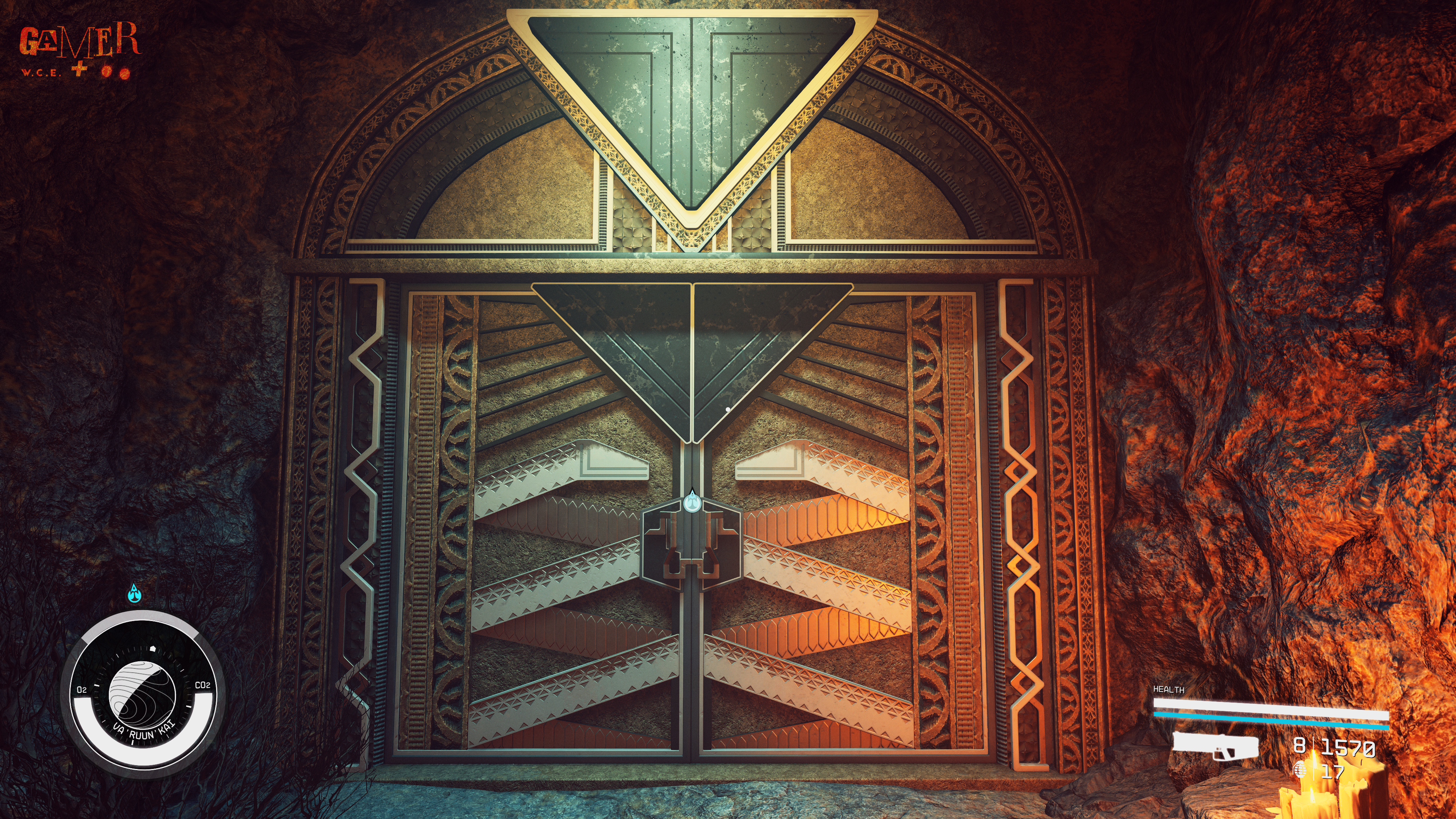
To sum up, The Promised religion: worships a celestial being they liken to a snake, is relatively new, is based on a single experience during a grav jump by a single person, is much more into violence than proselytizing, is forced onto the population, punishes apostasy with death, and is a mockery of Christianity. Who wouldn’t want to join?! If I were in an informal setting I might speculate on how perhaps the original intent was for the Va’ruun to indeed be a less diverse group, descendants of Eastern Europeans, practicing a religion that has similar characteristics to an infamous modern day religious subset, and that maybe, perhaps, the Yanomami were thrown in later to make the flash-point analogy weaker. But I’m not in an informal setting.

However, I will say more about what I realized late in my dive into this subject. Jinan sounds like the words “Jinn” and “Jann,” Arabic or Semitic words for the generally invisible beings we call Genies. When I was in university it was still taught that Muhammad was influenced by a Jinn during his creation of Islam, which is generally otherwise taken from the Bible. That is what was passed down through historical sources by the way, not made up by my public college professor. Jinn are a belief from pre-Islamic Arabians and supposedly their most common form of manifestation is that of a snake. There is also a story about how Muhammad was friends with a giant Jinn snake.v Make what you will of that.

Thanks so much for listening! Please Like and Subscribe. I’ll probably put out a review of Starfield next, less formally without a script, and then in Part 2 I’ll more fully go over what Bethesda’s people had said about the religious aspect of Starfield, survey the Sanctum Universum, and then compare the belief systems to one another. Take care.

i  “Inside Starfield: how Bethesda's 'NASA punk' epic became the biggest Xbox game in a decade,” GQ Magazine, UK, Same White, August 24, 2023.
ii  One source said it departed from Jemison, just FYI.
iii  I'll discuss this more in Part II. Were her visions from The Serpent, and if so, who or what can give us visions?
iv  In Chagnon's 1997 edition of his Yanomamo book, there are four layers, though I'm not sure about the snake.
v  “Jinn Snake Companion and Prophet Muhammad Story,” https://www.youtube.com/watch?v=BMHIkgA7OhI

vi I'm not an expert, but others have said the same about her accent. I want to note, however, that I heard an Israeli soldier speak recently and to me Andreja sounds a lot like him also. So there's the possibility of Middle Eastern accent. I did not add anything about their language, which has marks like a glottal stop. This could simply be Lovecraftian, or could harken to either the Czechoslovakian or Arabic language.

Where I’ve Been, lately

Welcome all, and the Lord bless you.  For some time I slowed down here while I did some training and “setting up shop” in the grants writing field.  But then I stepped back after becoming discouraged, realizing I needed to rethink my goals and strategy.  That sounds so . . . blah and businessy, doesn’t it?  But it’s actually true.  I wasn’t approaching things the right way and had to calm down about it.  Be still and know the Lord, right?  Yes, be still.  And listen.

In the meantime, during Christmas break time, I decided to go ahead and get going on an idea I’ve had for a long time.  And that is coming up with a clothes design called “Monkwear” (apparently the name has been used before since I couldn’t use that name on Twitter).  I have always had this tug on my heart, this desire that stems from sadness, that Christians should be more united.  Christ prayed for it, yet, we seem so much at odds with each other so often.  So I thought it would be neat if Christians would wear similar and humble clothes all at the same time–to show unity and to be encouraged by seeing siblings in Christ that we don’t personally know.  How much stronger would some of us be if we could only see how many really had faith, and were willing to show it (in what seems a non-confrontational way)?

Elisha prayed, “Open his eyes, Lord, so that he may see.” Then the Lord opened the servant’s eyes, and he looked and saw the hills full of horses and chariots of fire all around Elisha. 2 Kings 6:17

So Monkwear.  Brown simple clothes to wear one day a week or month.  I’m still working on a basic design I want to have on my version of Monkwear; I want to get it “right” and it’s daunting.  In the meantime (again), I’ve been learning GIMP and whatever else I need to know to sell designs on CafePress.  I might do another outlet later, but it’s CafePress for right now.  In case anyone is interested, I have these designs up now; there are even some “With Christian Eyes” things there.  This is not to promote my blog, since the url is not on it, but the sentiment CS Lewis wrote:

“I believe in Christianity as I believe the sun has risen, not only because I see it, but because by it I see everything else.”

The shop at CafePress is Monkwear and The Priest’s Dabblings, and you can connect with me on Twitter if you want at MonkwearCP.   (You can sign up for deals and coupon codes, which provide significant discounts – see CafePress home page.)  Thanks SO much for reading this far, and for visiting my shop if get THAT far!  In this media-saturated age, I know how much your time and attention are worth.

Be one, Jesus prays.   From John 17:23 (V Priest design).
Be one, Jesus prays. From John 17:23 (V Priest design).

Rooted in Love; Ephesians 3:17b-19 (artwork by V. Priest [c])

For Valentine's Day, or any day.  V. Priest (c)
For Valentine’s Day, or any day. V. Priest (c)

With Christian Eyes bumper sticker.

Prophecies fulfilled, others set in motion, at Jesus’ birth

Christmas gift box icon on old paper background and pattern
A slightly altered version of a saying floating around the internet.

Christmas is such a secular holiday anymore that a person is made to feel like they’re offending someone if they unselfishly wish someone a “merry Christmas.”  Instead, it’s all about having “happy holidays” or enjoying “the season” (my Christmas cards for this year say that . . . but what “season”?  Winter?  The season of blessing retailers with books in the black?).  It’s gotten so strange that some claim that you don’t need Christ in Christmas.  That makes sense . . . nowhere.  I’m surprised that calling it simply “the giving season” hasn’t caught on, akin to the calling of Thanksgiving “turkey day.”

I’m not complaining so much as noting the secular trend, in full swing now, to eliminate Christianity from public life.  Christmas, however, gives us the opportunity to enlighten people about God’s word, possibly more than any other holiday.  When it comes to Easter, people need to accept the New Testament witness regarding Christ’s resurrection.  With Christ’s birth, however, there are prophecies from the Old Testament (or Tanakh) that are pretty clear, and, there is no good reason to think the prophecies weren’t written centuries before Jesus was born.  These prophecies are from the books of Isaiah and Micah.

First, and no doubt very familiar, is Isaiah 7:14.  With verse 13 for context:  “Then Isaiah said, ‘Hear now, you house of David! Is it not enough to try the patience of humans? Will you try the patience of my God also?  Therefore the Lord himself will give you a sign: The virgin will conceive and give birth to a son, and will call him Immanuel.'”  This prophecy is announced as fulfilled in Matthew 1:22-23.  Here it is in context (Matthew 1:20b-23):

“an angel of the Lord appeared to him in a dream and said, ‘Joseph son of David, do not be afraid to take Mary home as your wife, because what is conceived in her is from the Holy Spirit.  She will give birth to a son, and you are to give him the name Jesus, because he will save his people from their sins.’ All this took place to fulfill what the Lord had said through the prophet: The virgin will conceive and give birth to a son, and they will call him Immanuel’ (which means ‘God with us’).”

Some critics like to point out that the word “virgin” is not specifically used in Isaiah, but, in the historical and cultural context, a young unmarried woman (a translation of the word used) meant the same thing as “virgin.”  It’s an odd criticism in any case, since, what else would God have meant?  Would an unchaste girl getting pregnant be any kind of sign from God?

Another criticism, and one without merit, is that the book of Isaiah may have been altered later.  There is no end to such criticisms of the Bible generally.  However, Isaiah is consistently viewed as ancient by scholars, even if some moderns like to imagine that it was written by two or three authors during three periods (the youngest being from about 400 BC).  More importantly, the birth prophecy is in the early part of the book, universally believed to be written in the 700s by Isaiah.  Regarding complete authenticity of the writings, a confirmation came via a Dead Sea Scroll of the entire book of Isaiah.  This scroll is from about 150-125 BC.  Having confidence in the authenticity and the ancientness of Isaiah, we can enjoy the related prophecies in Isaiah 9 (1b-2, 6-7):

“. . . in the future he will honor Galilee of the nations, by the Way of the Sea, beyond the Jordan—

The people walking in darkness
    have seen a great light;
on those living in the land of deep darkness
    a light has dawned.

For to us a child is born,
    to us a son is given,
    and the government will be on his shoulders.
And he will be called
    Wonderful[,] Counselor, Mighty God,
    Everlasting Father, Prince of Peace.
Of the greatness of his government and peace
    there will be no end.
He will reign on David’s throne
    and over his kingdom,
establishing and upholding it
    with justice and righteousness
    from that time on and forever.
The zeal of the Lord Almighty
    will accomplish this.”

There is another prophecy, from Micah 5 (2 & 4), that is quoted in Matthew and is therefore considered fulfilled.  As written in Matthew 2:6:

“‘But you, Bethlehem, in the land of Judah,
    are by no means least among the rulers of Judah;
for out of you will come a ruler
    who will shepherd my people Israel.”

The book of Micah was written about the same time as Isaiah was.  There are more prophecies regarding Jesus Christ, of course, some fulfilled and some yet to be.  You can view some of them in a linked list at Prophecies Jesus Fulfilled.

Wishing you a warm and love-filled Christmas, I also leave you with a couple of songs for you to enjoy:

It Came Upon a Midnight Clear  (simple and traditional; Bruce Crockburn)

Oh Holy Night (Josh Groban)

Sources:  (1)  NIV Archaeological Study Bible (Zondervan 2005), pp 1055, 1115, 1477.   (2) Rational Steps to Belief in Christ

Christians are Called to Heal (Not Hurt)

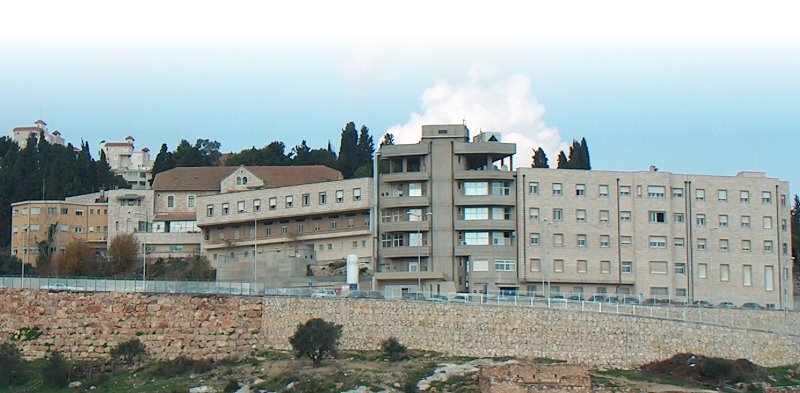
Nazareth Hospital (Christian), in Nazareth, Israel

. . . the crowds followed him on foot from the towns.  When Jesus landed and saw a large crowd, he had compassion on them and healed their sick (Matthew 13b-14).

Jesus went through all the towns and villages, teaching in their synagogues, proclaiming the good news of the kingdom and healing every disease and sickness.  When he saw the crowds, he had compassion on them, because they were harassed and helpless, like sheep without a shepherd.  Then he said to his disciples, “The harvest is plentiful but the workers are few.  Ask the Lord of the harvest, therefore, to send out workers into his harvest field.”  Jesus called his twelve disciples to him and gave them authority to drive out impure spirits and to heal every disease and sickness.  As you go, proclaim this message:  ‘The kingdom of heaven has come near.’  Heal the sick, raise the dead, cleanse those who have leprosy, drive out demons.  Freely you have received; freely give (Matthew 9:35-38, 10:1,7-8).

But he was pierced for our transgressions, he was crushed for our iniquities; the punishment that brought us peace was on him, and by his wounds we are healed (Isaiah 53:5).

“Freely you have received: freely give,” Jesus told his disciples.  Are we not also his disciples?

Jesus went throughout Galilee, teaching in their synagogues, proclaiming the good news of the kingdom, and healing every disease and sickness among the people.  News about him spread all over Syria, and people brought to him all who were ill with various diseases, those suffering severe pain, the demon-possessed, those having seizures, and the paralyzed; and he healed them (Matthew 4:23-24).

Jesus healed everyone.  In the passages above (and in many others), people came to Jesus because of his good news and the healing he did to back up his claims.  Jesus also commanded his disciples to go and heal, right along with his command to proclaim the good news.  We may not all have the gift of healing, or perhaps we, in reality, don’t have the faith for it.  But . . . instead of people coming to us, why are they repulsed?

Is it only because we haven’t healed someone through faith?  Why, in this country (the USA), would anyone come to us when so many “Christians” are out there loudly proclaiming that the poor don’t deserve health care (can you imagine Jesus saying that after reading all the verses about him healing the poor, the sinners)?  Why would anyone come to our churches when so many loudly proclaim that the poor shouldn’t receive health care from the government, when they can’t get it from anywhere else?  Did Jesus give us the story of the Good Samaritan (provided below as well) so we can only nod in admiration, instead of actually living it (or at least trying to)?   Did he ever say, or even hint, that a Christian’s business is somehow separate from his spiritual life (of course not – our faith and obedience come first–in fact, they are all)?

Below are many bible excerpts, but by no means all (I did not provide much cross-referencing of verses here, either), on healing.  It seems to me that Christians often gloss over these as they read.  Certainly, most don’t take them to heart like the early church did, or the later church that set up hospitals.  A forthcoming post will address the healings in Acts and how earlier Christians tended the sick who were poor, and set up hospitals.  There are still some hospitals around that are owned and operated by Christians, but cries for all those who have no health care in the USA to somehow pay today’s hospital bills on their own muffle out – like cattle stampeding over feathers – the small, quiet, and steady work of the Christians who still obey Christ’s call to heal.

Luke 10 (The Parable of the Good Samaritan)

25 On one occasion an expert in the law stood up to test Jesus. “Teacher,” he asked, “what must I do to inherit eternal life?”

26 “What is written in the Law?”  he replied. “How do you read it?”

27 He answered, “‘Love the Lord your God with all your heart and with all your soul and with all your strength and with all your mind’; and, ‘Love your neighbor as yourself.’”

28 “You have answered correctly,” Jesus replied. “Do this and you will live.”

29 But he wanted to justify himself, so he asked Jesus, “And who is my neighbor?”

30 In reply Jesus said: “A man was going down from Jerusalem to Jericho, when he was attacked by robbers. They stripped him of his clothes, beat him and went away, leaving him half dead. 31 A priest happened to be going down the same road, and when he saw the man, he passed by on the other side. 32 So too, a Levite, when he came to the place and saw him, passed by on the other side. 33 But a Samaritan, as he traveled, came where the man was; and when he saw him, he took pity on him. 34 He went to him and bandaged his wounds, pouring on oil and wine. Then he put the man on his own donkey, brought him to an inn and took care of him. 35 The next day he took out two denarii and gave them to the innkeeper. ‘Look after him,’ he said, ‘and when I return, I will reimburse you for any extra expense you may have.’

36 “Which of these three do you think was a neighbor to the man who fell into the hands of robbers?”

37 The expert in the law replied, “The one who had mercy on him.”

Jesus told him, “Go and do likewise.”

Matthew 8

When Jesus came down from the mountainside, large crowds followed him. A man with leprosy came and knelt before him and said, “Lord, if you are willing, you can make me clean.”

Jesus reached out his hand and touched the man. “I am willing,” he said. “Be clean!” Immediately he was cleansed of his leprosy. Then Jesus said to him, “See that you don’t tell anyone. But go, show yourself to the priest and offer the gift Moses commanded, as a testimony to them.”

When Jesus had entered Capernaum, a centurion came to him, asking for help. “Lord,” he said, “my servant lies at home paralyzed, suffering terribly.”

Jesus said to him, “Shall I come and heal him?”

The centurion replied, “Lord, I do not deserve to have you come under my roof. But just say the word, and my servant will be healed. For I myself am a man under authority, with soldiers under me. I tell this one, ‘Go,’ and he goes; and that one, ‘Come,’ and he comes. I say to my servant, ‘Do this,’ and he does it.”

10 When Jesus heard this, he was amazed and said to those following him, “Truly I tell you, I have not found anyone in Israel with such great faith. . . .”  13 Then Jesus said to the centurion, “Go! Let it be done just as you believed it would.” And his servant was healed at that moment.

14 When Jesus came into Peter’s house, he saw Peter’s mother-in-law lying in bed with a fever. 15 He touched her hand and the fever left her, and she got up and began to wait on him.

16 When evening came, many who were demon-possessed were brought to him, and he drove out the spirits with a word and healed all the sick. 17 This was to fulfill what was spoken through the prophet Isaiah [53:4]:  “He took up our infirmities and bore our diseases.”

Matthew 15:30-31.   Great crowds came to him, bringing the lame, the blind, the crippled, the mute and many others, and laid them at his feet; and he healed them.  The people were amazed when they saw the mute speaking, the crippled made well, the lame walking and the blind seeing. And they praised the God of Israel.

Matthew 19:1-2.  When Jesus had finished saying these things, he left Galilee and went into the region of Judea to the other side of the Jordan.  Large crowds followed him, and he healed them there.

Luke 13:10-13.   On a Sabbath Jesus was teaching in one of the synagogues, and a woman was there who had been crippled by a spirit for eighteen years. She was bent over and could not straighten up at all.  When Jesus saw her, he called her forward and said to her, “Woman, you are set free from your infirmity.”  When he put his hands on her, and immediately she straightened up and praised God.

Luke 18

35 As Jesus approached Jericho, a blind man was sitting by the roadside begging. 36 When he heard the crowd going by, he asked what was happening. 37 They told him, “Jesus of Nazareth is passing by.”

38 He called out, “Jesus, Son of David, have mercy on me!”

39 Those who led the way rebuked him and told him to be quiet, but he shouted all the more, “Son of David, have mercy on me!”

40 Jesus stopped and ordered the man to be brought to him. When he came near, Jesus asked him, 41 “What do you want me to do for you?”

“Lord, I want to see,” he replied.

42 Jesus said to him, “Receive your sight; your faith has healed you.” 43 Immediately he received his sight and followed Jesus, praising God. When all the people saw it, they also praised God.

Matthew 21:14-15.  The blind and the lame came to him at the temple, and he healed them.  But when the chief priests and the teachers of the law saw the wonderful things he did and the children shouting in the temple courts, “Hosanna to the Son of David,” they were indignant.

Matthew 12

. . . he went into their synagogue, 10 and a man with a shriveled hand was there. Looking for a reason to bring charges against Jesus, they asked him, “Is it lawful to heal on the Sabbath?”

11 He said to them, “If any of you has a sheep and it falls into a pit on the Sabbath, will you not take hold of it and lift it out? 12 How much more valuable is a person than a sheep! Therefore it is lawful to do good on the Sabbath.”

13 Then he said to the man, “Stretch out your hand.” So he stretched it out and it was completely restored, just as sound as the other. 14 But the Pharisees went out and plotted how they might kill Jesus.

15 Aware of this, Jesus withdrew from that place. A large crowd followed him, and he healed all who were ill. 16 He warned them not to tell others about him. 17 This was to fulfill what was spoken through the prophet Isaiah:

18 “Here is my servant whom I have chosen,
the one I love, in whom I delight;
I will put my Spirit on him,
and he will proclaim justice to the nations.
19 He will not quarrel or cry out;
no one will hear his voice in the streets.
20 A bruised reed he will not break,
and a smoldering wick he will not snuff out,
till he has brought justice through to victory.
21 In his name the nations will put their hope.”

22 Then they brought him a demon-possessed man who was blind and mute, and Jesus healed him, so that he could both talk and see.

Mark 5 (see also Matthew 9 and Luke 8)

21When Jesus had again crossed over by boat to the other side of the lake, a large crowd gathered around him while he was by the lake. 22 Then one of the synagogue leaders, named Jairus, came, and when he saw Jesus, he fell at his feet. 23 He pleaded earnestly with him, “My little daughter is dying. Please come and put your hands on her so that she will be healed and live.” 24 So Jesus went with him.

A large crowd followed and pressed around him. 25 And a woman was there who had been subject to bleeding for twelve years. 26 She had suffered a great deal under the care of many doctors and had spent all she had, yet instead of getting better she grew worse. 27 When she heard about Jesus, she came up behind him in the crowd and touched his cloak, 28 because she thought, “If I just touch his clothes, I will be healed.” 29 Immediately her bleeding stopped and she felt in her body that she was freed from her suffering.

30 At once Jesus realized that power had gone out from him. He turned around in the crowd and asked, “Who touched my clothes?”

31 “You see the people crowding against you,” his disciples answered, “and yet you can ask, ‘Who touched me?’ ”

32 But Jesus kept looking around to see who had done it. 33 Then the woman, knowing what had happened to her, came and fell at his feet and, trembling with fear, told him the whole truth. 34 He said to her, “Daughter, your faith has healed you. Go in peace and be freed from your suffering.”

35 While Jesus was still speaking, some people came from the house of Jairus, the synagogue leader. “Your daughter is dead,” they said. “Why bother the teacher anymore?”

36 Overhearing what they said, Jesus told him, “Don’t be afraid; just believe.”

37 He did not let anyone follow him except Peter, James and John the brother of James. 38 When they came to the home of the synagogue leader, Jesus saw a commotion, with people crying and wailing loudly. 39 He went in and said to them, “Why all this commotion and wailing? The child is not dead but asleep.” 40 But they laughed at him.

After he put them all out, he took the child’s father and mother and the disciples who were with him, and went in where the child was. 41 He took her by the hand and said to her, “Talitha koum!” (which means “Little girl, I say to you, get up!”). 42 Immediately the girl stood up and began to walk around (she was twelve years old). At this they were completely astonished. 43 He gave strict orders not to let anyone know about this, and told them to give her something to eat.

Luke 7

11Soon afterward, Jesus went to a town called Nain, and his disciples and a large crowd went along with him. 12 As he approached the town gate, a dead person was being carried out—the only son of his mother, and she was a widow. And a large crowd from the town was with her. 13 When the Lord saw her, his heart went out to her and he said, “Don’t cry.”

14 Then he went up and touched the bier they were carrying him on, and the bearers stood still. He said, “Young man, I say to you, get up!” 15 The dead man sat up and began to talk, and Jesus gave him back to his mother.

16 They were all filled with awe and praised God. “A great prophet has appeared among us,” they said. “God has come to help his people.”

Mark 6:4-6.  Jesus said to them, “A prophet is not without honor except in his own town, among his relatives and in his own home.”  He could not do any miracles there, except lay his hands on a few sick people and heal them.  He was amazed at their lack of faith.

John 9

1As he went along, he saw a man blind from birth. His disciples asked him, “Rabbi, who sinned, this man or his parents, that he was born blind?”

“Neither this man nor his parents sinned,” said Jesus, “but this happened so that the works of God might be displayed in him. As long as it is day, we must do the works of him who sent me. Night is coming, when no one can work. While I am in the world, I am the light of the world.”

After saying this, he spit on the ground, made some mud with the saliva, and put it on the man’s eyes. “Go,” he told him, “wash in the Pool of Siloam” (this word means “Sent”). So the man went and washed, and came home seeing.

His neighbors and those who had formerly seen him begging asked, “Isn’t this the same man who used to sit and beg?” Some claimed that he was.

Others said, “No, he only looks like him.”

But he himself insisted, “I am the man.”

10 “How then were your eyes opened?” they asked.

11 He replied, “The man they call Jesus made some mud and put it on my eyes. He told me to go to Siloam and wash. So I went and washed, and then I could see.”

12 “Where is this man?” they asked him.

“I don’t know,” he said.

13 They brought to the Pharisees the man who had been blind. 14 Now the day on which Jesus had made the mud and opened the man’s eyes was a Sabbath. 15 Therefore the Pharisees also asked him how he had received his sight. “He put mud on my eyes,” the man replied, “and I washed, and now I see.”

16 Some of the Pharisees said, “This man is not from God, for he does not keep the Sabbath.”

But others asked, “How can a sinner perform such signs?” So they were divided.

17 Then they turned again to the blind man, “What have you to say about him? It was your eyes he opened.”

The man replied, “He is a prophet.”

18 They still did not believe that he had been blind and had received his sight until they sent for the man’s parents. 19 “Is this your son?” they asked. “Is this the one you say was born blind? How is it that now he can see?”

20 “We know he is our son,” the parents answered, “and we know he was born blind. 21 But how he can see now, or who opened his eyes, we don’t know. Ask him. He is of age; he will speak for himself.” 22 His parents said this because they were afraid of the Jewish leaders, who already had decided that anyone who acknowledged that Jesus was the Messiah would be put out of the synagogue. 23 That was why his parents said, “He is of age; ask him.”

24 A second time they summoned the man who had been blind. “Give glory to God by telling the truth,” they said. “We know this man is a sinner.”

25 He replied, “Whether he is a sinner or not, I don’t know. One thing I do know. I was blind but now I see!”

26 Then they asked him, “What did he do to you? How did he open your eyes?”

27 He answered, “I have told you already and you did not listen. Why do you want to hear it again? Do you want to become his disciples too?”

28 Then they hurled insults at him and said, “You are this fellow’s disciple! We are disciples of Moses! 29 We know that God spoke to Moses, but as for this fellow, we don’t even know where he comes from.”

30 The man answered, “Now that is remarkable! You don’t know where he comes from, yet he opened my eyes. 31 We know that God does not listen to sinners. He listens to the godly person who does his will. 32 Nobody has ever heard of opening the eyes of a man born blind. 33 If this man were not from God, he could do nothing.”

34 To this they replied, “You were steeped in sin at birth; how dare you lecture us!” And they threw him out.

35 Jesus heard that they had thrown him out, and when he found him, he said, “Do you believe in the Son of Man?”

36 “Who is he, sir?” the man asked. “Tell me so that I may believe in him.”

37 Jesus said, “You have now seen him; in fact, he is the one speaking with you.”

38 Then the man said, “Lord, I believe,” and he worshiped him.

39 Jesus said, “For judgment I have come into this world, so that the blind will see and those who see will become blind.”

Matthew 13:5.  For this people’s heart has become calloused; they hardly hear with their ears, and they have closed their eyes. Otherwise they might see with their eyes, hear with their ears, understand with their hearts and turn, and I would heal them.’

2 Kings 5

1Now Naaman was commander of the army of the king of Aram. He was a great man in the sight of his master and highly regarded, because through him the Lord had given victory to Aram. He was a valiant soldier, but he had leprosy.

Now bands of raiders from Aram had gone out and had taken captive a young girl from Israel, and she served Naaman’s wife. She said to her mistress, “If only my master would see the prophet who is in Samaria! He would cure him of his leprosy.”

Naaman went to his master and told him what the girl from Israel had said. “By all means, go,” the king of Aram replied. “I will send a letter to the king of Israel.” So Naaman left, taking with him ten talents of silver, six thousand shekelsof gold and ten sets of clothing. The letter that he took to the king of Israel read: “With this letter I am sending my servant Naaman to you so that you may cure him of his leprosy.”

As soon as the king of Israel read the letter, he tore his robes and said, “Am I God? Can I kill and bring back to life? Why does this fellow send someone to me to be cured of his leprosy? See how he is trying to pick a quarrel with me!”

When Elisha the man of God heard that the king of Israel had torn his robes, he sent him this message: “Why have you torn your robes? Have the man come to me and he will know that there is a prophet in Israel.” So Naaman went with his horses and chariots and stopped at the door of Elisha’s house. 10 Elisha sent a messenger to say to him, “Go, wash yourself seven times in the Jordan, and your flesh will be restored and you will be cleansed.”

11 But Naaman went away angry and said, “I thought that he would surely come out to me and stand and call on the name of the Lord his God, wave his hand over the spot and cure me of my leprosy. 12 Are not Abana and Pharpar, the rivers of Damascus, better than all the waters of Israel? Couldn’t I wash in them and be cleansed?” So he turned and went off in a rage.

13 Naaman’s servants went to him and said, “My father, if the prophet had told you to do some great thing, would you not have done it? How much more, then, when he tells you, ‘Wash and be cleansed’!” 14 So he went down and dipped himself in the Jordan seven times, as the man of God had told him, and his flesh was restored and became clean like that of a young boy.

15 Then Naaman and all his attendants went back to the man of God. He stood before him and said, “Now I know that there is no God in all the world except in Israel. So please accept a gift from your servant.”

16 The prophet answered, “As surely as the Lord lives, whom I serve, I will not accept a thing.” And even though Naaman urged him, he refused.

17 “If you will not,” said Naaman, “please let me, your servant, be given as much earth as a pair of mules can carry, for your servant will never again make burnt offerings and sacrifices to any other god but the Lord. 18 But may the Lord forgive your servant for this one thing: When my master enters the temple of Rimmon to bow down and he is leaning on my arm and I have to bow there also—when I bow down in the temple of Rimmon, may the Lord forgive your servant for this.”

19 “Go in peace,” Elisha said.

___

(all passages are from the NIV 1984)

The Repentant Criminal on the Cross, Luke 23:39-43

Image from Chora Church, Istanbul, Turkey (1903; CC Flikr), modified by author.

Jesus Christ was crucified along with two other men, criminals, who, according to Matthew and Mark, insulted or mocked Him (Matthew 27:44, Mark 15:32).  But Luke provides for us a different picture–that one of these criminals was redeemed–and today I was very pleasantly surprised by a new insight on this.  Luke 23:39-43 reads:

 One of the criminals who hung there hurled insults at him: “Aren’t you the Messiah? Save yourself and us!”  But the other criminal rebuked him. “Don’t you fear God,” he said, “since you are under the same sentence?”  We are punished justly, for we are getting what our deeds deserve. But this man has done nothing wrong.  Then he said, “Jesus, remember me when you come into your kingdom.”  Jesus answered him, “Truly I tell you, today you will be with me in paradise.”

This has always been an inspiring passage, one of hope.  It also teaches, directly from the words of our Lord, that people go straight to heaven when they die (as does 2 Corinthians 5:6-8 and 1 Philippians 1:22-24, though some try to teach otherwise).  I basically hadn’t thought about it much otherwise, but then I realized today what a drastic measure of faith and spiritual knowledge the criminal showed by him when he asked, “Jesus, remember me when you come into your kingdom.”

How did the criminal know about Jesus’ kingdom, and that He would be coming into it?  Obviously the criminal knew it was spiritual, not just physical, since they were all dying.  How did he know that?  Most of the disciples didn’t even understand all this, and for the most part, they weren’t even with the people at the crucifixion (Luke 23:49, but also see John 19:25-27).  The disciples displayed their lack of understanding after the crucifixion, so they wouldn’t have been good witnesses during the event in any case.

On the road to Emmaus they grumbled about Jesus not fulfilling what they thought He was supposed to do, until the post-Resurrection Jesus met up with them and “interpreted for them the things concerning Himself in all the Scriptures” (Luke 24:27b).  The women, too, had to try and convince Peter and the others that the Lord was resurrected . . . not dead.

Yet the criminal (can I call him something . . . Bob?) came to an astonishing understanding of Jesus’ purpose during his last hours on earth, without having been a disciple.

Of course, it was the Holy Spirit’s doing, but did the Spirit just simply give this man the spiritual knowledge all of a sudden?  How much did Criminal Bob talk with Jesus on the cross before this?  My bible note suggests that Jesus talked with  Criminal Bob.  Certainly He could have, but they couldn’t have talked much, since when a person is crucified it’s very hard to breath.  In fact, that’s the idea of crucifixion–you are caused to have excruciating pain while you force your body in a position to allow breathing.  [I do have problems with the explanation of crucifixions that claim these extreme symptoms, at least when applied to Jesus and the two criminals, simply because they are said to have talked so much!  Perhaps they had a foot support or the nail didn’t go through the medial nerve . . . I don’t know.]

However Criminal Bob came to his understanding doesn’t actually matter.  What matters is that he was a blind criminal, then he came to see before it was too late.  There is hope for anyone.  Hope and grace are continually present and active!

Christian Poems XII: Three by C.S. Lewis

The Naked Seed [1943]

My heart is empty.  All the fountains that should run
With longing, are in me
Dried up.  In all my countryside there is not one
That drips to find the sea.
I have no care for anything thy love can grant
Except the moment’s vain
And hardly noticed filling of the moment’s want
And to be free from pain.
Oh, thou that art unwearying, that dost neither sleep
Nor slumber, who didst take
All care for Lazarus in the careless tomb, oh keep
Watch for me till I wake.
If thou think for me what I cannot think, if thou
Desire for me what I
Cannot desire, my soul’s interior Form, though now
Deep-buried, will not die,
–No more than the insensible dropp’d seed which grows
Through winter ripe for birth
Because, while it forgets, the heaven remembering throws
Sweet influence still on earth,
–Because the heaven, moved moth-like by thy beauty, goes
Still turning round the earth.

——

The Apologist’s Evening Prayer [1964]

From all my lame defeats and oh! much more
From all the victories that I seemed to score;
From cleverness shot forth on Thy behalf
At which, while angels weep, the audience laugh;
From all my proofs of Thy divinity,
Thou, who wouldst give no signs, deliver me.

Thoughts are but coins.  Let me not trust, instead
Of Thee, their thin-worn image of Thy head.
From all my thoughts, even from my thoughts of Thee,
O thou fair Silence, fall, and set me free.
Lord of the narrow gate and the needle’s eye,
Take from me all my trumpery lest I die.

——

Dungeon Grates [1919]*

So piteously the lonely soul of man
Shudders before this universal plan,
So grievous is the burden and the pain,
So heavy weighs the long, material chain

From cause to cause, too merciless for hate,
The nightmare march of unrelenting fate,
I think that he must die thereof unless
Ever and again across the dreariness

There came a sudden glimpse of spirit faces,
A fragrant breath to tell of flowery places
And wider oceans, breaking on the shore
For which the hearts of men are always sore.

It lies beyond endeavour; neither prayer

Nor fasting, nor much wisdom winneth there,
Seeing how many prophets and wise men
Have sought for it and still returned again

With hope undone.  But only the strange power
Of unsought Beauty in some casual hour
Can build a bridge of light or sound or form
To lead you out of all this strife and storm;

When of some beauty we are grown a part
Till from its very glory’s midmost heart
Out leaps a sudden beam of larger light
Into our souls.  All things are seen aright

Amid the blinding pillar of its gold,
Seven times more true than what for truth we hold
In vulgar hours.  The miracle is done
And for one little moment we are one
With the eternal stream of loveliness
That flows so calm, aloof from all distress

Yet leaps and lives around us as a fire
Making us faint with overstrong desire
To sport and swim for ever in its deep–
Only a moment.

O! but we shall keep
Our vision still.  One moment was enough,
We know we are not made of mortal stuff.
And we can bear all trials that come after,
The hate of men and the fools loud bestial laughter
And Nature’s rule and cruelties unclean,
For we have seen the Glory–we have seen.

CS Lewis - mystery photo (modified from internet image).
CS Lewis – mystery photo (modified from internet image).

——

* This poem speaks of Lewis’ moments of “joy,” spiritual glimmers of God, prior to his actual conversion to faith.  Of the book that this poem was published in, Spirits in Bondage; A Cycle of Lyrics, in Three Parts (pp 40-42), Lewis wrote his friend Arthur Greeves “. . . nature is wholly diabolical & malevolent and that God, if he exists, is outside of and in opposition to the cosmic arrangements” (CS Lewis by B Gormley, p 61).  Stanza breaks were added by me . . . for ease of reading.

The other two poems can be found in CS Lewis: Poems (1964), pp 117 and 129.

Christian Poems XI: Eliot, and a prayer from Kierkegaard

ASH WEDNESDAY (FROM CANTO I)

By T.S. Eliot

Because I do not hope to turn again
Because I do not hope
Because I do not hope to turn
Desiring this man’s gift and that man’s scope
I no longer strive to strive toward such things
(Why should the aged eagle stretch its wings?)
Why should I mourn
The vanished power of the usual reign?

Because I do not hope to know again
The infirm glory of the positive hour
Because I do not think
Because I know I shall not know
The one veritable transitory power
Because I cannot drink
There, where trees flower, and springs flow, for there is nothing again

Because I know that time is always time
And place is always and only place
And what is actual is actual only for one time
And only for one place
I rejoice that things are as they are and
I renounce the blessed face
And renounce the voice
Because I cannot hope to turn again
Consequently I rejoice, having to construct something
Upon which to rejoice

And pray to God to have mercy upon us
And I pray that I may forget
These matters that with myself I too much discuss
Too much explain
Because I do not hope to turn again
Let these words answer
For what is done, not to be done again
May the judgement not be too heavy upon us

Because these wings are no longer wings to fly
But merely vans to beat the air
The air which is now thoroughly small and dry
Teach us to care and not to care
Teach us to sit still.

Pray for us sinners now and at the hour of our death
Pray for us now and at the hour of our death.

In A Sacrifice of Praise (2nd ed), James H. Trott, editor (Cumberland House 2006), 714-715.

heart2-1

___________

AT THE LORD’S TABLE

(One of seven entries in the source cited)

By Soren Kierkegaard

O Lord Jesus Christ, who didst first love us, who until the end didst love them whom Thou didst love from the beginning, who unto the end of days dost continue to love him who would belong to Thee; Thy faithfulness cannot deny itself–oh, only when a man denies Thee can he compel Thee as it were to deny him also, Thou loving One.  So be this our comfort when we must accuse ourselves of the offences we have committed and of the things we have left undone, of our weakness in temptation, unfaithfulness to Thee, to whom once in early youth and ofttimes again we promised faithfulness–this be our comfort, that even if we are unfaithful, Thou dost remain faithful, Thou canst not deny Thyself.

In The Prayers of Kierkegaard, P.D. LeFevre, editor and author (Univ of Chicago Press 1956), 120.

Lent, the Rich and Poor in Orange County, and low-income housing


The average prA Place at the TAbleice of a home in Orange County, CA, where we live is over $646,000 (the average for CA as a whole is over $345,000).  This simply floors me.  You cannot be low income and really live in this county, yet there are poor everywhere.  The gap between rich and poor is amazing.  There are homeless in the plazas I walk to, along the sidewalks and in McDonald’s (and there are a great many that hang out at the library a bit farther away) and some have died in these places recently.  I have more than they do, by far, and we are low income.  So what are all the wealthy here doing?  Surely many must be millionaires here for the average price of a home to be over half a million dollars.

I just got done looking over a property that we’re trying to buy through a low income housing project.  Only one unit is available, and it is farther away from where we work than I’d like . . . but seeing how the prices are only going up now, we should take it if we happen to be chosen to buy it.  Who knows how they decide that . . .  The average price for a home in the city in which it is in – though it is on the boarder of an even poorer city – is almost $426,000; if you can believe it, the average one year ago was over $100,000 less (hurrah for economic recovery???).  I think, honestly, that the price for the low income home we’re trying to get is too high.  I think the bank owns the whole property or something, and is asking “market value,” but providing loans that are not normally available.  I’ll find out tomorrow.

Anyway, I come to this after reading the short introductory chapters of A Place at the Table: 40 Days of Solidarity with the Poor (by Chris Seay).  Our church is using this book this Lenten season.  I don’t know why most nondenominational Christian churches do not emphasize fasting at all.  Some will talk about it and encourage people to do it, but this is somewhat rare from my experience.  The new church we’re going to is affiliated with the Evangelical Covenant Church denomination. It’s not Catholic-related by any means (they emphasize Christ’s church in the world, and de-emphasize themselves, more than any church I’ve attended), but they observe Lent.  Christ fasted for 40 days before His public ministry began, and He said that His followers would fast after he ascended, so I don’t know why we don’t emphasize it more.  Anyway, reading this book and considering its messages, is humbling.

It says in here that there are 2.2 billion children in the world – and guess how many live in poverty? – almost half, 1 billion.  Also, stunningly, a child dies every 15 seconds for lack of clean water to drink.  Drink clean water and thank God for all He gives us.  The book, and our church, suggest eating simply for Lent and giving the difference of what we would normally spend on our food to the poor.  I hadn’t thought about it much yet, but I’ll see what we come up with.

“Why do Christians ‘pick and choose’ which Biblical laws to follow?”

1273151_84403885 stock.xchng ba1969I’ve seen that question asked so many times on the internet, and it surprises me that more people don’t know the answer.  But then again, I always have to check my surprise because, really, the answer isn’t taught much in churches, it seems.  I had always gone to Bible teaching churches, and the subject just doesn’t come up much (or at least it didn’t in the past).  Maybe, in a way, it just seems too obvious to pastors, but then why do people keep asking?  One law that will get a sermon now and then, since it specifically relates to non-Jews, is whether keeping the “Sabbath” “holy” is still required (this is from one of the Ten Commandments), but that specific subject is for a future post.

So what is the answer?  As so many ask, why don’t we stone homosexuals anymore?  Implying, I guess, that since we no longer stone them, then we should no longer think their actions sin anymore either.  Of course, the one action or lack thereof (capital punishment) doesn’t change what God thinks of the crime (homosexual acts); what has changed between the Old and New Testaments was the timing of judgement.  A major part of the Old Testament covers the time of the Jews, the history of the nation of Israel.  God made the nation of Israel to be a human group that was governed by God’s laws, and His specific revelations would come through Israel during that time.  They were an example that the pagan nations around them could see, and for future peoples to learn from.

But we – Christians –  are not the nation of Israel and so we don’t mete out punishments to people that sin against God.  We are to convey God’s plan of redemption to all peoples.  God’s plan is redemption, it isn’t punishment, per se.  His focus, as it was at the beginning and as it will be in the future, is for humans to have a wonderful life in fellowship with Him.  God is extending His hand to all who will accept Him during this church era, and is reserving judgement until later.  Sin is still sin.  Just because God doesn’t zap people from heaven when they sin doesn’t mean He doesn’t see it or that He has changed His mind about it.  Consider these quotes from two of the sources provided below:

The New Testament gives us further guidance about how to read the Old Testament.  Paul makes it clear in places like Romans 13:8ff that the apostles understood the Old Testament moral law to still be binding on us.  In short, the coming of Christ changed how we worship but not how we live.  The moral law is an outline of God’s own character–his integrity, love, and faithfulness. . . .   The New Testament continues to forbid killing or committing adultery, and all the sex ethic of the Old Testament is re-stated throughout the New Testament (Craig).

If we are to understand the application of the Law to ourselves, we must understand its purpose.  The law was never intended to be a permanent and full revelation of God’s mind to man but was given for the express purpose of preparing the way for Christ (Galatians 3:23-25).  Furthermore, the law given through Moses was never intended for any people except the nation of Israel (Deuteronomy 5:1-3; 6:6-7).  Thus, with the death of Christ upon the cross, this impermanent law, the Old Testament, was taken away (Colossians 2:13-17).  Now instead, God “has in these last days spoken to us by His Son.”  (Hebrews 1:2; cf. Matthew 17:1-5)  One who goes back to the Old Testament and tries to be justified by it has “become estranged from Christ” (Galatians 5:4) (Sharp).

So, in response to  the original question, we don’t “pick and choose” which laws to follow, since those laws aren’t for us to enforce.  We do, however, acknowledge as sin what God tells us is sin, and we convey it to others since “the Good News” is that Jesus died for our sins.  If there was nothing for Him to die for, then obviously He died for nothing.  If people don’t or won’t recognize their sin, then they will not see why Jesus had to die for them.  So, if you don’t know what sins are or don’t think that you’ve sinned, why would you think Jesus relevant?  The gospel would be pointless.

If homosexual sins, or any other sins, are said to be forgiven and thus accepted by God, it makes a mockery of the whole actions of Christ.  Christ said to the adulteress, “go and sin no more.”  We are to strive to live sin free; to continue to live a life of sin, purposefully, is to deny Christ’s work.  It’s like saying I can go out and murder, and the whole time Christ is at my side smiling, knowing He’s got me covered.  Yes, we all sin, but the point is to recognize sin and repent of any sinful actions, so that we can have relationship with God; God will forgive the repentant, but to be unrepentant means to be unforgiven.

For a more detailed presentation of the subject, please read one or more of the sources listed below.

_______________

Sources/For Further Reading:

Craig, David.  Dr. Tim Keller on The Bible and Homosexuality – What’s the Big Deal?

Dorsey, David A.  “The Law of Moses and the Christian: A Compromise,” in Journal of the Evangelical Theological Society (34:3/Sept. 1991).

Sharp, Keith.  Understanding the Law.

__________________

Image from ba1969 at stock.xchng, “Bible Collage 2.”

Christian (Christmas) Poems X: Shaw, Auden, Eliot

657685 sotck.xchng juliafMARY’S SONG

By LUCI SHAW

Blue homespun and the bend of my breast
keep warm this small hot naked star
fallen to my arms.  (Rest . . .
you who have had so far
to come.)  Now nearness satisfies
the body of God sweetly.  Quiet he lies
whose vigour hurled
a universe.  He sleeps
whose eyelids have not closed before.
His breath (so slight it seems
no breath at all) once ruffled the dark deeps
to sprout a world.
Charmed by dove’s voices, the whisper of straw,
he dreams,
hearing no music from his other spheres.
Breath, mouth, ears, eyes
he is curtailed
who overflowed all skies,
all years.
Older than eternity, now he
is new.  Now native to earth as I am, nailed
to my poor planet, caught that I might be free,
blind in my womb to know my darkness ended,
brought to this birth
for me to be new-born,
and for him to see me mended
I must see him torn.

In The Poetic Bible, C Duriez ed. (Hendrickson Pub.s 2001), 113.

___________

AT THE MANGER MARY SINGS

By W.H. AUDEN

O shut your bright eyes that mine must endanger
With their watchfulness; protected by its shade
Escape from my care: what can you discover
From my tender look but how to be afraid?
Love can but confirm the more it would deny.
Close your bright eye.

Sleep. What have you learned from the womb that bore you
But an anxiety your Father cannot feel?
Sleep. What will the flesh that I gave do for you,
Or my mother love, but tempt you from his will?
Why was I chosen to teach his Son to weep?
Little One, sleep.

Dream. In human dreams earth ascends to Heaven
Where no one need pray nor ever feel alone.
In your first few hours of life here, O have you
Chosen already what death must be your own?
How soon will you start on the Sorrowful Way?
Dream while you may.

In The Poetic Bible, C Duriez ed. (Hendrickson Pub.s 2001), 112.

___________

JOURNEY OF THE MAGI

By T.S. ELIOT

‘A cold coming we had of it,
Just the worst time of the year
For a journey, and such a long journey:
The ways deep and the weather sharp,
The very dead of winter.’
And the camels galled, sorefooted, refractory,
Lying down in the melting snow.
There were times we regretted
The summer palaces on slopes, the terraces,
And the silken girls bringing sherbet.
Then the camel men cursing and grumbling
and running away, and wanting their liquor and women,
And the night-fires going out, and the lack of shelters,
And the cities hostile and the towns unfriendly
And the villages dirty and charging high prices:
A hard time we had of it.
At the end we preferred to travel all night,
Sleeping in snatches,
With the voices singing in our ears, saying
That this was all folly.

Then at dawn we came down to a temperate valley,
Wet, below the snow line, smelling of vegetation;
With a running stream and a water-mill beating the darkness,
And three trees on the low sky,
And an old white horse galloped away in the meadow.
Then we came to a tavern with vine-leaves over the lintel,
Six hands at an open door dicing for pieces of silver,
And feet kiking the empty wine-skins.
But there was no information, and so we continued
And arriving at evening, not a moment too soon
Finding the place; it was (you might say) satisfactory.

All this was a long time ago, I remember,
And I would do it again, but set down
This set down
This: were we led all that way for
Birth or Death? There was a Birth, certainly
We had evidence and no doubt. I had seen birth and death,
But had thought they were different; this Birth was
Hard and bitter agony for us, like Death, our death.
We returned to our places, these Kingdoms,
But no longer at ease here, in the old dispensation,
With an alien people clutching their gods.
I should be glad of another death.

In The One Year Book of Poetry, P Comfort and D Partner, compilers (Tyndale House Pub.s 1999), December 28 & 29.