New Series: Let’s Play The Descent (DA: Inquisition).
Reblogged! I’ll add one of my screen captures here, too.


New Series: Let’s Play The Descent (DA: Inquisition).
Reblogged! I’ll add one of my screen captures here, too.

 I don’t know about you, but I’m tired of Jesus’ harsh sayings being explained away, especially in light of the Christian church falling into disrepute. We should not be trying to placate everyone, and this is obvious by Jesus’ (and Paul’s) own words (verses are from the New International Version [NIV] unless otherwise stated):
Christians are not to attack back when we’re personally offended, but we are to convey God’s word and will. This is simply going to be offensive to some and we shouldn’t be made to feel guilty over it. Many “Christians” just seem to roll with the cultural flow, but Jesus’ example was . . . what? He ended up dying on the cross for the truth.
One example of Jesus’ harsh words that I’ve always found difficult is from Matthew 15:21-27 (see also Mark 7:24-30). Can you imagine Jesus ignoring you, then calling you a dog and making you feel like you have to beg like a dog? Here is the passage:
Leaving that place, Jesus withdrew to the region of Tyre and Sidon. A Canaanite woman from that vicinity came to him, crying out, “Lord, Son of David, have mercy on me! My daughter is demon-possessed and suffering terribly.”
Jesus did not answer a word. So his disciples came to him and urged him, “Send her away, for she keeps crying out after us.”
He answered, “I was sent only to the lost sheep of Israel.”
The woman came and knelt before him. “Lord, help me!” she said.
He replied, “It is not right to take the children’s bread and toss it to the dogs.”
“Yes it is, Lord,” she said. “Even the dogs eat the crumbs that fall from their master’s table.”
Then Jesus said to her, “Woman, you have great faith! Your request is granted.” And her daughter was healed at that moment.
I’ve heard sermons admonishing us to think of the “dogs” here as “puppies,” and in Mark’s version of the conversation the woman indeed uses the term “little dogs.” But, if we wanted to think of the word as “puppy,” there’s the issue of what puppies grow up into: dogs. Whether a puppy or a dog, the creature is something less than its owner. In the passage, Jesus is saying that the gentile is asking something of God that only the privileged should have, the implication being that not all humans are equal in God’s eyes.
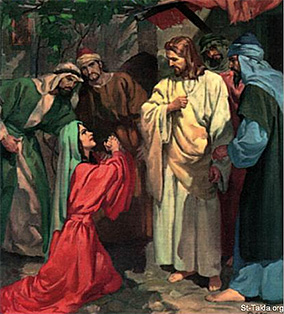
But brushing aside the offense, the desperate mother cleverly and humbly responds. We don’t know if Jesus’ expression and inflection betrayed a different intent than His literal words, which were said in the presence of Israelites. In any case, I think the passage’s primary meaning can be understood in the light of Jesus’ other examples of people other than the house of Israel having true faith (and large doses of humility). Many in Israel thought that, in God’s eyes, outsiders were less than they were, and here Jesus seems to be confirming that belief. In another harsh passage, Jesus says not to throw your pearls to swine (Matthew 7:6). Ouch. These passages seem to fly in the face of God’s love and concern for everyone, that Christ died for all, and that all are equal in His sight.
But there are common misconceptions based on these ideas which indeed are found in scripture. Misunderstandings seem to come from thinking that certain verses refer to universal salvation. God’s saving grace may be universal, but it requires individual acceptance (it’s a gift that one accepts, or leaves unopened), and God knows that not everyone is going to accept it. He also knows (and has passed this knowledge on to us) that He has active enemies, not just people who don’t really want to accept Him. We don’t know who all these enemies are, but God does.
Therefore, neither “human” or “person” are synonyms for “child of God.” People can become children of God through faith, and individual Israelites were not necessarily God’s children. Once Israel rejected Jesus as Christ, all who did (and do) accept Him as such were (and are) adopted into God’s family. The Canaanite mother seems to be an example of this forthcoming church age.
While many Israelites did take Jesus’ messages to heart and come to faith, the nation as a whole did not. What were the problems? Following man-made traditions like many in Israel were doing was actually leading people away from God, and as alluded to above, many also had the attitude that being born an Israelite (a child of Abraham) automatically saved you (see John chapter 8, for example).
Again and again, Jesus dispelled these notions. In Matthew 15 here, a gentile Canaanite woman has saving faith. She believed that what Jesus was doing was real (of God) and sought Him out, while the religious leaders amongst God’s “own people” did not. Other examples are the centurion who knew that Jesus could heal even from a distance (Matthew 8:5-13 and Luke 7:1-10); the (parable of the) good Samaritan who helped a man left to die when Israelite holy men would not (Luke 10:30-37); the Samaritan woman who became His witness to other Samaritans (John 4:1-30); and, the thankful Samaritan leper who was healed along with nine other Israelite lepers, who did not glorify God like the Samaritan did (Luke 17:11-19).
Jesus also brought up other related examples from the past, like Jonah the Israelite not wanting to give God’s warning to the Ninevites, God having the prophet Elijah stay with a non-Israelite lady during a severe, long term drought, and God healing a Syrian–but not any Israelites–of leprosy during Elisha’s time (Luke 4:24-27). Of course, He also reminded the Israelites here and there about God’s prophets they had killed in times past. These examples, of course, angered many. Those unwilling to accept His messages sought His life, just as they sought the past prophets’ lives he reminded them of.
We can see, perhaps shockingly, that the Canaanite woman was not really offended; apparently, she understood something that was more important than the apparent offense. Her faith led to the healing of her daughter and a compliment from the Son of God. In another example that many of His own disciples found offensive, Jesus taught that He was the bread of life, and that His blood was for salvation. He said that a person needed to eat his flesh and blood. Of course, he was speaking in spiritual terms of the coming Last Supper and future sacrament of communion. He wasn’t all-of-a-sudden advocating cannibalism. But many disciples failed to trust His words, were offended, and left Him (John 6:47- 71). But those who believed in Him stayed even though they didn’t fully understand His words at the time. Faith is trust, and blessed are those not offended by Christ.


I was reading Matthew today and came across the below group of verses. It made me think about my own salvation and if I’m on the right track. I have these times where I wonder if God expects more of me, if I’m letting Him down, and if He’s really paying attention to me anymore. I think all believers go through times with thoughts like that. I do believe I’m saved, as Paul wrote: “The Spirit himself testifies with our spirit that we are God’s children” (Romans 8:16). But I also think Paul wrote his passages about persevering for a reason, that people can indeed fall away from the faith (become apostate). One example from Hebrews (12:1-3):
Therefore, since we are surrounded by such a great cloud of witnesses, let us throw off everything that hinders and the sin that so easily entangles. And let us run with perseverance the race marked out for us, fixing our eyes on Jesus, the pioneer and perfecter of faith. For the joy set before him he endured the cross, scorning its shame, and sat down at the right hand of the throne of God. Consider him who endured such opposition from sinners, so that you will not grow weary and lose heart.
The following passages from the end of Jesus’ Sermon on the Mount, consisting of three paragraphs and concepts, is a good reminder to consider: where we’re at in our faith; if our faith is matched by our actions; and, if our righteous-looking actions are hiding unrighteous motives. It is that last bit that is the scariest. Those persons who do NOT enter God’s Kingdom, even though they seemed like they were powerfully working for God, seem to be surprised. Perhaps it is yet just another deception they are trying to pull off, or, they are so deluded they can’t even tell the difference.
Continue reading Who Will Enter God’s Kingdom?


I’ve changed pages and updated With Christian Eyes in the past, but there’ve been more changes lately and I also wish to better connect with my followers. I edited and updated my biographical information in the About the Author page (formerly “About Me”), and moved a bit of what was in the “Let Me Write for You” page to there and deleted the rest. I added two table of contents pages for ease of finding articles; there are two instead of one in order to keep the number of links on each page down.
In case you didn’t know, there is a second blog run by my husband here, Lingering Trees, although I’m going to see about how to transfer it to him to make it separate (for his ease and distinct online presence). He is trying to promote his and my son’s YouTube account so as to eventually make some money off of it. This is not to get rich, by any means, but only to make extra money since he is ill so much. Eventually, unless God chooses to heal him, he’s not going to be able to work a regular job. It’s too bad Christians don’t support other Christians in this way as much as the worldly folk do–if you don’t know about people making a living off of YouTube, just know that some do extremely well. We’re not expecting to live off of YouTube income (!), but are working at it with the hope of earning money to go toward living expenses and gifts.
I’ve appreciated the likes and follows so much! Thanks for the time you’ve spent here. As we prepare to end homeschooling and move across the country, we’ll still be here! After that’s all done, we’ll see how God guides us, but I may be able to write more. I should have more time and ability to focus–maybe I’ll even work on a book or two. The Lord hold you and smile at you.


 Philosophy professor William Lane Craig maintains a web site, Reasonable Faith, where he has apologetics articles and answers people’s questions. He answered someone’s question about the recent gay marriage supreme court ruling, and I’ve reproduced much of it here. See Craig’s site for the full response.
I’m going to use your question, R.C., [as] an excuse for addressing the Supreme Court’s tragic and misguided decision to re-define marriage in Obergefell v. Hodges.
We need to understand clearly that that is exactly what the Supreme Court has done. By ruling that same-sex unions can count as marriage the Court has implicitly redefined what marriage is. Marriage is no longer taken to be essentially heterosexual, as traditionally conceived, but has been implicitly redefined so that men can be married to men and women to women.
The Court’s majority opinion, written by Anthony Kennedy, shows a clear consciousness of what the Court is doing. Referring to the traditional view, Kennedy writes, “Marriage, in their view, is by its nature a gender-differentiated union of man and woman. This view long has been held—and continues to be held—in good faith by reasonable and sincere people here and throughout the world” (my emphasis). It is this view which Court’s majority declares is now obsolete.
Continue reading Prof. Wm Lane Craig on Obergfell v. Hodges


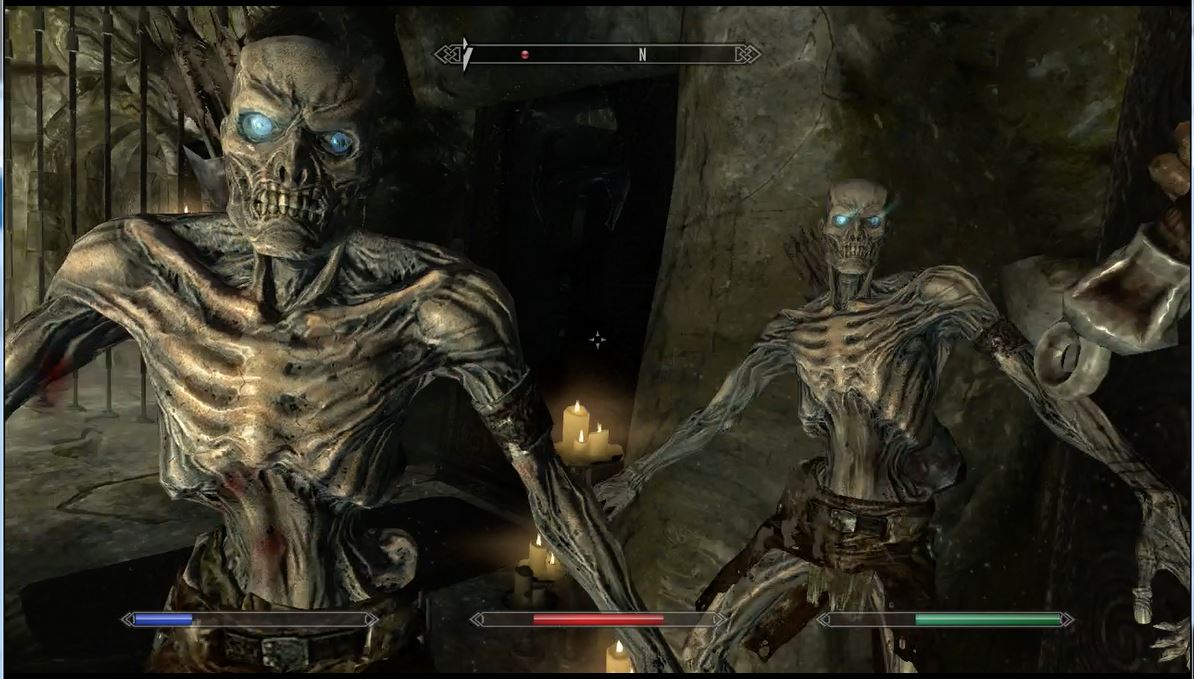
Hello! I’ve been doing a Skyrim Let’s Play (unmodded game, on XBOX 360, with all expansions) and so far have taken the time to capture screen shots for the video thumb nails. Please click on the images to see them full size – the small format on this page doesn’t do them justice.
I take many I like that I don’t have a current use for (and I have left some of my best ones out for my own use later). So, you can use any of these that you like in a blog article, but please attribute them to this site by including a link to this page (I’ll note those I used already in case that matters to you). I’ll be adding more images and replacing some of the olde ones frequently. Thank you, and enjoy! (PS – Even though I’ve spent a great deal of time playing Skyrim in the past, I’ve learned more from viewing it slowly via video and from seeing characters in these stills!)
_____

__________

Continue reading Favorite Skyrim Screen Shots (Use Allowed with Attribution)


We’re not “stay out of debt” and “pay cash only” fanatics. It’s just that there can be good reasons for paying with cash instead of getting a loan, and we’ve had those good reasons. Yet when we have paid for our cars with cash, both times have been horrible and draining experiences. Lately, we have been trying to buy a cheaper home with cash, and that also has been an exceedingly stressful experience. “Cash is King,” right? So what’s the problem?
As far as I can tell, those buyers with lots of cash and the know-how to flaunt it, don’t have the same problems. When we were trying to purchase a condo in Orange County, California, a few years back, we could never do it because – as our agent told us – too many Chinese investors were here buying things up quickly with cash. In very short order, real estate prices rose and we were shut out of the market. (Why our own governments allows this . . . well, they allow it for the obvious reason that they prefer the influx of money over the the interests of its citizens and communities.)
This is what happened to us when we bought cars with cash. We didn’t buy either one from an owner, and I’m pretty sure buying from an owner would be much easier with cash. Anyway, we bought a used car from a dealership. It took FOREVER. They did a credit check, even though we weren’t paying with credit, and I believe they did a type of check that can be detrimental to one’s credit (I found out later). In any case, we ended up leaving with the car, having paid for it with a personal check. I thought they’d have one of those electronic check scanners and it would all be no problem; I was very wrong. Based on our experience, perhaps a call to the dealer ahead of time–asking what you can do to make the whole transaction easier and less time-consuming–might be helpful if you want to pay with cash.
Continue reading Buying a Car or Home with Cash? Good luck! (The World Doesn’t Like It)


This is the second in a series of “Words Christians Use,” or simply, the first section of a Christian dictionary/desktop encyclopedia. Short phrases may occasionally be included, and some words or phrases have a Christian base but are used more often by the general public. (Click for > “A” terms.)
(c) Vicki Priest________________________________________________________________
Babylon. This word probably isn’t used as much as it should be. Not for the historic city it was, but for the its symbolic Biblical meaning. “Babylon” (or mystic Babylon) refers to the world system, containing religious and political aspects, that are corrupt, self-centered, and against God. It is the global anti-God if you will. Since the Bible tells us that Satan is the ruler of this world (a lot of folks seem to forget that; see John 12:31), mystic Babylon seems to be a simple way of referring to the physical manifestation of the Satanic world system. Not all Christians interpret the symbolic use of Babylon so broadly, but view it as a term used for any corrupt commercial center that is or will be judged. In any case, many who call themselves Christians today don’t recognize the anti-God nature and effects of modern global corporatism and such and appear to support “mystic Babylon”; this could explain the term’s relative non-use.
Bacon (and Biblical laws). Just kidding. Christians don’t use the term “bacon” more than anyone else, BUT, bacon can be the focal point of an important lesson. Christians are often accused of “picking and choosing” which Biblical laws they follow. Aside from certain sects and annoying individuals, the accusation itself is false or deceptive. It is based on ignorance of the difference between a Jew and a Christian. Christians don’t follow the Jewish laws–the laws of ISRAEL–because Christ’s work set believers free from them and from the Jewish nation. Folks, it’s not a matter of “picking and choosing”; Christians are not Jews and so don’t need to follow the laws of Israel. God told the Israelites not to eat pork, and He had good reason. But Christians are free to eat pork. There are some prohibitions that were maintained under the new covenant, however, that are reiterated as sin against God in the New Testament (like any sex outside of marriage [and marriage is maintained as heterosexual] and deceiving people).

Continue reading Words Christians Use Explained: “B” Terms


So I’m working at my WordPress site today (June 26), and when I view the stats page this colorful banner confronts me. Huh. Looks kind of tacky. I don’t go around imposing my Christian symbolism on sites that are public and have users from all different backgrounds, beliefs, creeds, and whatnot, but hey, I guess WordPress can do what it wants.
Anyway, thanks for putting up a reminder of God’s covenant with humankind, given through Noah, after God destroyed the Earth and most that was in it by water. God had judged the Earth’s inhabitants to be too far along in their selfish and evil desires. But instead of destroying humankind altogether, He chose Noah and his family to start the human race all over again. It’s a good thing they could all have kids. While we’re all descendants of Adam and Eve, we’re also all descendants of Noah and his wife, too.
Continue reading Thanks, WordPress, for reminding me of the Noahic Covenant


With Christian Eyes author does a Skyrim “let’s play” with a cool-looking (magish) female Breton. For any Christians or simply parents interested in getting a general impression of in-game dialogue and violence, the game introduction isn’t bad way to do it. There is a little swearing in it, which is actually more than in the rest of the game — most swearing, when characters happen to do it, is in ways reflective of the in-game culture (not standard real world curses).
A beheading takes place in the introduction, fairly representative of pretty much the worst you’ll see in-game. Certain perks (like Devastating Blow and Savage Strike) can be chosen later on to emphasize bloody violence, but, as said, that is a choice a player can make. Unfortunately, however, you can’t turn off the slow-mo killing scenes which happen once-in-a-while (in Fallout New Vegas, which Bethesda also produced, you can. Maybe the next Elder Scrolls game will have this feature). There are reasons why Skyrim has a “mature” rating, but as far as mature games go, it’s quite tame. Thanks for watching!
And, episode 2:

An educational resource for topics of architectural styles, and related historic trends.
Philosophy. Ethics. Theology. Culture.
Unflinching Investigation of Sustainability Realities
2girls1up!
Reflections on Canadian Culture From Below the Border
Poems, Prayers, & Proverbs that speak to what it means to be a "living curriculum" of the Christian Life.
(collpase into now)
It's a Rare Thing
Gaming, Music & Movies
Gain Long-term Freedom From Addiction
Secret Knowledge of Spaces
Vince Michael on history, preservation, planning and more
we advocate for Michigan's historic places because they contribute to our economic vitality, sense of place and connection to the past.
Blue Water Area Local History
 With Christian Eyes